

Film cycle: In collaboration with Filmoteca Española: In Spring
Curated by Roman Khimei & Yarema Malashchuk
3 June – 17 June 2026

In Spring is presented on the occasion of Pedagogies of War, an exhibition by Yarema Malashchuk and Roman Khimei at the Museo Nacional Thyssen-Bornemisza, open until 21 June 2026.
We are living at a moment in which the historical narratives that shaped the twentieth century seem to be reasserting themselves in places where a sense of stability had recently prevailed. Armed conflicts are becoming normalised, culture is increasingly shaped by states of emergency, and ideology is once again openly, unapologetically present.
From this temporal crossroads, we propose this series as a space for dialogue between different historical moments. To this end, we present a selection of short films we made between 2017 and 2023 in conversation with works from the so-called golden age of Ukrainian cinematic avant-garde of the 1920s. This encounter invites us to read these “classical” works not as fixed icons of History, but as expressions of their time that never intended to become canon.
The programme opens with Arsenal (Oleksandr Dovzhenko, 1929), a film portraying the suppression of a Bolshevik uprising at the Arsenal factory in Kyiv and condensing the ideological tensions of early twentieth-century Ukraine. From there, the session jumps to the present: one hundred years later, echoes of the past continue to resonate within contemporary forms of life. The collective subject of those early films appears today displaced within a neoliberal world governed by individualism. The series of short films we have made around youth—understood as the driving force of the 2014 Revolution of Dignity, the popular uprising that led to the fall of President Viktor Yanukovych and steered the country towards Europe—traces the different stages of this transition: the aestheticisation of the Soviet past (Dedicated to the Youth of the World, Part I, 2017), the post-revolutionary melancholy of Kyiv’s rave culture (Dedicated to the Youth of the World, Part II, 2019), the exhaustion of post-Soviet discourse (Live Stream, 2020), and the desire to return to a time already fractured by the pandemic and the Russian invasion of 2022 (Dedicated to the Youth of the World, Part III, 2023).
The second session begins from a paradox: living in wartime turns normality into a fragile privilege, to the point where civilian life can appear more unreal than the routines of the front itself. These questions run through our short film Additional Scenes (2024), starring Pavlo Aldoshyn, an actor who trained as a sniper during the filming of Sniper: The White Raven (Marian Bushan, 2022) and who, after the outbreak of war in February 2022, joined the Armed Forces of Ukraine. In the film he embodies a civilian through a series of fragmented scenes of everyday life. One of these reinterprets a sequence from La Palisiada (Philip Sotnychenko, 2023), set in Ukraine in 1996 during the post-Soviet transition, which explores the social, political and moral tensions of that period through a police investigation. Filmed before the invasion, the film now carries a different weight: what was once a portrait of an era becomes an image of what has been lost.
The closing session takes as its starting point In Spring (Mykhailo Kaufman, 1929), dedicated to seasonal floods in Kyiv and also linked to our own anticipation of spring in the city, in a context marked by Russian attacks on energy infrastructure and extreme winter cold. As with many works produced in Ukrainian cinema of the 1920s and 1930s, this film was later absorbed into the canon of the Russian avant-garde. Against this appropriation, Explosions Near the Museum (2023) reflects on the erasure and colonial plunder of Ukrainian history and culture: a video journey through the emptied exhibition of the Kherson Regional History Museum, looted during the withdrawal of Russian forces from southern Ukraine in 2022. The film embodies a contemporary form of colonialism understood as the rewriting of history in the service of imperial narratives of greatness. Ultimately, the series invites us to think of history not as something completed and closed, but as a living field that continues to operate in the present.
Yarema Malashchuk and Roman Khimei
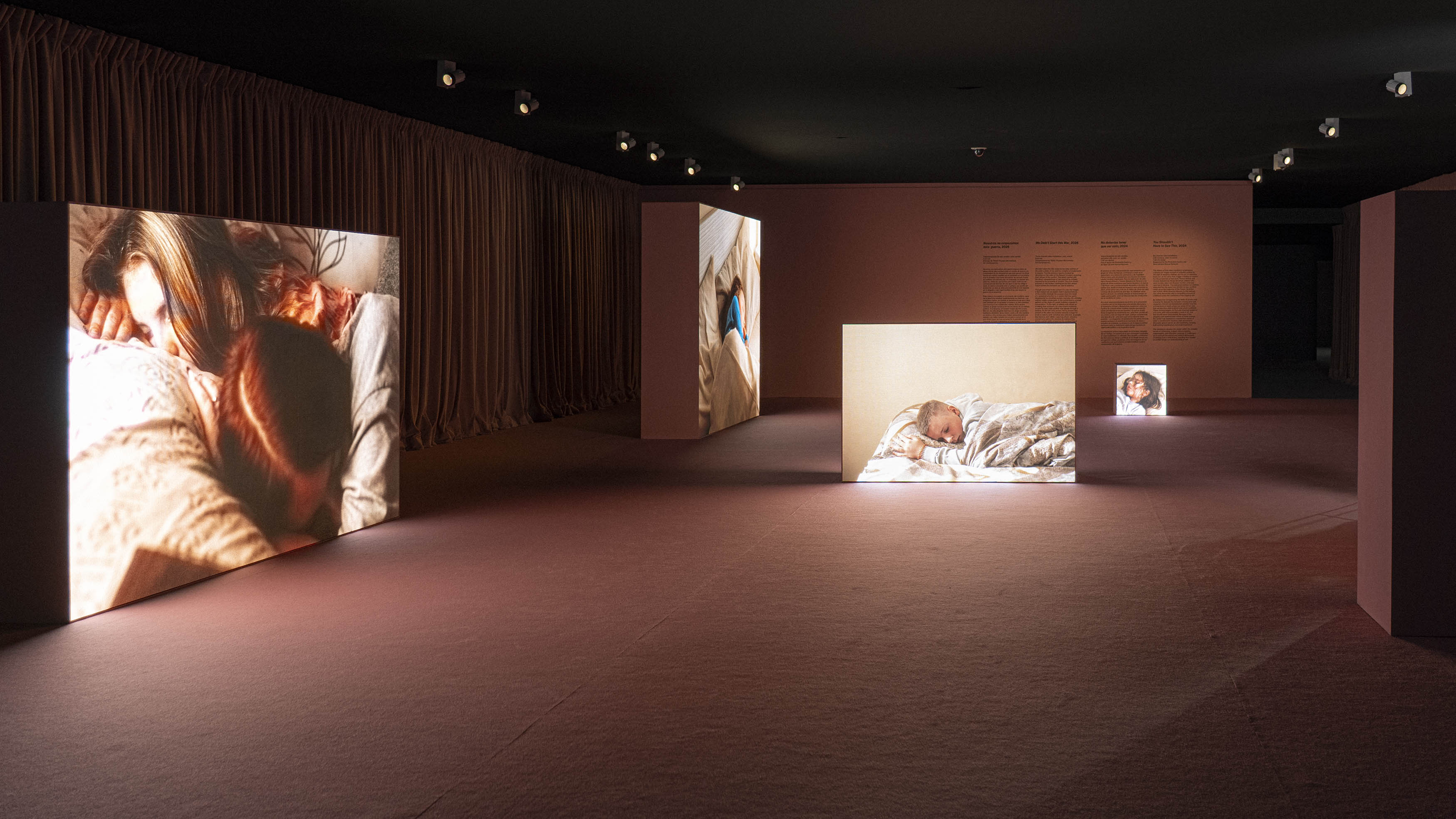
Roman Khimei and Yarema Malashchuk. Pedagogies of War
Exhibition at Museo Nacional Thyssen-Bornemisza, Madrid
3 March – 21 June 2026
Learn more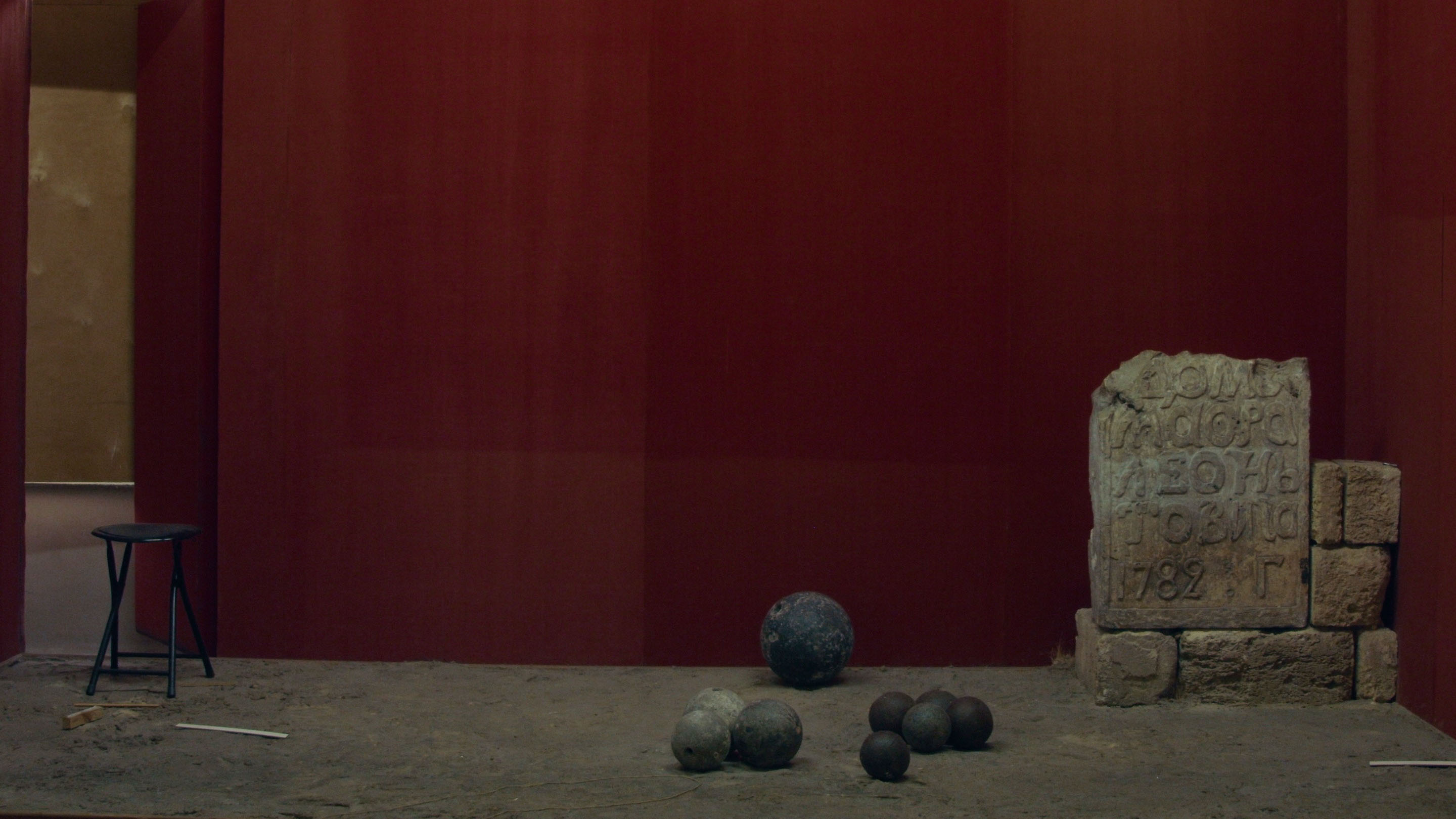
Film Cycle: In Spring. Films from Ukraine | Third session: Stolen images
17 June 2026
Learn more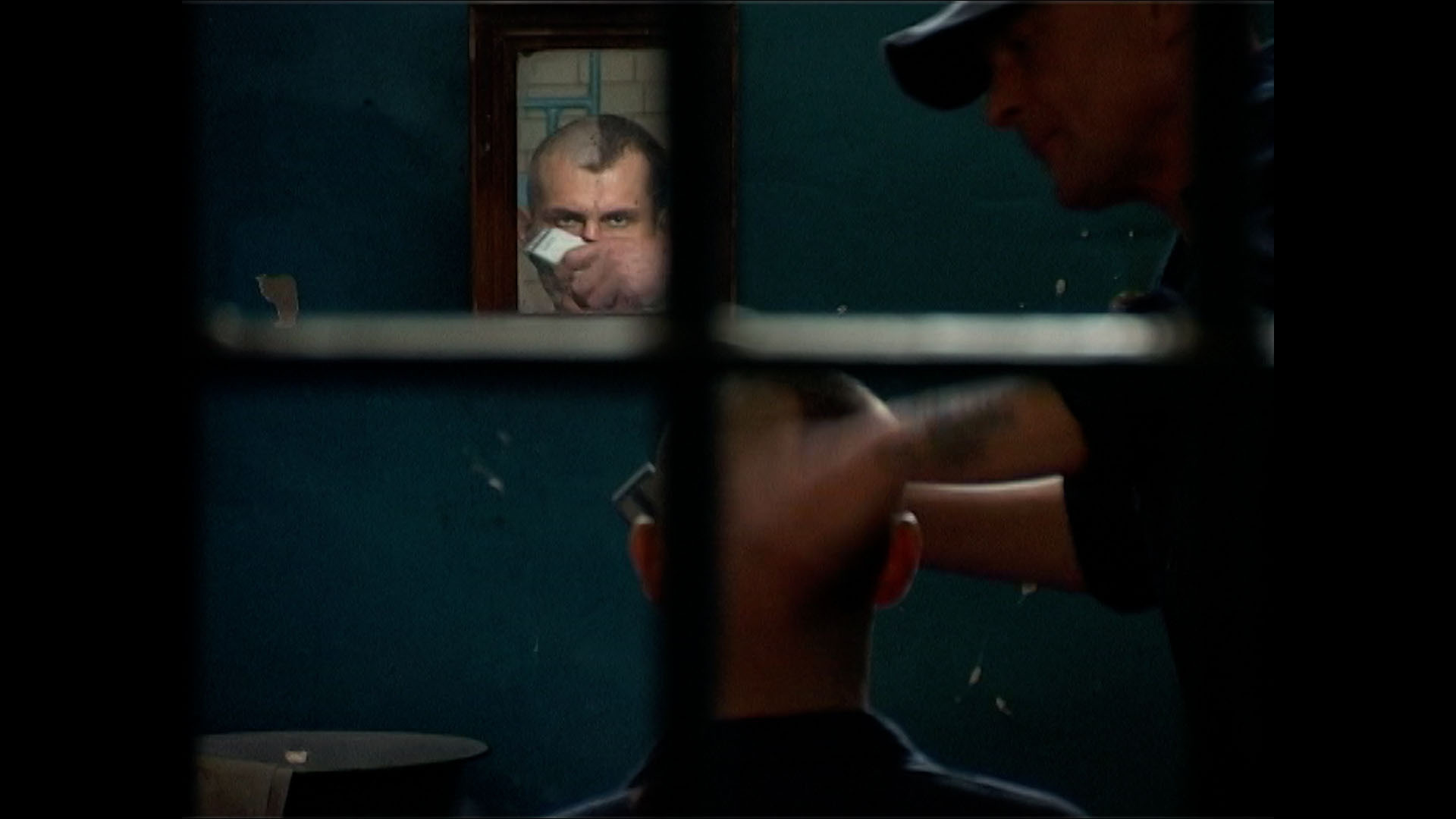
Film Cycle: In Spring. Films from Ukraine | Second Session: Representational Collapse
10 June 2026
Learn more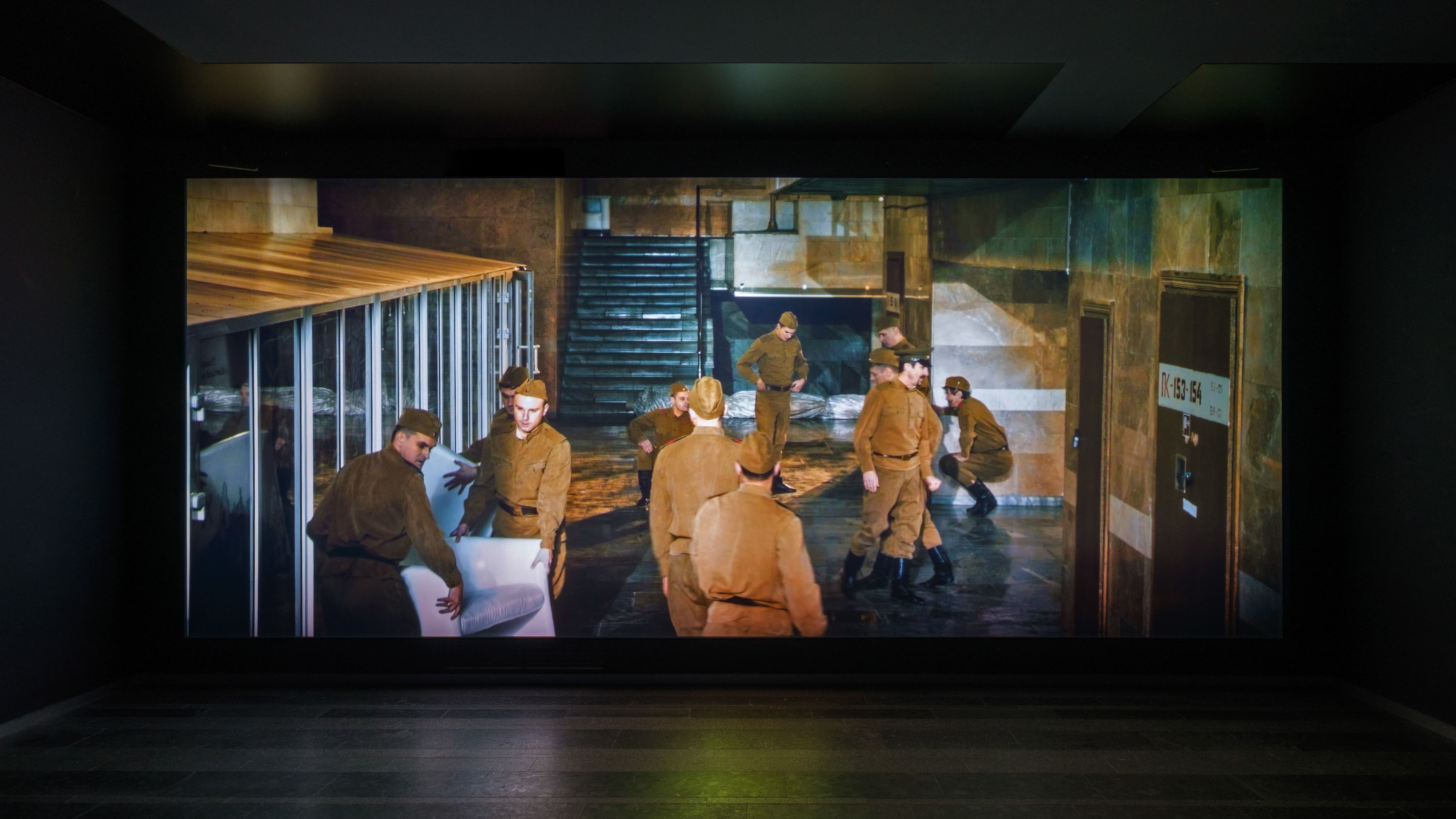
Film Cycle: In Spring. Films from Ukraine | First session: Youth and Crowds as Constructs
3 June 2026
Learn more