

Cultural mediation guide of the exhibition
Text by Ana Folguera
The (other) physical education
A MEDIATION PROPOSAL
Think about the shock, and notice your solar plexus: does it contract?
Now your spine: does it arch inwards?
Your breathing stops and your voice breaks. Something freezes.
What happens with violence a few minutes later? What traces does it leave on the body?
Questions:
The body as the primary archive
Before looking, listen to your body.
● What happens in your solar plexus when you think about the shock?
● Does your breathing change when confronted with certain images?
● Can you identify a body posture associated with fear or alertness?
● What traces does a violent experience leave minutes later? Hours later?
Years later?
● Is it possible for the body to remember what the consciousness tries to forget?
Conceptual key:
If trauma means “wound,” where is that wound inscribed when it is not visible?
War is not only a means of political domination; it is also a form of long-term training. A particular kind of physical education that remains in the body.
In the West, we tend to understand war as a series of punctual events that disappear immediately. We consume images of war without noticing that they have duration, development, and consequences rooted in time—and in subjectivity.
Ultimately, war exceeds the grand narrative of Political History we have learned: it is written into and interwoven with bodies. In every convulsive moment of the past, the rigidity of trauma remained (its Greek etymology meaning “wound”): a muscular tension that restructures subjectivity through loss and mourning.
What if the history of the world were not a sequence of time periods, but a hidden archive of pain?
Questions:
War as a form of training: beyond the event
● Do you perceive war as a specific event or as an extended process?
● What changes in a society when the threat becomes permanent?
● Could war function as a form of involuntary “physical education”?
● What gestures, habits or bodily tensions could be part of this
forced learning?
● What does it mean to think of history as an archive of pain rather than a chronology of dates?
This is the starting point for Ukrainian artists Yarema Malashchuk and Roman Khimei. In The Wanderer (2022), the artists imitate Russian soldiers who fell during the recent invasion of Ukraine in the Carpathian Mountains. Where do you place your hand and cheek when you have collapsed onto a rock? How do you shift your weight between your kneecap, foot and rib? Imitating an exact posture is not easy, nor is reconstructing the past. Researcher André Lepecki says that recreating events (known in contemporary performance as ‘reenactment’) has nothing to do with a nostalgic view. The author proposes seeing it as the ability to identify in a past work ‘fields of impalpable possibilities that have not yet been exhausted’. In fact, the title of the work of the Ukrainian collective alludes, on the one hand, to the sublime as a category of Northern European artistic tradition, but above all to physical research into the iconography of war. Here, the artists bring down to earth the romantic idea of those killed in combat and the colonisation of the landscape. There is no longer any moral supremacy of the individual over nature, but rather nature itself ironically assists in a certain theatricalization of the epic. Heroism becomes choreography. The stereotypical image of war – learned through gestures in this case, as in a musical score – is replaced by the slow and real devenir of bodies in the snow or on the rock.
Questions:
The Wanderer
● Is this recreation a nostalgic gesture or a form of research?
● What relationship is established here between landscape and conflict? Is there a symbolic colonisation
of the environment?
Observe:
Is there theatricality? Is there irony? What disappears when the gesture slows down?
In line with this theme of returning as an experiment, the work Open World (2025) depicts a return, but one marked by technology and the traumatic distance of forced exile.
Yaroslav is a teenager who fled from his home town of Zaporizhzhia in Ukraine. He now lives in Poland. Using a military robot dog, he makes a virtual return to his former home city. One of the most complex questions raised by exile is: how can we revisit the places that were once part of our lives through our memories? The empty school; Buffy the dog sleeping in the sun, in a neighbourhood where only snakes now nest. Jonik, the chubby, furry cat, waiting on the sofa at home. The irreplaceable touch and contact of skin, hair, wood.
Suddenly, a smiling girl appears on the sand in the open field and wants to play a game of chasing. In this sense, it is curious how the young can move between the most overwhelming emotions and the ability to be ironic towards them. In his empty room, when asked if he feels nostalgic when he sees his house, Yaroslav says: “Now that I've seen it, no”.
Is that sarcasm real, or is it a defence mechanism? Is it the coldness of technology? Is it the technology of coldness? Is it anaesthesia in the face of pain? Take note of that word: “anaesthesia”. The etymology means “lack of sensation”. Every day we see so many images related to violence that it seems that the only way to maintain interest is to increase the intensity in order to find that new “distribution of the sensible” that the philosopher Jacques Rancière spoke of. In this exhibition, Yarema Malashchuk and Roman Khimei offer us something different. It is about overturning expectations.
Questions:
Open World
● What does it mean to return to a place through a machine?
● Does technology cool emotion or make it bearable?
● Is Yaroslav's sarcasm a defence, an anaesthetic or a form of
resilience?
● What does the body lose when the return is virtual?
● Can memory inhabit a space without touch?
Focus on the word “anaesthetic”:
Are we desensitised by the repetition of violent images?
Do we need more intense experiences to feel anything?
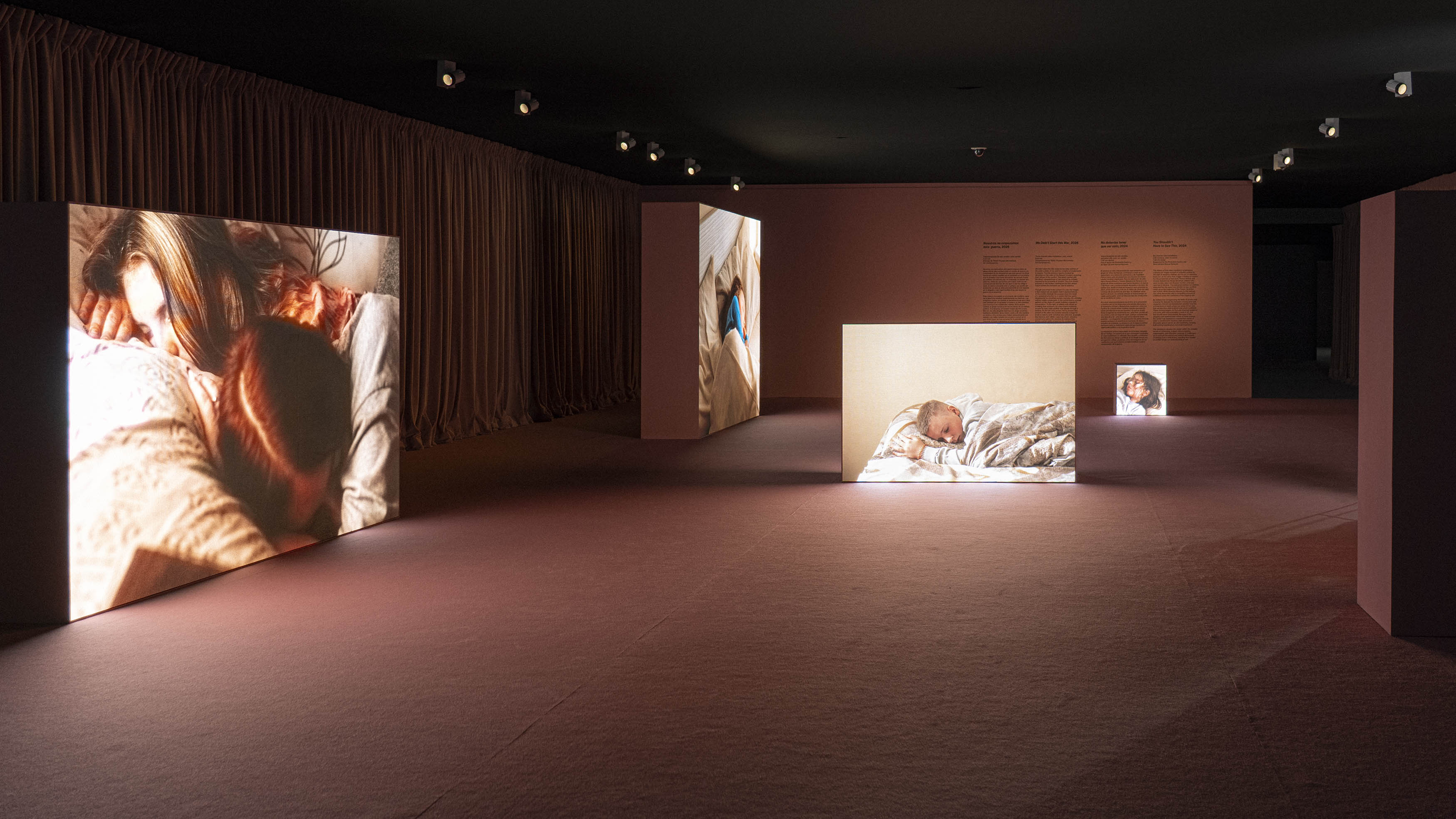
You Shouldn't Have to See This (2024) surrounds us with the cotton-candy pink of sleeping children. But as in all dreams, there is something very disturbing about it. These children were kidnapped on Russian territory and later returned to their homes in Ukraine. We are seeing what should be an everyday act, yet here it becomes something extraordinary, also cathartic due to a sense of relief. What must these children have gone through? What consequences will this have? Will they be able to sleep peacefully in a few years' time? Will they ever be able to trust anyone again? Perhaps well-being means taking the placidity of everyday gestures for granted without considering them a privilege. A head on a pillow, relaxed hands. Coming home. In this sense, we can return to something that the philosopher Didi-Huberman pointed out when he spoke of the double origin of the French word ‘tendresse’, which means ‘tension and tenderness’. That is what we feel in this room. Tension and tenderness regarding a situation that even we do not know how to process.
We let them sleep. Today more than ever, being gentle with something means maintaining a careful distance.
Questions:
You Shouldn't Have to See This
● Why does something as ordinary as sleeping become extraordinary here?
● What tension do you perceive beneath the image of tenderness?
● What invisible stories accompany these bodies at rest?
● Can sleep remain an innocent gesture after the kidnapping?
● What does it mean to care for an image? Could watching also be a form of responsibility?
Think:
Could tenderness harbour latent violence?
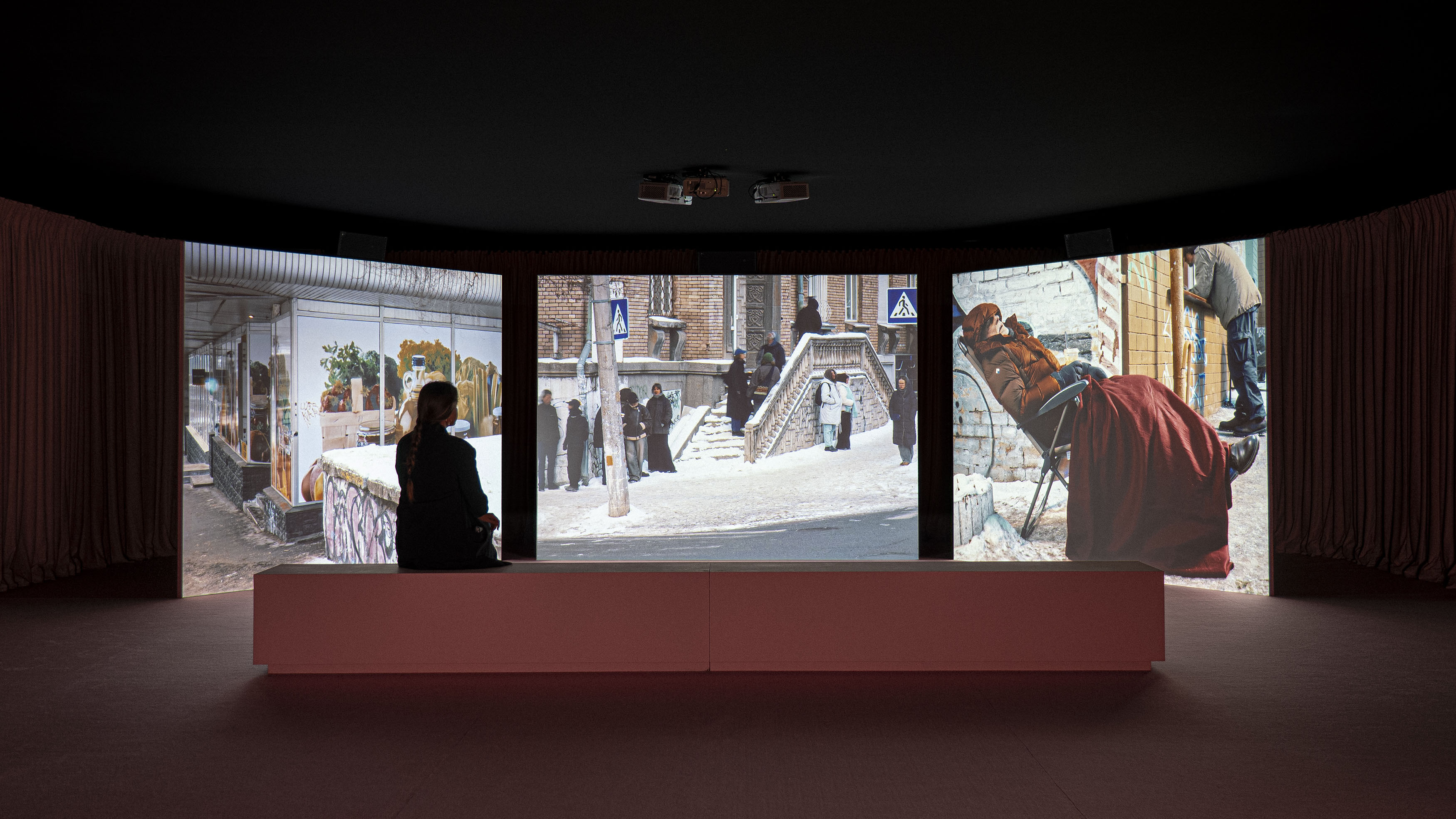
Perhaps it is a question of reclaiming the body as a space of autonomy and freedom. The work We didn't start this war (2026) alludes to everyday life in Ukraine under the constant threat of Russian invasion. But here we will not see bloody scenes, but rather the disturbing image of a city that continues to function. The streets are full of people, a bee flits about; attention is suspended and then unfolds again.
One of the most dangerous aspects of any traumatic experience is pretending that nothing has happened. In the 21st century, we find ourselves in a paradox: we live with fear while maintaining a supposedly unalterable daily routine that is fraught with tension. A silent mourning that cannot be channelled. The obligation to maintain a devitalised routine as if it were a set of exercises. In this (other) physical education we are receiving, will it be possible to leave/let ourselves/let each other be in peace?
Ana Folguera
Questions:
End of the itinerary: is it possible to ‘leave us alone’?
● What has changed in your body since you began the tour?
● Have you identified any tension that you did not perceive before?
● Do you feel closer to the images or more distant?
● What does it mean to reclaim the body as a space of autonomy?
● In this ‘other physical education’, what would need to be un-learned?
Public Program

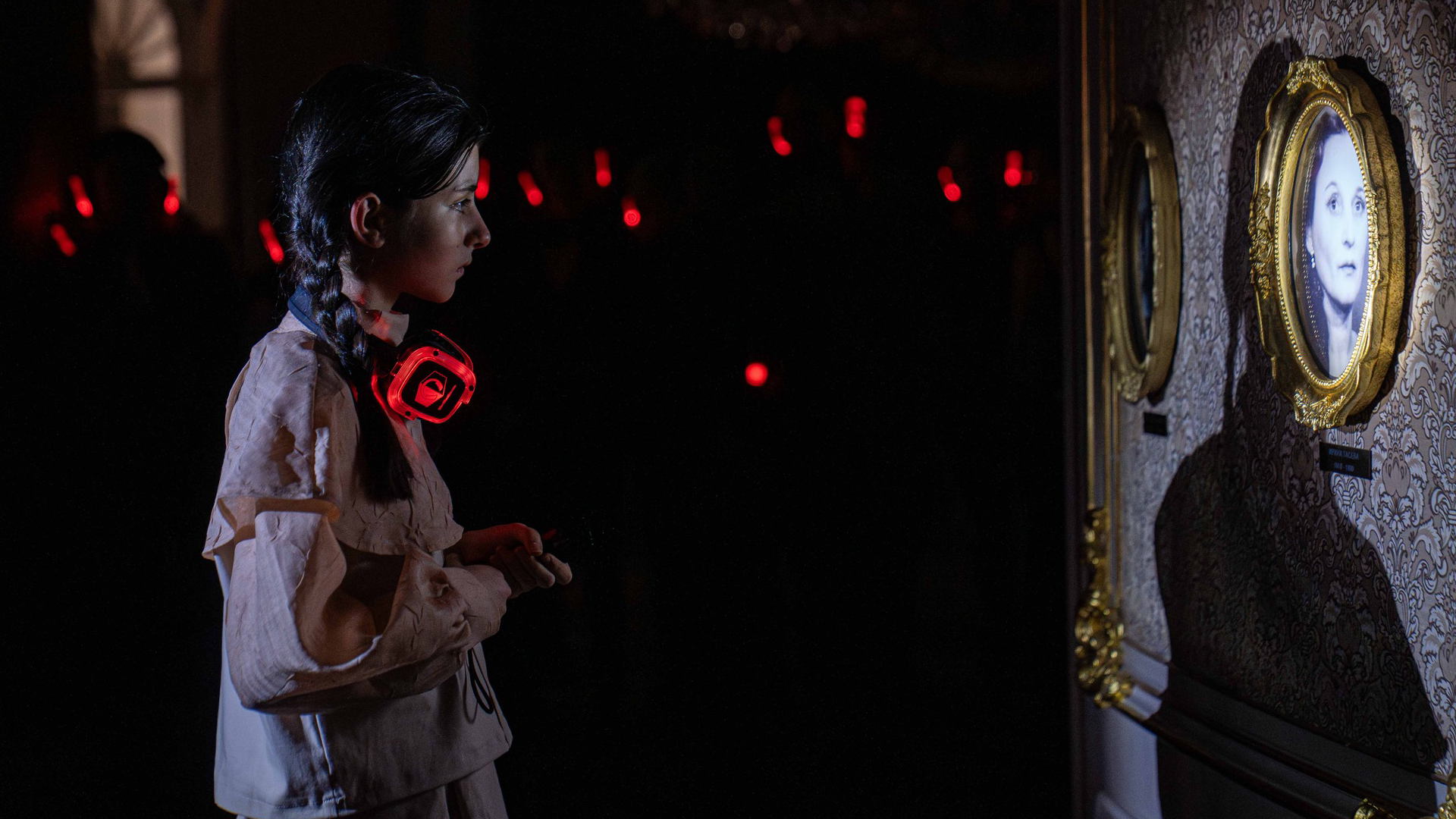
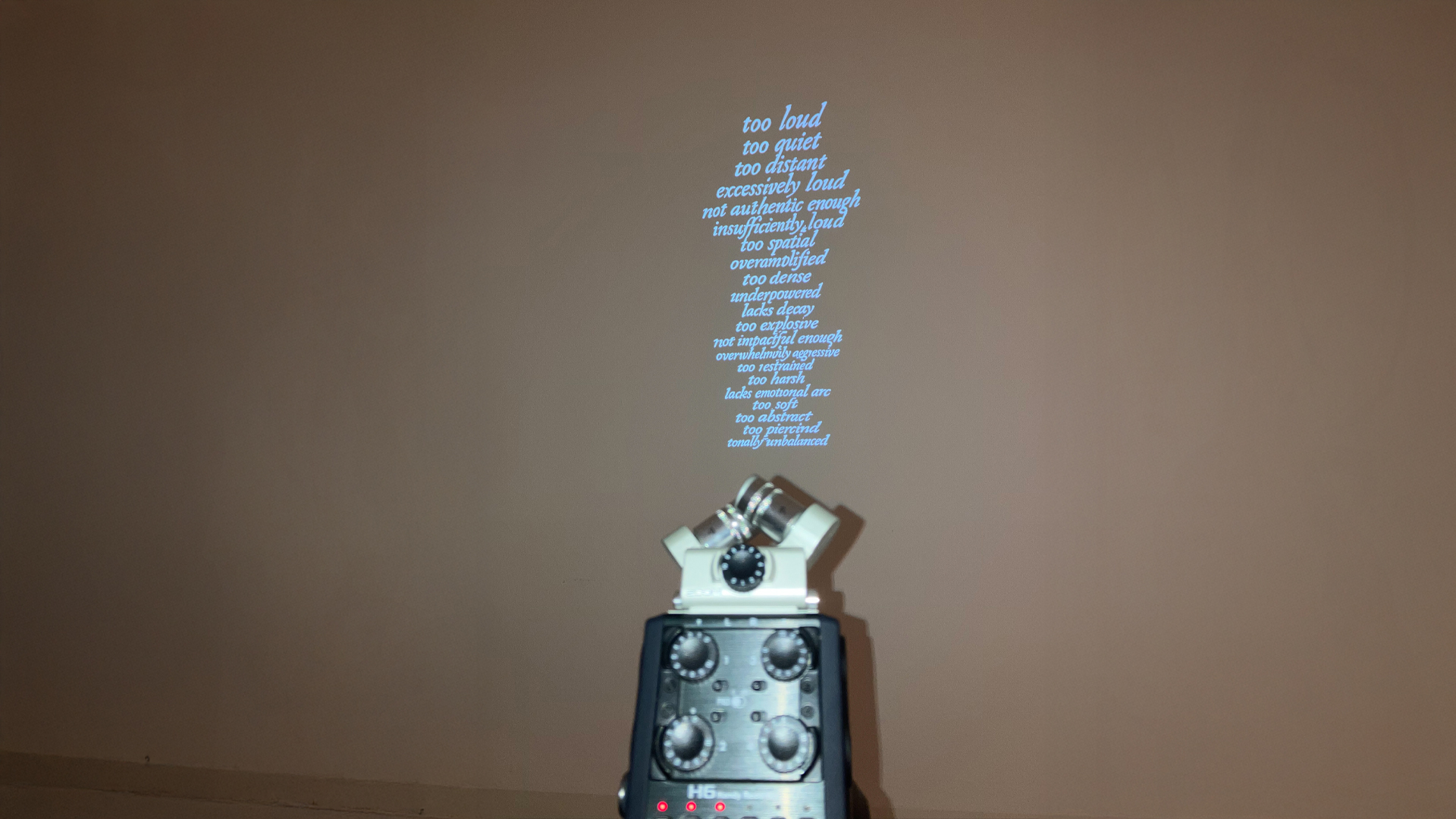
Nocturnal Walkthroughs: Perfect Explosion Or I Stop When It Gets Too Loud
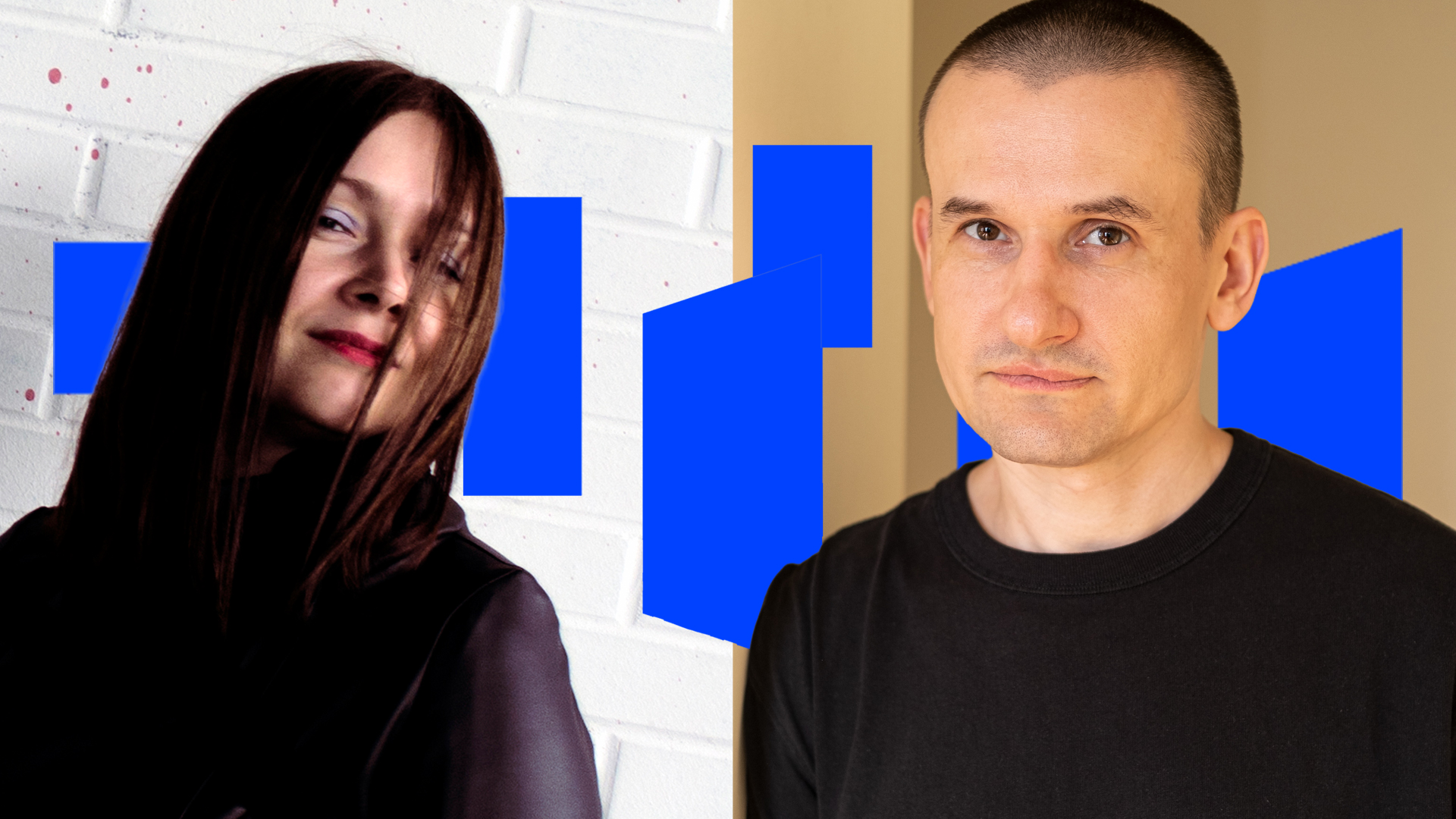
Listening performance by Daria Zhuravel in collaboration with Ihor Babaiev
13 June 2026
Learn more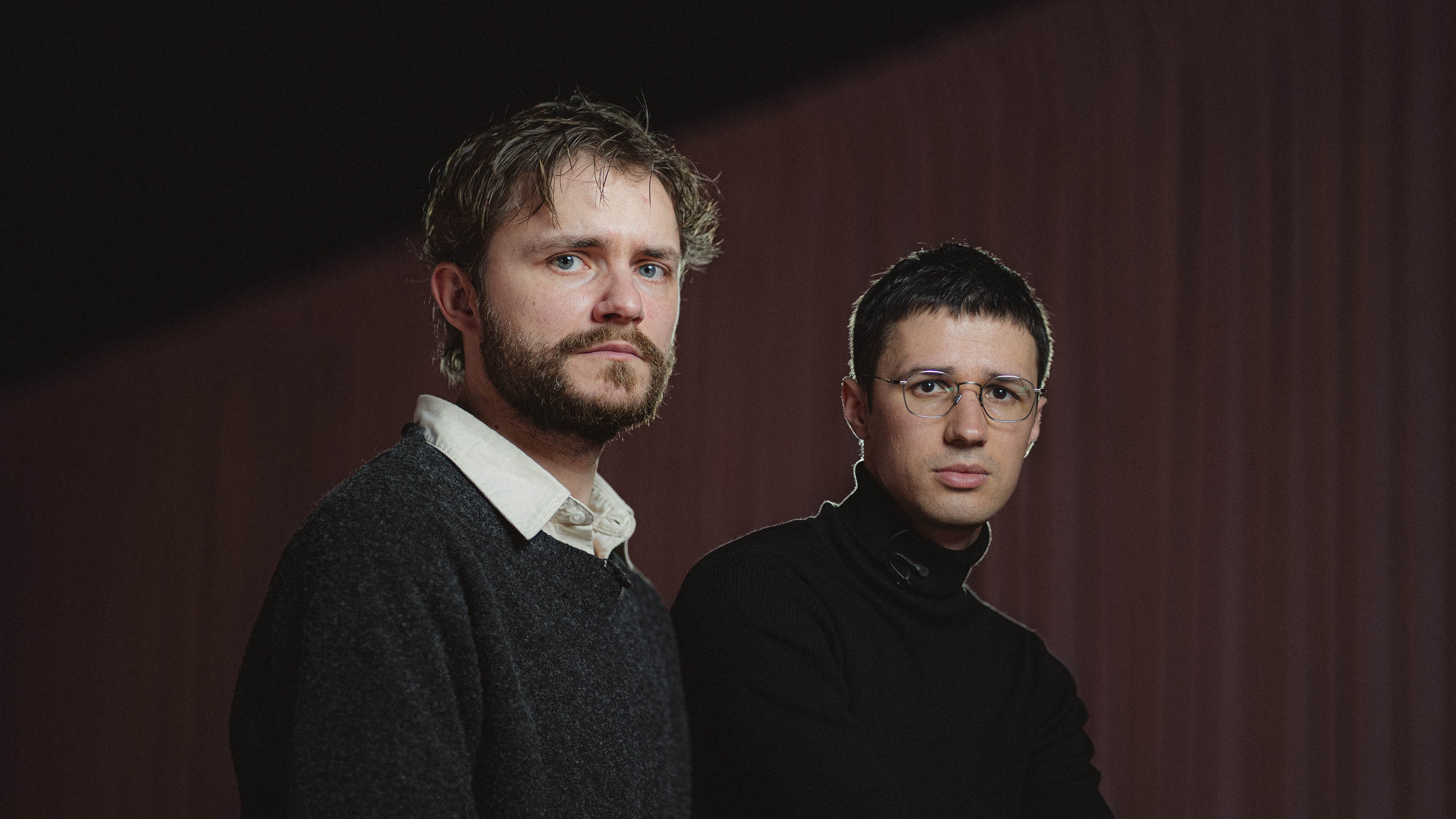
Film cycle: In collaboration with Filmoteca Española: In Spring
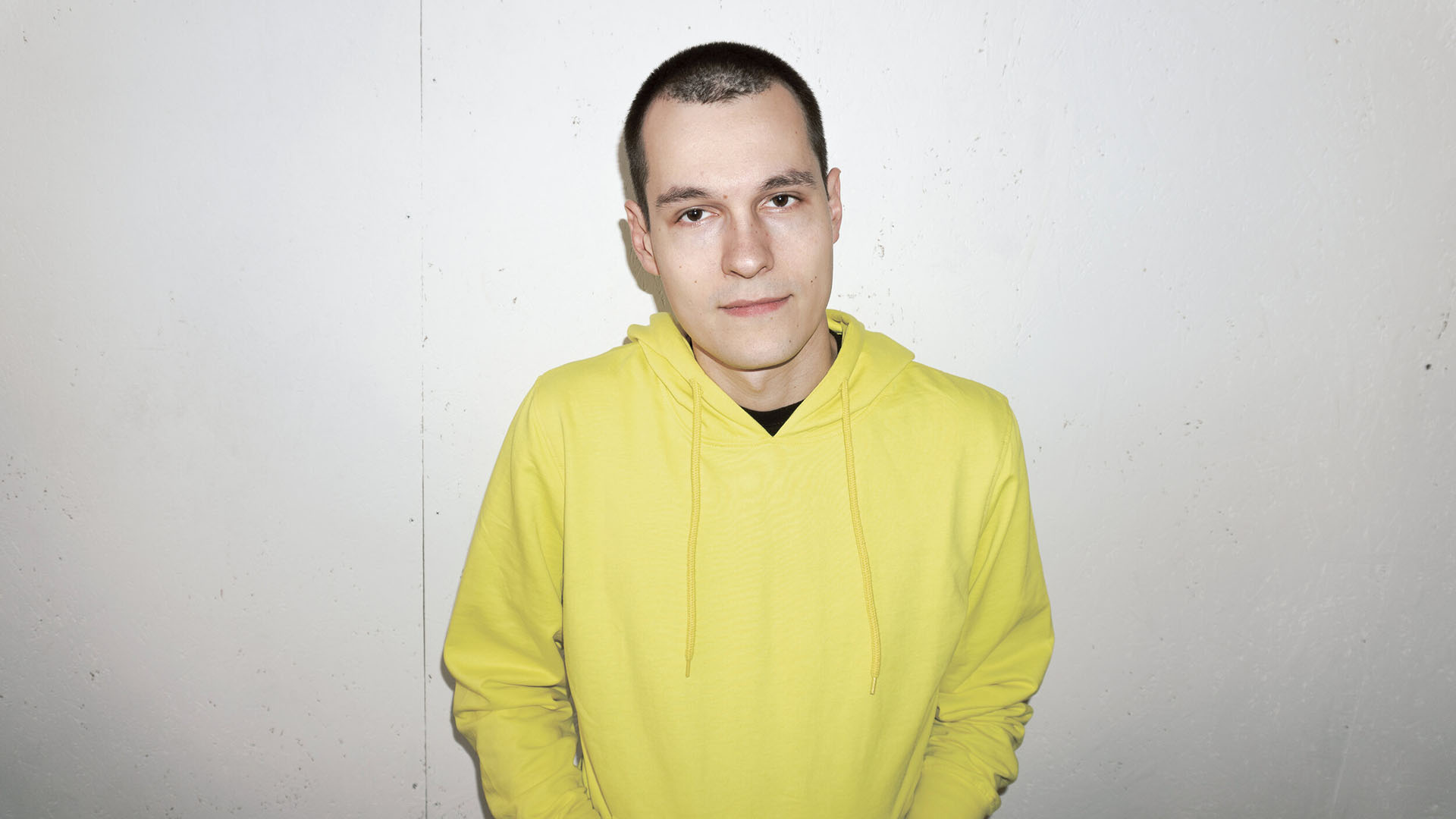
Curated by Roman Khimei & Yarema Malashchuk
3 June – 17 June 2026
Learn more