
Gifts of Trust: A Sacred Ocean Alliance Surfaces
A Chronicle on the Pacific Island and Jamaican Indigenous Cultural Exchange by datejie cheko green

July 19, 2026, Portland, Jamaica
Bending down to speak in her young daughter's ear, Taino Kasikeiani (Chieftainess) Ronalda Pairman gently shared a timeless lesson with her, and with the circle of invited guests watching the historic ceremony in Charles Town Maroon Village in Portland, Jamaica, on July 19.
She said, "When you give a gift, you have to say what the gift means, and why you're giving it."
Eight-year-old Kasike-Rahuto Tanama-Areyto took her mother's instruction, paused, and carefully prepared to gift her artwork.
In the Asafu Yard, delegates and culture groups from the Yamaye Guani (Hummingbird) Taino, the Charles Town, Moore Town, Scott's Hall, and Accompong Maroon Villages met for the first time with delegates representing the Kanaka ʻOiwi, the Indigenous people of Hawaiʻi. They all brought fresh water collected from rivers, lakes, and streams in Hawaiʻi and Jamaica, as well as Pacific and Atlantic Ocean water. These were to give as offerings to the traditional water ceremony that would honor the gathering and dedicate their new Sacred Ocean Alliance.
Kasike (Chief) Kalaan Kaiman and Kasikeiani Ronalda opened the program with a tobacco blessing in the Indigenous Taino language of the Caribbean Sea and Atlantic Ocean regions. Then Kasikeʻs ancestral call to the four sacred directions grounded us in place, space, time, and purpose.
The three delegates from Hawaiʻi, Lanaʻi islander and revered elder, Solomon "Uncle Sol" Pili Kahoʻohalahala, Maui islander, Edwin “Ekolu” Lindsey III, and Oʻahu islander, Dr. Brittany Lehua Kamai, shared sacred chants, or oli, in their Hawaiian language. They told stories about their peoples, history, and how their relationship with the Pacific Ocean continent connects them to all life forms, from the creatures and energies that inhabit the deepest seabed, to the waves, currents, and voyaging canoes, weather systems, and stars.
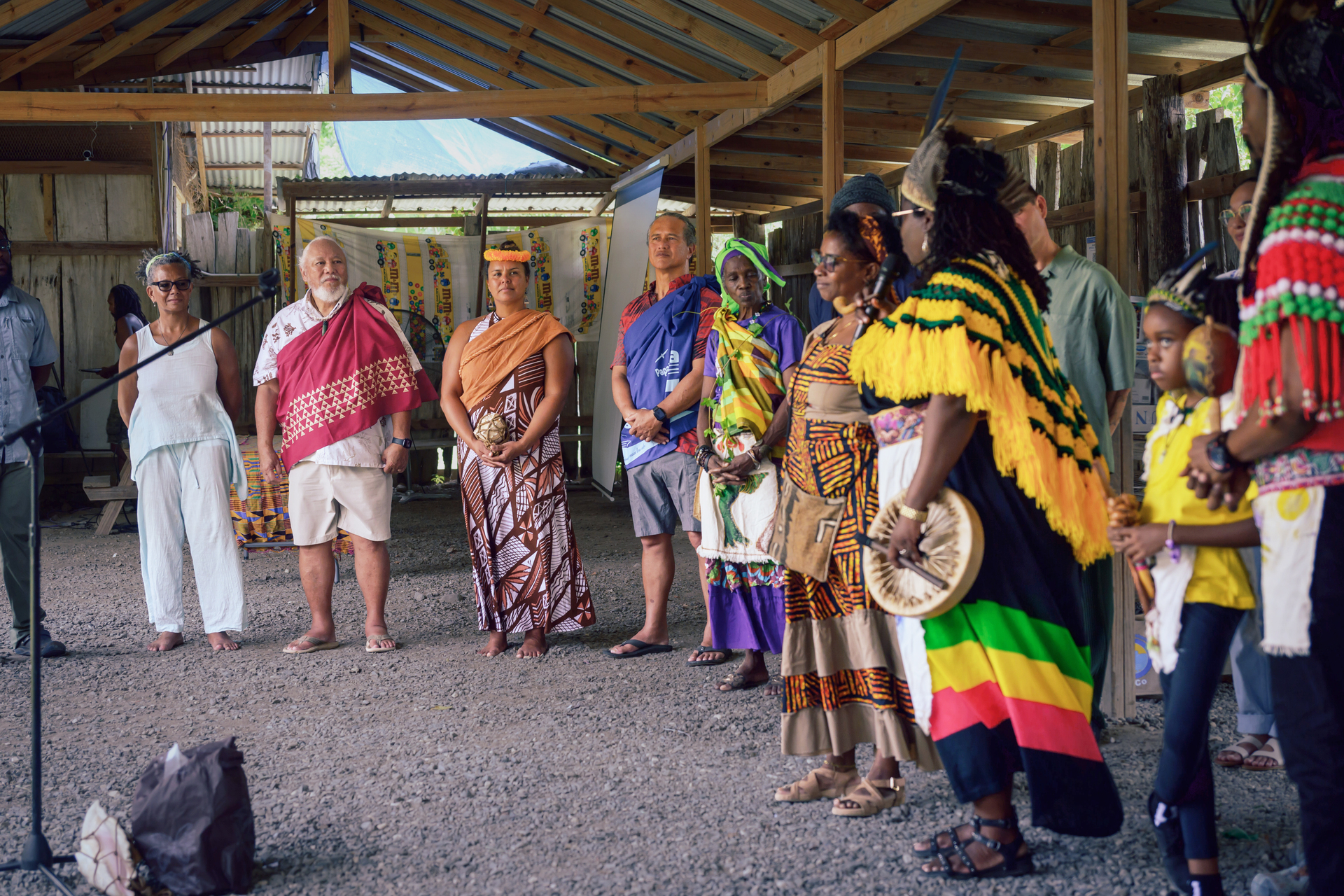
Dr. Kamaiʻs sounding of the Pacific Ocean Conch blended with Kasike Kalaanʻs Caribbean Conch and the Maroon Abeng, a traditional cow horn instrument first brought across the Atlantic to Jamaica by ancestors from Ghana, played by Maroon Captain Rodney Rose and Master Craftsman, Valentine 'Koda' McLean.
Together they called the creator, ancestors, community, and allies, to be present and protective in the work ahead.
When the time came for the gift exchange, young Tanama-Areyto chose Dr. Kamai to receive her depiction of a green sea turtle in blue water, made with shiny beads sewn on canvas. She explained, "We all have to protect the sea... and if we don't start, we won't have a world to live on."
Her bold child's gesture opened the gift ceremony that followed, a tradition designed to show goodwill and lay the ground for trust across cultures, languages, communities, and generations. Handcrafted oils, bowls, adornments, and instruments were exchanged, and the creation chant or Kumulipo of the Indigenous people of Hawaiʻi, first translated into English by Queen Liliʻuokalani, was presented and received with honor.
Markus Reymann, Co-Director of the international art and advocacy foundation TBA21, presented one carved Abeng to the Jamaican delegation, and one to the delegation from Hawaiʻi as a gift signifying their commitment to ongoing support and learning to these Indigenous stewards. The two horns were especially selected from one cow to symbolize the inherent unity of the Indigenous peoples across the two oceans, that they exist as one body leading ocean stewardship, and to help them call upon each other on this journey, as Indigenous family.
Gaa Mang Gloria “MaMa G” Simms, Spiritual Leader and Paramount Queen of the Diaspora Maroons, collected the fresh and ocean water offerings into one yabba, or clay pot, and gave the blessing.
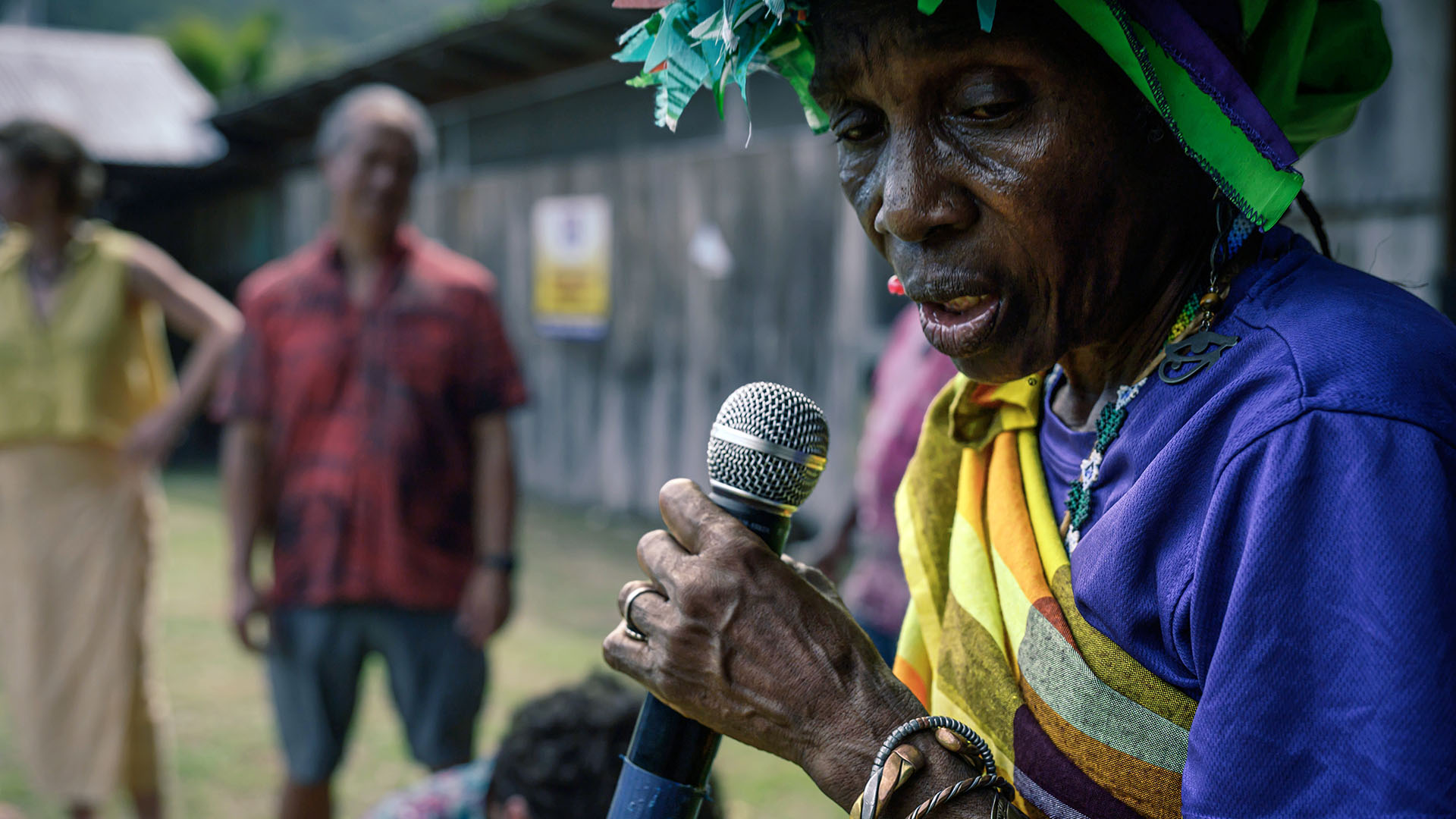
"Wata is something that carries memories. You can speak your intention into wata. Wata itself is life. Wata flows. Wata is so powerful but looks so gentle," MaMa G said. "It has no obstacles in its way. It will either go under, go over, or go through."
The beloved elder invited all present to approach the yaaba and speak into it, saying,
“As we think ... we put our imagination, our mind, our intention into the flow of wata today, because this wata is the reason, and the mission and the purpose that brings us all together.”
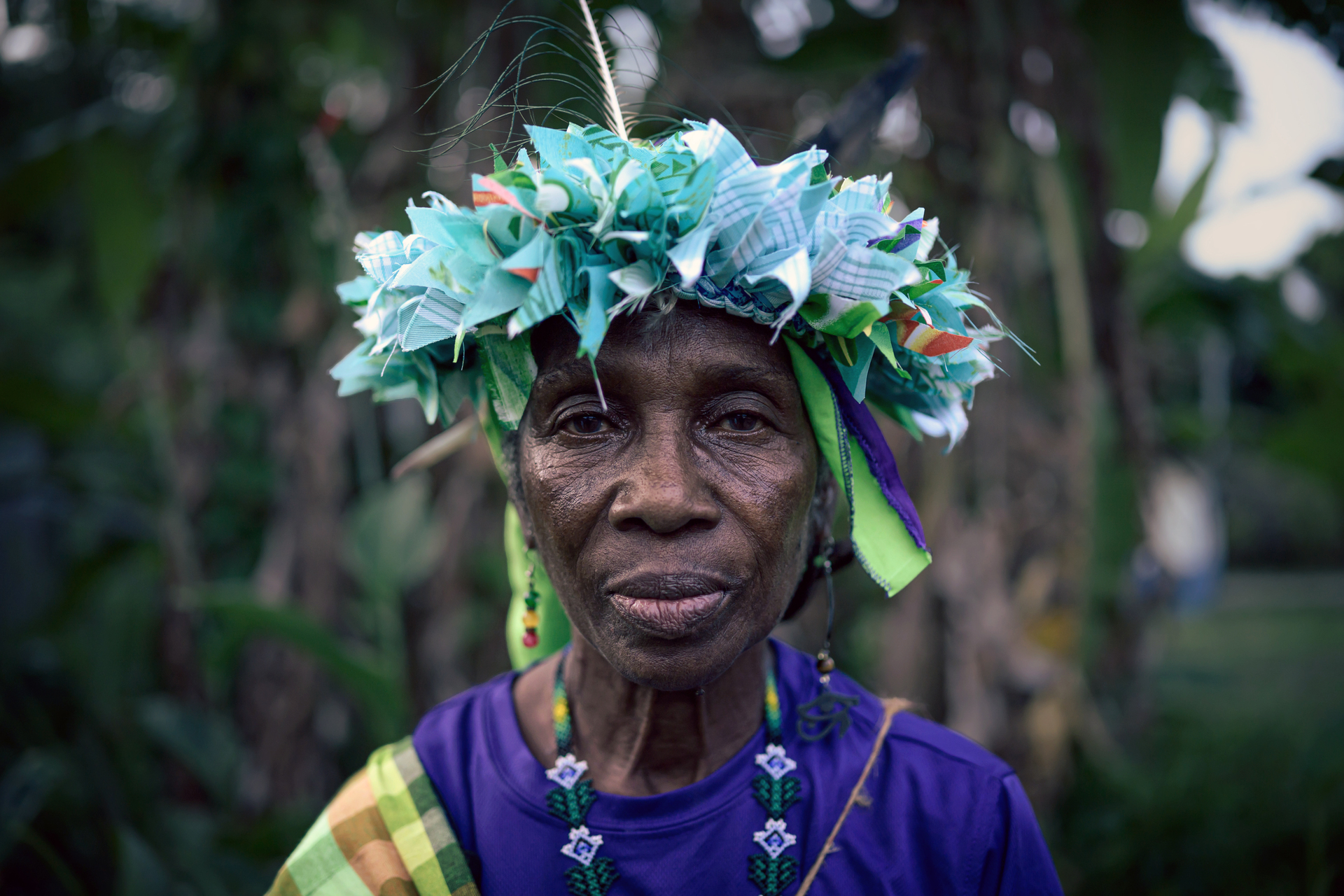
One by one, as MaMa G and Maroon delegates sang and played drums in call and response, guests and community members lined up to speak words into the yabba. Then, in procession, all walked to the Charles Town River, where MaMa G gave offerings of honey and fruit to Mami Wata, the water spirit, poured the sacred water from the yabba into the running current, and blessed its journey to the Caribbean Sea.
The commingling of fresh and sea water signified a unification that was doubled in a tree planting ceremony led by MaMa G. A small sucker of the Charles Town community breadfruit tree, destroyed last year by Hurricane Melissa, was chosen.
Known as the ʻulu tree in Hawaiʻi, the breadfruit tree originated in Tahiti centuries ago, and its fruit has become a major source of food wherever it is planted. The Indigenous and supporting delegations blessed this young tree, alternatively sprinkling powdered bissy (kola nut), cinnamon, and chocolate, and fertilizing with dry leaves. As the tree was placed in the prepared earth, Dr. Kamai honored those Pacific-Caribbean connections with a traditional dance from the Tahitian island of Ra’iātea, inviting others to join in. At the end of the song, participants took turns pouring out and sprinkling the blessed water over the tree, to encourage its new life, and to honor the connectedness of the land and seas, as our indivisible habitat and collective trust.
Text by datejie cheko green