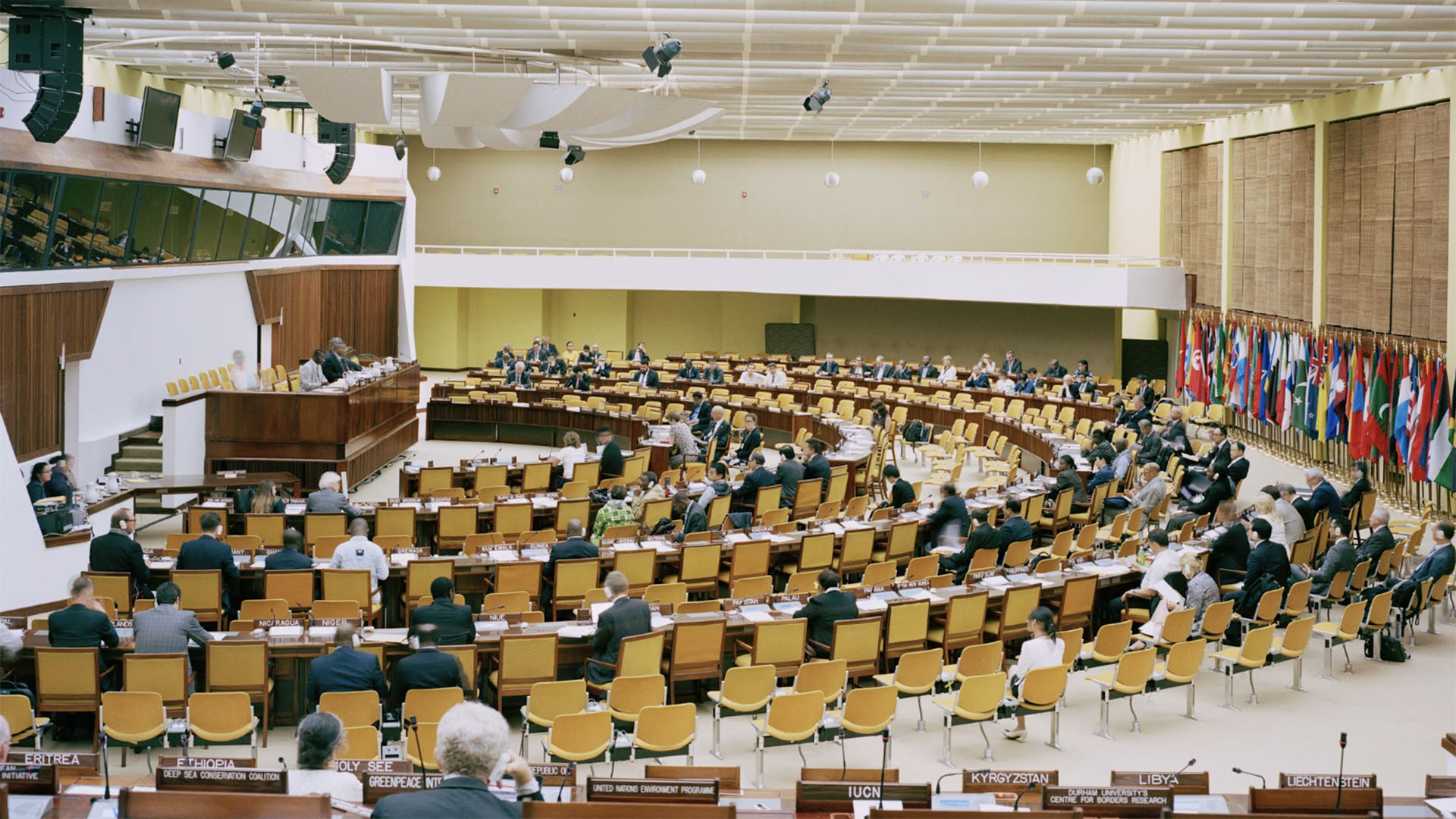

TBA21 at the 31st Session of the International Seabed Authority
Kingston, Jamaica
27 July – 31 July 2026

The 31st Session of the International Seabed Authority (ISA), an intergovernmental body focused on regulating activities related to the seabed and ocean floor beyond national jurisdiction—including the contentious issue of deep-sea mining—is taking place in Kingston, Jamaica, between June 29 and July 31, 2026, with the Assembly on July 27–31.
What is at stake in 2026?
The 31st International Seabed Authority (ISA) session is a turning point for global ocean governance. The primary stakes are whether nations can finalize the Mining Code to regulate deep-sea mining, or if the deep ocean will be opened to commercial exploitation before strict environmental protections are in place.
In 2025, the United States declared deep-sea mining a national priority, driven by the need to secure critical mineral supplies and counter China’s growing influence in the sector. Through the National Oceanic and Atmospheric Administration (NOAA), the U.S. now allows companies to apply for mining permits directly under domestic law, bypassing ISA oversight. This approach risks undermining the multilateral system and has sparked tensions at the ISA, where international regulators are pushing back against U.S.-backed companies. The U.S. remains the only major global economy not part of the ISA, a consequence of its longstanding refusal to ratify the United Nations Convention on the Law of the Sea (UNCLOS), the treaty that established the Authority.
What is TBA21’s role?
TBA21 has held Observer status at the ISA since 2017—using its position to advocate for a ban on deep-sea mining, emphasize the importance of cultural connections to the sea, and support local and Indigenous communities that have long opposed the exploitation of the seabed. As an Observer, TBA21 can make plenary interventions during the Assembly—lending its credentials for the 2026 annual assembly to Indigenous leaders and First Nations—namely, Maroon and Taíno leaders from Jamaica, as well as First Nations representatives active at the ISA. As a mechanism of access, the Foundation’s role is to open the door and step aside: to aid in the historically lacking institutional access to international regulatory debates for Indigenous leaders and coastal community representatives, who carry deep knowledge of the Ocean we all live with.
At the 31st Session, the intervention will be made by Gaa Mang Gloria “MaMa G” Simms - Paramount Queen/Chieftainess of Diaspora Maroons, and Kasike Kalaan Nibonrix Kaiman, appointed chief and medicine man (Behike) of the Yukayeke Yamaye Guani (Jamaican Hummingbird Taino People), representing the Maroon and Taíno communities of Jamaica.
Off-site program
Ahead of the plenary intervention, a Pacific Island and Jamaican Indigenous Cultural Exchange took place on Sunday, July 19, 2026, in Charles Town Maroon Village in Portland as a full-day community-to-community exchange led by the Maroon community. Gaa Mang Gloria Simms ("MaMa G") and Kasike Kalaan welcomed Solomon Pili Kahoʻohalahala (“Uncle Sol”) and the Hawaiian Indigenous Delegation to Charles Town ahead of the political Assembly, fostering deeper connections and mutual learning between the Pacific and the Atlantic.
On Saturday, July 25, 2026, TBA21 TBA21 and the Institute of Jamaica co-host the Underwater Cultural Heritage reception following the Deep Sea Dialogues organized by IUCN, Oceano Azul, and the Dona Bertarelli Foundation. This reception will explore the wider cultural dimension of the deep sea with the Honorable Olivia Grange, Minister of Culture, Gender, Entertainment and Sport; Leticia Reis de Carvalho, Secretary-General of the International Seabed Authority (ISA); TBA21 Director Markus Reymann; Clement You Mulalap, Legal Adviser of the Permanent Mission of the Federated States of Micronesia to the United Nations and facilitator of the ISA Council's Intersessional Working Group on Underwater Cultural Heritage; Ambassador of Spain to Jamaica, Antigua and Barbuda, Bahamas, Dominica, and Saint Kitts and Nevis José María Fernández López de Turiso; Solomon Pili Kahoʻohalahala ("Uncle Sol"), Indigenous leader from Maui, representative of the Maui Nui Makai Network, and part of the initiative One Oceania; and Gaa Mang Gloria “MaMa G” Simms and Kasike Kalaan Nibonrix Kaiman, representing the Indigenous communities of Jamaica.