
TBA21 Donation by Francesca Thyssen-Bornemisza

Ministers, distinguished members of the Board, beloved family, members of the press, colleagues, my dear friends,
I have spent most of my life in rooms full of art, and yet this is one of those rare, happy moments when there is no art, but just people that matter!
Thank you for your kind words. I am humbled and overwhelmed.
The announcement here today is more than a donation. It is a commitment that my family has been keeping, in one form or another, for over a century. Borja and I are the fourth generation of our family seized by this passion. My daughter Eleonore is already showing signs of deep appreciation for the arts. It’s either contagious, or it‘s in our DNA!
It began with my great-grandfather, August, who commissioned Rodin to create a number of sculptures, and came away with seven masterpieces, six of which are in this museum today. My grandfather Heinrich built the gallery at the Villa Favorita in Switzerland to house his extraordinary collection of old masters. When he died, the collection was sadly divided against his dream of continuity, among his four children, and my father, then just twenty-six, was devastated by the empty frames on the wall and the thought of it being scattered. He spent the next fifty years reassembling it, through dealers and historians and restorers, and, more than once, through priests.
Through my mother, he found his way to German Expressionism, more by necessity than design—it was what he could afford at that time—and later that taste widened into the Avant-Garde, the Impressionists, Classic Modern masters, as well as the Hudson River school. He built something extraordinary in its own right. In 1975, he showed his modern art collection for the first time in Germany. Then he took it further: a traveling exhibition from Washington to San Francisco, then on to Australia, New Zealand, and Japan, where my own education began traveling alongside him.
Later, together with Tita, who was his most enthusiastic supporter, came a pivotal era of Cold War diplomacy. An exhibition exchange was brokered between his private collection and the Soviet state collections, which was truly groundbreaking. Works were sent to Moscow, Leningrad, and Kyiv in exchange for masterpieces from the Hermitage and the Pushkin state collections. It was an act of cultural diplomacy that transcended all boundaries at the height of the Cold War, embodying their dream of world peace.
Each generation of my family collected differently. My father taught me that a collection is not a possession, but a dialogue with the world, held only briefly, in trust. Tita understood this when she fought to bring the collection to Madrid, over offers from Germany, the UK, and the United States, a decision we children endorsed without a moment's hesitation. Continuity is the thread that runs through every generation's very different way of collecting.
But when a family has built something of this magnitude, there is only one honest question left to ask: what next?
My answer began quietly, eight years ago, when this museum and TBA21 first started working together on a program of exhibitions drawn from the TBA21 Collection. It took further shape in 2023 with Organismo, an experimental research program built together with the team of the museum: artists, scientists, scholars, and communities from Madrid working side by side, not to produce an exhibition, but tangible prototypes for ecological, social, and cultural reparation. It showed both institutions something neither could have shown alone—that a museum can be a place where citizens don't only look at the world, they work on it, together.
That is why my dream today is not only to bring our collection into this museum, but to give it a home worthy of what two decades of TBA21's methodology have already proven possible. The Palacio de Hielo, dormant for twenty years, reawakened as accessible civic infrastructure for the people of Madrid. Nearly doubling this museum's footprint, it offers room not for more art alone, but for what a museum should host, produce, and be today—assemblies, prototypes of possible futures, and a public with a real stake in what happens inside these walls.
TBA21 was created as an institution to do exactly this kind of work. It's not just a collection. Within the first two years of its existence, we made an unusual decision: we would rather commission a work into being than acquire one that already existed. This is an entirely different engagement with artists, and it means accepting that the outcome may not be what either of us—the artist or the commissioner—had imagined.
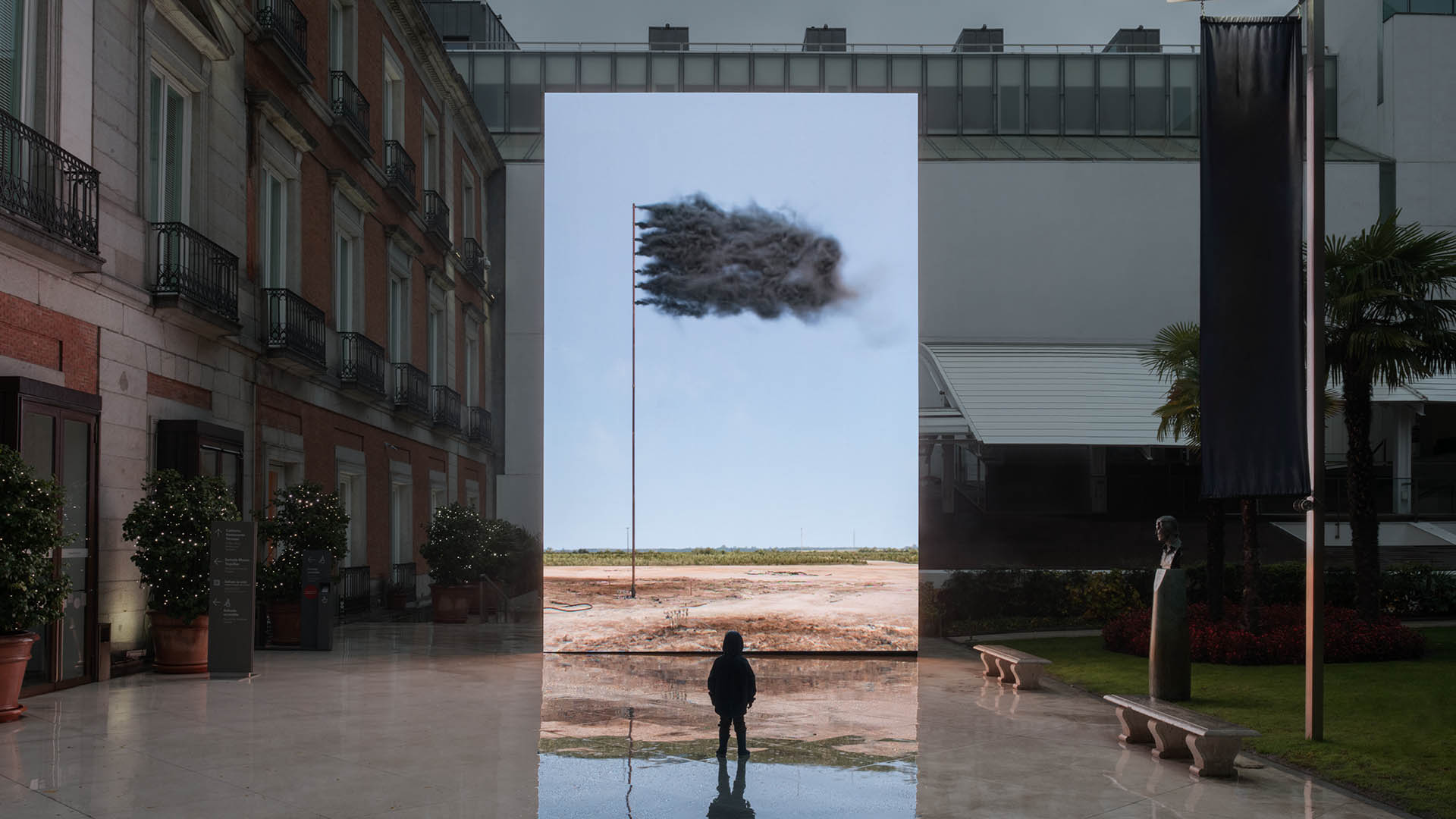
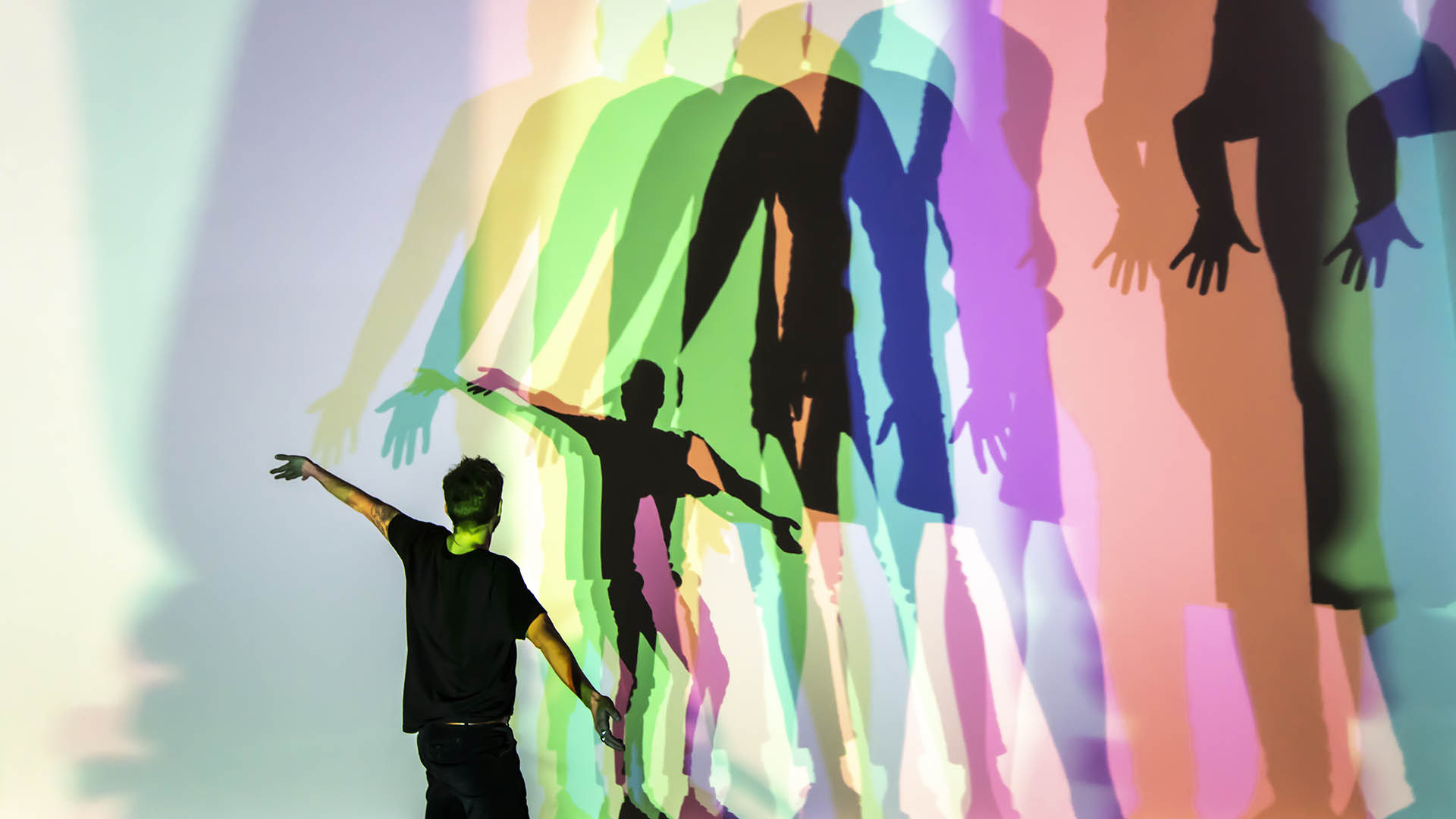
Over more than two decades, that decision has produced a practice: commissions built through years-long relationships rather than single transactions. It has meant long-term collaborations with artists including John Akomfrah and Ólafur Elíasson, Janet Cardiff and Joan Jonas, whose work speaks directly to the current moment, to science and to policy, in places where the stakes are not theoretical.
The Museum’s collection is a record of how the West once saw the world, across seven centuries. TBA21 is a living record of how the world sees itself now, through ecological thought, oceanic knowledge, indigenous cosmologies, and political ecologies. With this gift, those two records come together into the same institution. I do not see them merged into one smooth chronology. I would prefer them held in tension.
We owe this to our children and grandchildren, three of mine are here with me today, just as this museum was itself, an intergenerational commitment when it opened its doors in 1992, nearly thirty-five years ago. If my great-grandfather's generation asked what art could show us about beauty, and my father's asked what art could do for peace between nations, ours is asking what art can do to help us imagine, together, ways of living well collectively on a rapidly changing planet.
I am deeply grateful to the entire team of TBA21, above all our directors Rosa Ferré and Markus Reymann, who worked tirelessly to bring this project to where it stands today. I also want to thank especially Daniela Zyman, who was instrumental in building the TBA21 Collection and has been with the foundation from the very beginning, as well as Chus Martínez, who was central to our presence and landing in Madrid. Thank you to all the other curators, who have contributed to the unique outlook of our collection. And, especially, to all the artists we have had the privilege of working with over the years. Thank you.
To Evelio Acevedo and Guillermo Solana, whose collaborative spirit over these seven years has known no limits. To the Minister of Culture, Ernest Urtasun Domènech, and the Secretary of State, Jordi Martí Grau, for their trust and their vision. And to the Minister of Finance, Arcadi España García, for even considering parting with the Palacio de Hielo, twenty years dormant, and about to be reintegrated into the cultural and social fabric of the neighborhood and the city.
Last, my family, whom I love dearly. My parents, whose seventieth wedding anniversary falls tomorrow. My children, Gloria, Ferdinand, and Eleonore, who brought with her my third grandchild, Cosima, prove that this, too, is a family tradition. My brothers, Lorne, who could not be here, and Borja, with his wife, Blanca, whose support has been genuine and steadfast throughout. And Tita, who has given most of her life to this museum, and without whom none of us would be standing here.
Thank you.
—Francesca Thyssen-Bornemisza