Cristian Vargas Paillahueque is an art historian and curator with a BA in Art History and Theory and an MA in Latin American Studies and is currently a PhD candidate in the same field at the Universidad de Chile. His main fields of research are the study of collections, Indigenous heritage, and traditional and contemporary Indigenous art. He has organized a number of exhibitions, including Kalül ñi tukulpan. Memorias del cuerpo mapuche at the Centro Cultural de España in Santiago (2021), Miradas sobre el Wallmapu. Territorios, afueras y disputas at the Museo Nacional de Bellas Artes de Chile (2023–2025) and Fugas de lo nuestro. Visualidades indígenas de sur a norte at the Museo de la Solidaridad Salvador Allende (2024). In recent years, he has been general coordinator of the catalogue raisonné project at the Museo Chileno de Arte Precolombino (2023–2024) and curator of the exhibition titled Vivos y Presentes. Arte de los Pueblos Atacameño/Lickanantay, Mapuche y Rapanui (2025–2026).
Daniela Catrileo is a writer and philosophy professor with an MA in American Aesthetics. She is the author of the poetry books Río herido (2016), Guerra florida (2018), Las aguas dejaron de unirse a otras aguas (2021), and El territorio del viaje (2022); the anthologies Todas quisimos ser el sol (2023), Un puñado de almendras (2025) and Soñamos con cetáceos. Poesía reunida (2016–2026); the narrative works Piñen (2019) and Chilco (2023); and the nonfiction volume Sutura de las aguas. Un viaje especulativo sobre la impureza (2024). Her distinctions include the Municipal Literature Prize of Santiago (poetry category, 2019), the Best Literary Works Prize from the Chilean Ministry of Cultures, Arts, and Heritage (short story category, 2020), the Municipal Prize of Santiago (novel category, 2024), and the Marta Brunet Latin American Short Story Prize (2025).
Elisa Loncon Antileo is a scholar in the Department of Education at the University of Santiago, Chile. She holds a PhD in Humanities from Leiden University, a PhD in Linguistics from the Pontifical Catholic University of Chile, and a Master’s degree in Linguistics from the Metropolitan Autonomous University in Mexico. In 2021, she was elected President of Chile’s Constitutional Convention after being elected as a constituent representative of the Mapuche people. That same year, Time named her one of the 100 most influential women, and the Financial Times included her among the world’s 25 most influential women. She also received the René Cassin International Human Rights Award in recognition of her commitment to human rights. In 2024, she received the Coppieters Award for her advocacy of diversity and democracy, and in 2025, she was elected to the University Council of the University of Santiago, Chile. Her research focuses on interculturality, Indigenous languages, and Indigenous ontologies. She has authored numerous academic articles on Indigenous languages, Indigenous peoples, and intercultural education, as well as studies on cultural colonialism and Indigenous ontology in Pewenche communities in the Upper Biobío region. Her books include Azmapu: Contributions of Mapuche Philosophy to the Care of the Lof and Mother Earth (2023) and Txayenko: Autobiography (2023).
Ximena Cuadra Montoya is a sociologist, academic, and socio-environmental activist. She is currently Director of the School of Sociology at the Catholic University of Maule in Chile. She holds a PhD in Political Science and a master’s degree from the Université du Québec à Montréal, as well as a master’s degree in Sociology from the University of Barcelona. She is a member of the Environmental Rights Action Network (RADA), a community-based organization that promotes environmental justice in Wallmapu, Mapuche territory. She currently leads the Fondecyt Initiation Research Project 11260923 (2026–2029), which examines the processes, discourses, and practices through which electricity companies engage with local communities in Chile in the context of the energy transition. Her research interests focus on the social and political phenomena associated with environmental conflicts, the energy transition, and Indigenous issues, drawing on participatory, praxiological, and situated research methodologies.
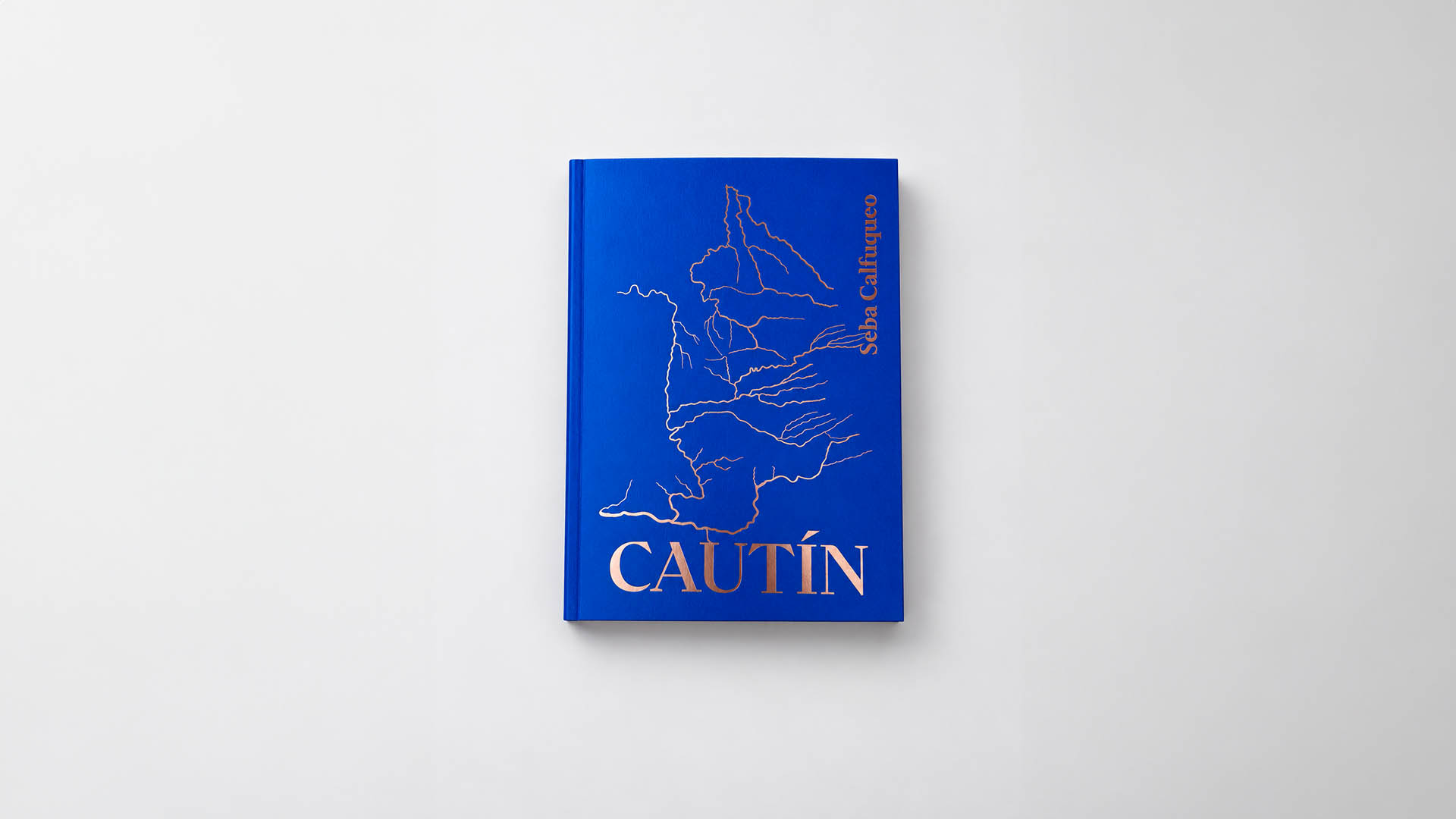
Marina Avia Estrada is head of exhibitions and public programs at TBA21 Thyssen-Bornemisza Art Contemporary. She is an art historian and curator and holds an MA in Critical and Curatorial studies from Columbia University (Fulbright Scholar) and an MA in Contemporary Art History and Visual Culture from the Autonomous University of Madrid. She has previously worked at institutions such as IPCNY (International Print Center New York), the Wallach Art Gallery, Tabacalera Promoción del Arte, and AECID (the Spanish Agency for International Development Cooperation). She recently co-curated for TBA21 the exhibition Moby Dick—The Whale. The Story of a Myth from Antiquity to Contemporary Art (Palazzo Ducale, Genoa, 2025) and is the curator of the exhibition CAUTÍN by Seba Calfuqueo (Museo Nacional Thyssen-Bornemisza, Madrid, 2026).
Sebastiana (Seba) Calfuqueo (Santiago de Chile, 1991) is a Mapuche trans artist whose practice questions the mainstream narrative created by colonial processes and their impact on contemporary Indigenous and Western societies. She is a curator at Espacio218, member of the Mapuche collective Rangiñtulewfü, and Yene magazine contributor. Her work has just been recognized with the Focus Stand Prize at Frieze New York 2026. She has also received widespread international recognition, including the Cuervo Prize at Zona Maco (2024), awards from Fundación Ama Amoedo (2024) and Fundación FAVA (2018), and an Eyebeam Fractal Fellowship (2020). She has been a guest artist at the Venice Biennale (2024), the Whitney Biennial (2024), the São Paulo Biennial (2021), the Mercosul Biennial (2020), and the Paiz Art Biennial (2025, 2020). Her work can be found in the Tate Modern (United Kingdom), Centre Pompidou (France), Denver Art Museum (United States), Museo MALBA (Argentina), TBA21 Thyssen-Bornemisza Art Contemporary, KADIST Collection (France), Museu de Arte Contemporânea do Rio Grande do Sul (Brazil), Museo Nacional de Bellas Artes (Chile), and MAC (Chile), among other major international collections.