

No amount of adaptation will save us.
Climatologist Lučka Kajfež Bogataj calls for a renewed water literacy

Dr. Lučka Kajfež Bogataj is one of Slovenia’s pioneers in climate change research, a long-standing member of the UN Intergovernmental Panel on Climate Change (IPCC), and a joint recipient of the Nobel Peace Prize, which the IPCC was awarded in 2007 for its efforts to raise public awareness of the fatal consequences of atmospheric warming. Focusing her research on the impact of the climate crisis on humans and plant agriculture, she is also a prolific author and a prominent voice in international climate policy discussions.
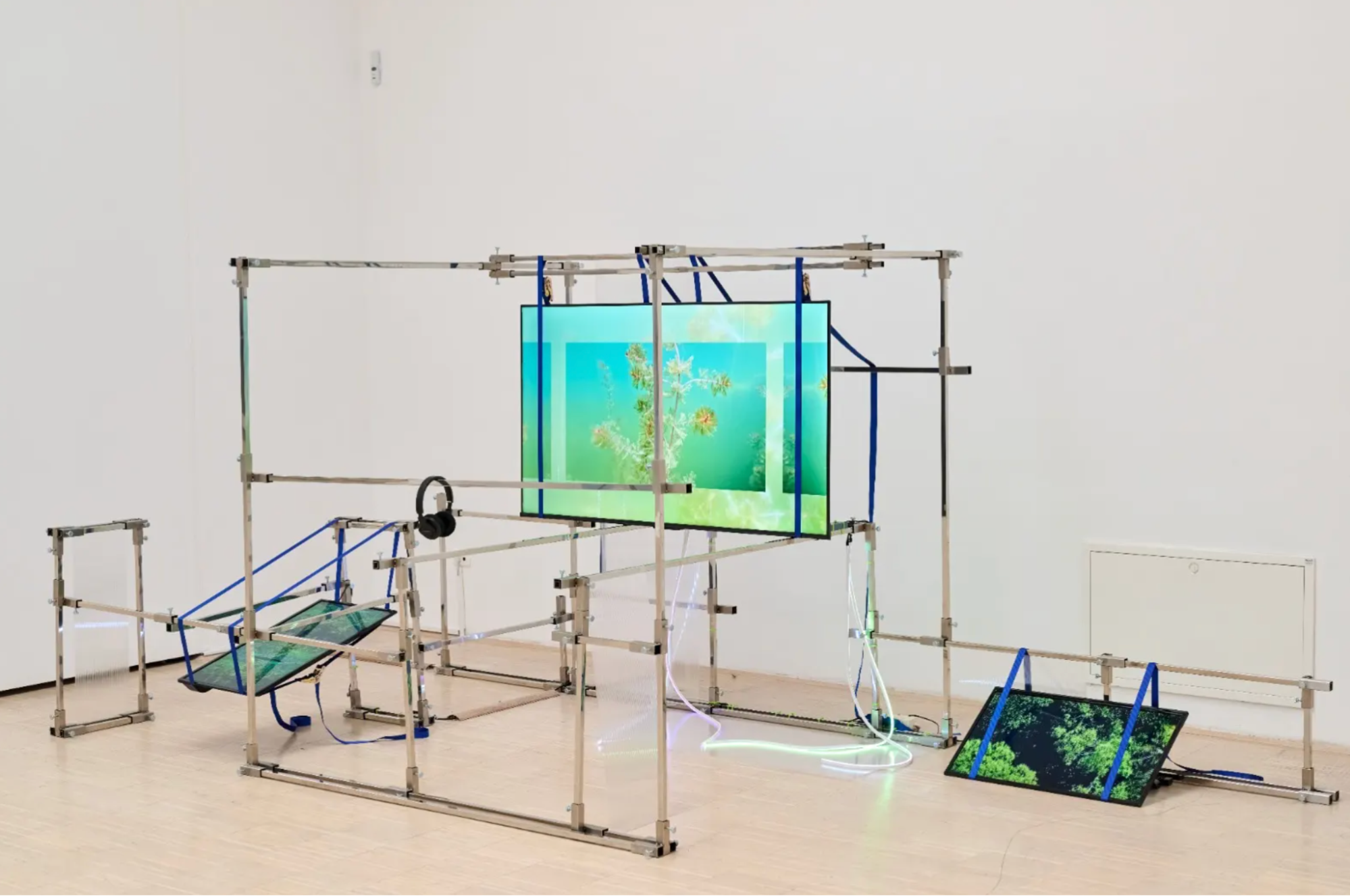
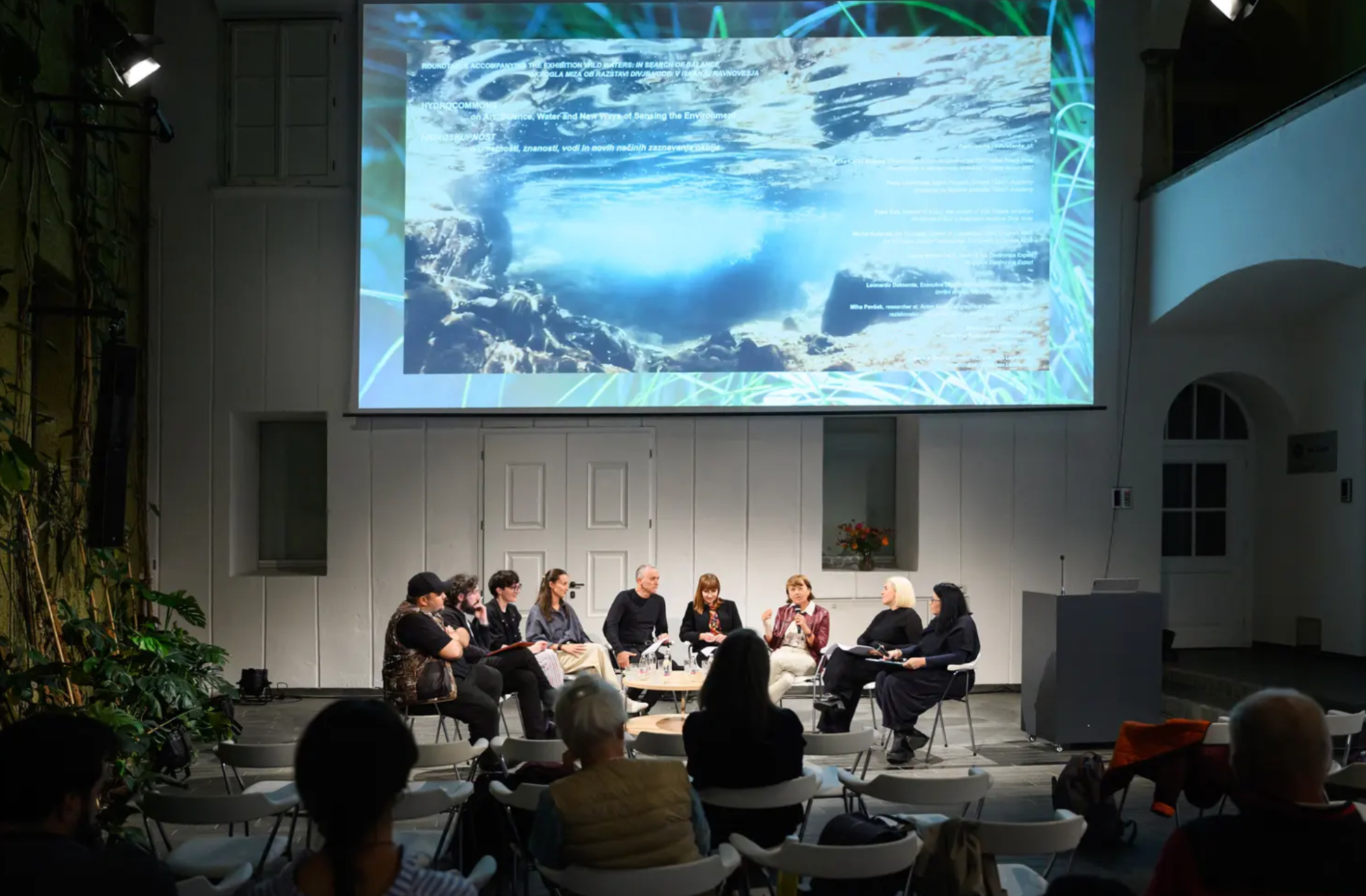
This interview was conducted in the context of Shadows Above My Window, Robertina Šebjanič’s Ocean-Archive.org Digital Residency. Šebjanič invited Kajfež Bogataj, both a world-renowned expert and well-known ally of the watery worlds, to speak at the symposium Hydrocommons, organized at the Research Center of the Slovenian Academy of Sciences and Arts in Ljubljana, as well as at an online event celebrating the release of the video essay Shadows Above My Window.
Drawing on these conversations, Kajfež Bogataj expands on the cultural capital of water in contemporary time, the challenges of planetary governance and the role of civil society in holding a mirror to power. A firm believer in the power of narrative and imagination, she calls for a new water literacy that bridges art and science without shying away from radical change in structural accountability.
Interview conducted by Katarina Rakušček
In the texts accompanying the exhibition Wild Waters. In Search of Balance at the Museum of Modern and Contemporary Art Koroška, there is a great passage of yours in which you note that water is losing not only its economic but also its cultural capital. Why do you think this loss is happening? How can we reignite it?
LKB: Rituals connected to water are common to all world cultures. Water is the impetus for birth and life; it features in numerous creation myths and symbolizes birth and reincarnation. Water ritually cleanses the body as well as spiritual transgressions, and bathing in sacred waters is even believed to cure illnesses.
Yet in today's consumerist society, water has been reduced to a mere commodity or an industrial input. Worse still, we have confined it to pipes, concrete channels, and plastic bottles, thereby severing our everyday connection with it. We no longer know which spring our drinking water comes from, where it is treated, or where it flows away. Water is no longer a gathering place. Once, village wells, washing streams, and riverbanks were the very heart of community life. What is even more alarming is that in the public consciousness, water increasingly exists only as a threat and a source of fear during extreme weather events, rather than as an ally and a source of life.
Therefore, we must bring water back into our visible space. We must open up access to streams, rivers, and public drinking fountains. When you see, hear, and feel water in a park or a town square, it once again becomes part of your daily life and shared identity. We need a new "water literacy" that views water as the living bloodstream of the planet and as an integral part of each of us. We must bridge science and art. Art, literature, music, and the local stories of older generations can re-embed water into our culture and collective memory. When water is recognized as a shared heritage for which we are all responsible—rather than property to be exploited at will—our cultural attitude will shift as well. After all, people only protect what they know, respect, and feel is a part of themselves.
You have been a member of the IPCC for 16 years and have served as Vice-Chair of Working Group II, "Impacts, Adaptation and Vulnerability," in the preparation of the IPCC's Fourth Assessment Report, a landmark report that focused on linking human activities directly to global warming. For this, the IPCC, and you with it, have been awarded the Nobel Peace Prize. It's truly astounding work. How do you reflect on the changes in collective consciousness since that time? A 2026 study in Germany showed a notable increase in climate skepticism in the past couple of years[1], and this is not an isolated trend. What is happening?
LKB: The year 2007, when we received the prize, was first followed by the financial crisis, bringing recession and shifting attention away from the environment toward reigniting economic growth. Then, in 2015, the Paris Agreement was adopted, which proved difficult to implement. Once again, denying change became a convenient excuse. The European refugee crisis and the COVID-19 pandemic also confronted people with new urgencies, pushing climate concerns into the background. On top of all this came the war in Ukraine and the undeniable rise of right-wing politics to power. The denialism emanating from populist governments is deeply contagious among citizens—from the EU to the US, and beyond.
In part, however, this is also a human defense mechanism—a form of psychological denial when the truth becomes too uncomfortable. As long as climate change remained something abstract—affecting polar bears or future generations—people found it easy to support climate action. Yet the moment the transition requires altering our comforts, how we heat our homes, travel, and consume, fear and anger emerge. Inevitably, someone always steps in to offer people false comfort: "You don’t need to change a thing; the scientists are exaggerating."
Adaptation, mitigation, reduction—how can we balance these strategies in practice? Focusing on adaptation can be a slippery slope in a society of infinite growth, and for reduction to be impactful and meaningful, we have to address root causes such as overconsumption among the Global Minority. What is the role of civil society in this process?
LKB: Adaptation without mitigation is like bailing water out of a boat with a bucket while refusing to plug the hole in the hull. Sadly, that is precisely what the EU is doing at this moment, as the Green Deal is barely even mentioned anymore. If we continue to insist on a model of endless material growth and overconsumption by the wealthiest part of the world, no amount of adaptation will save us—the cost of the damage will simply outstrip our capacities. The proper sequence is clear: first, we must drastically reduce unnecessary energy and resource consumption; next, mitigate emissions by transitioning to renewables; and simultaneously adapt to the changes we can no longer prevent.
This will not happen without pressure from civil society. Politics is trapped in four-year electoral cycles and fears unpopular measures, while business is fixated on quarterly profits. It is civil society—from youth, scientists, and local initiatives to cultural workers—that holds a mirror up to those in power, asks uncomfortable questions, and proves that it is possible to live well with fewer material possessions, yet with more community, time, and a clean environment.
In an interview, you mentioned that prediction played a big role in your becoming a climate scientist. So I first want to ask about climate modeling—what has changed in climate modeling in recent years as computational capacity has grown immensely through AI, while the resources and energy these models require have skyrocketed as well?
I am curious about your view on projects like the Digital Twin of the Ocean—a mediated representation of the largest body of water on the planet. Can these models aid disaster risk management, or would resources be better spent on concrete mitigation strategies?
LKB: Modeling is the core of modern physical research. On one hand, it reflects our advancing knowledge and understanding, merging them with progress in computing and measurement techniques. Climatological models were already remarkably robust around 1990, and their results were astonishingly accurate. Thirty years later, we are already experiencing their predictions firsthand.
Today, thanks to artificial intelligence and satellites, we possess vast amounts of data and extraordinarily precise forecasts—which is excellent for early warning systems ahead of natural disasters, where lives can be saved. However, two things concern me. First, data centers and AI themselves consume massive amounts of electricity and water for cooling—meaning that at times, the very technology we use to study the crisis actually deepens it.
Second, projects like the Digital Twin of the Ocean are fascinating, yet they sometimes serve as an alibi for inaction. We do not need a perfect digital replica of the ocean to know that we must stop warming it, acidifying it, and choking it with plastic. Digital tools should serve as an aid in protecting people, but they must not siphon away the funding and attention we urgently need for tangible nature conservation in the real world.
On the topic of governance structures and international cooperation, the symposium that you have taken part in in Ljubljana discussed the idea of the hydrocommons, of water as planetary commons. What would it take to take this idea seriously in political legislation?
We are conducting this interview while COP31 is taking place in Antalya. Last year's conclusions were disappointing in terms of actionable outcomes. Are you hopeful for this year?
LKB: To seriously treat water and the atmosphere as a common good (commons) in legislation, we would need to transform the very foundations of our legal systems, which currently prioritize property and national borders. Yet nature knows no borders—a river flows through multiple countries, and moisture evaporating from the Amazon rainforest falls as rain thousands of kilometers away. We need a legal framework in which states are no longer the absolute owners of the resources within their territory, but rather their stewards for future generations and for the ecosystem itself.
As for climate conferences, such as this year’s COP31, it is difficult to speak of optimism. The climate summit in Antalya acted as a mirror reflecting today’s geopolitical reality. The erosion of the international order, double standards, and short-sighted power politics have come to dominate climate diplomacy as well. The failure in Antalya exposes a profound lack of empathy and a blindness to the fact that we are all in the same boat on this planet. The COP process is ripe for radical reform. Consensus-based decision-making, which grants veto power to the biggest obstructionists, should be replaced by a qualified majority of states representing both the majority of the population and of emissions, while finally curbing the influence of fossil fuel lobbies.
At its core, the climate crisis is a problem of inequality and the distribution of power. Addressing climate injustice requires a shift toward structural accountability—rewriting the rules of the global economy so that preserving the planet and human lives becomes more economically rewarding than destroying them. So far, climate justice is being addressed far less radically. Climate reparations are channeled through the Loss and Damage Fund, to which wealthy nations—historically the largest polluters—contribute woefully little, falling far short of actual needs, and persistently imposing loans instead of grants.
After the devastating floods in Slovenia in 2023[2], you noted that in the efforts to regenerate the flooded areas, money was not the issue; rather, nobody knew what to do. “Should we build in the same place, rebuild the houses, rebuild the schools, the factories, and just wait for next September when this might happen again? Or should we move whole villages, towns out of that area?”[3] So I want to ask a two-pronged question, not only about risk mitigation, but about climate action more broadly: on the one hand, there seems to be a crisis of imagination, and on the other, a crisis of literacy. How can we address both of these problems?
LKB: Yes, where we get stuck is in how to understand expertise and science (literacy) and how to envision a new world on that foundation (imagination). The 2023 floods revealed just how trapped we are in old grooves—and that despite decades of warnings from climatologists, we had prepared no plans, not even a Plan A, let alone a Plan B. When disaster strikes, our first reflex is: "Let's rebuild everything exactly as it was before, and as quickly as possible." This is a crisis of imagination—we are unable to envision a different spatial layout, a retreat from the river, a different kind of architecture, or coexisting with water by giving it room to spill over where it causes no harm.
On the other hand, we face a crisis of scientific and spatial literacy. We have forgotten how to read the landscape. People have built over torrential ravines and floodplains because they no longer understood why houses were never built there in the past. To make matters worse, spatial planning has been hijacked by the interests of capital.
Both problems can only be solved through education—from primary schools to mayors and urban planners. We need modern science paired with a pinch of our ancestors' wisdom, who knew where space belonged to water and where it belonged to humans. We also urgently need spatial and social experiments—"living laboratories"—that awaken the imagination and show people that a different world is possible today: cities where asphalt is replaced by trees and aquatic biotopes, or neighborhoods with community energy and riverside parks that safely retain water during floods. The arts and humanities can also open up space for new narratives. Writers, architects, designers, and musicians are the ones who can sketch a new image of the world—a world that is neither grey nor ascetic, but rich in relationships, culture, and coexistence with nature.
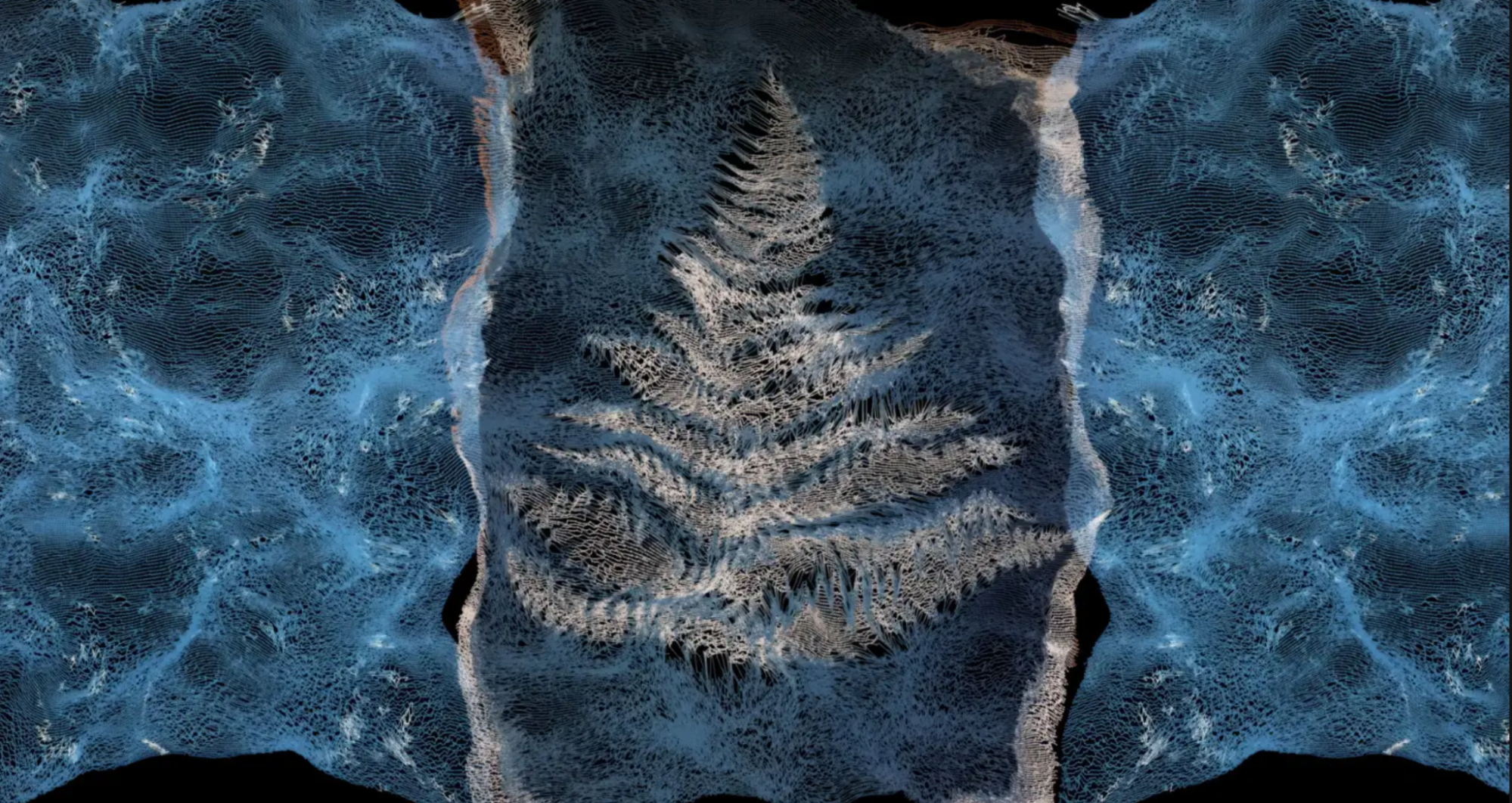
You mentioned in an interview that art is crucial when it comes to science communication, because the message has to get out there, and art may have fewer limitations in doing so. How do you reflect on the collaborations of art & science now? We are talking in the context of an artistic project, Robertina Šebjanič’s Shadows Above my Window, which explores the interconnection of water, the atmosphere, and more-than-human life through environmental change, mythology, and listening. What was your experience of Robertina’s artistic practice?
LKB: Collaborating with Robertina has been both instructive and invaluable to me. She does not remain merely on the surface of raising awareness, but literally goes into the depths—she truly listens to the underwater world and the atmosphere, reminding us of our fellow travelers on this planet. Art possesses the wonderful power to translate scientific facts, which can seem cold and distant, into a sensory experience. We humans need to hear it and feel it on our own skin so that the environment touches us in a completely different way than a graph in a report ever could.
One part is the message; the other is material practice. Efforts to be more sustainable, travel less and better, and use materials with less impact on the environment. I like what you said about knowledge of chemistry, physics, and mechanical engineering being essential for sustainability.[4] We could also add local ecological knowledge; in any case, as you put it, most faculties of fine arts are not very keen on these knowledges, so interdisciplinarity here can help in a very concrete manner. As you’ve framed it, “throughout history, art was always responding to what happened in society. Art always reflected, on purpose or not on purpose, the circumstances. And we are in the middle of a crisis. So if art actually expresses concern about it, it's only natural for art – that's what art is.” I found this a really beautiful rebuttal to the notion of utilizing art for an environmentalist agenda. Art reflects the crisis. Can it also aid in the solutions?
LKB: I believe that art does not merely reflect the crisis, but can very concretely contribute to solutions. The first crucial part of finding solutions lies in preserving hope, in keeping alive a joy for the living world and for life itself. And second, as I mentioned earlier—art unlocks our imagination, helping us envision a different future in which development replaces growth and progress does not mean the destruction of nature. We must be careful, however, that it does not devolve into didactic propaganda. At the same time, it is vital that art and natural science meet again in practice: just as Renaissance artists understood physics, chemistry, and the nature of materials, we too must unite different forms of knowledge today so that our creative work is environmentally conscious and genuinely carries a message of hope and responsibility.
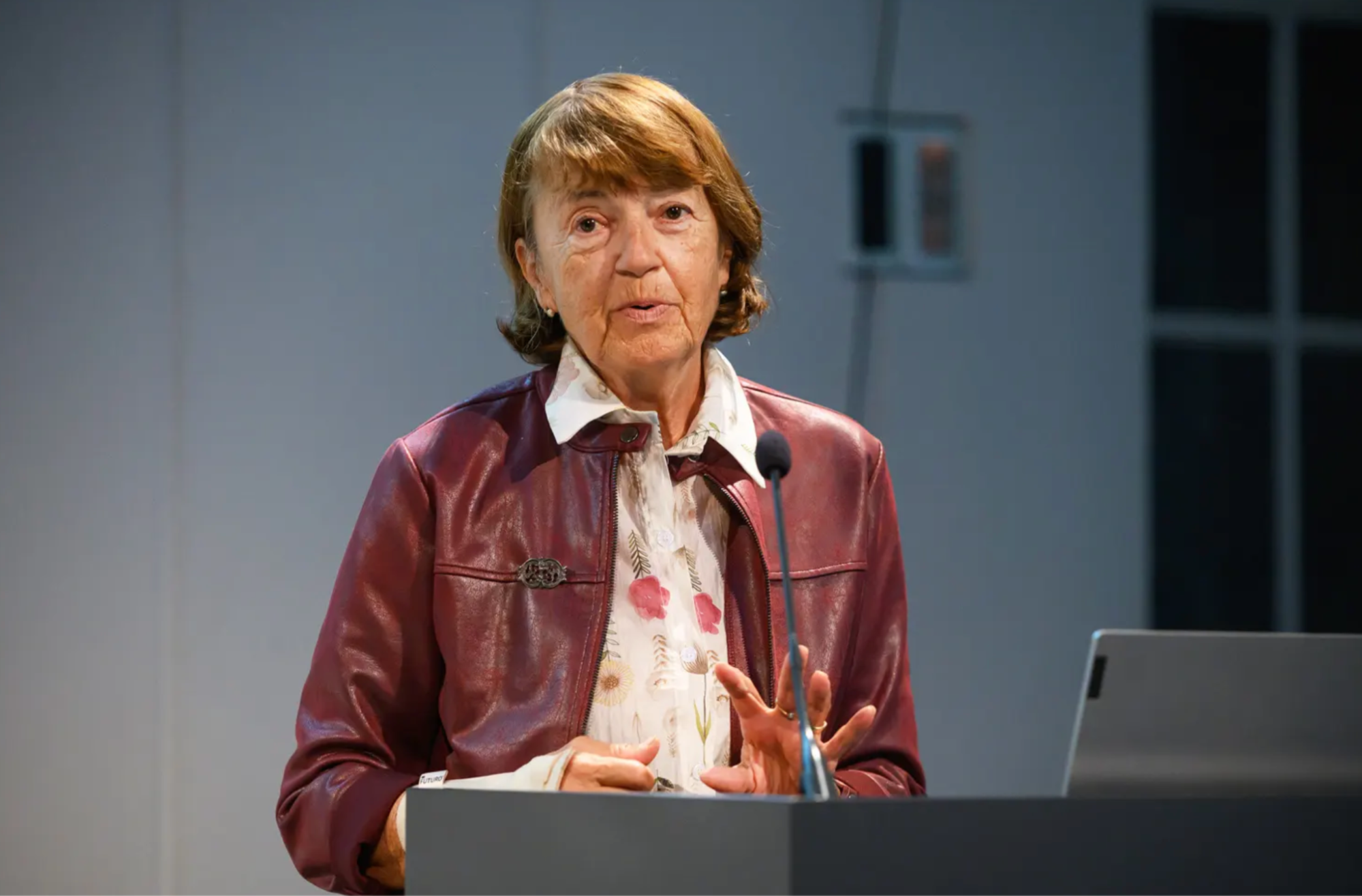
Dr. Lučka Kajfež Bogataj is one of Slovenia’s pioneers in climate change research. She is a full professor and teaches at the Biotechnical Faculty in Ljubljana, while also lecturing at the Faculty of Mathematics and Physics and at the Faculty of Architecture. Since 1996, she has headed the Center for Biometrology at the Biotechnical Faculty. For 16 years now, she has been a member of the UN Intergovernmental Panel on Climate Change (IPCC). In 2007, the IPCC received the Nobel Peace Prize, and thus Lučka Kajfež Bogataj, as part of the IPCC team, became a joint recipient of the Prize. Her research focuses on climate change and applied meteorology, especially the impact of weather and climate change on plant production and humans.