Re-presentations of a People of the South: A Mapuche Film Cycle
Third screening: Identity, Diaspora and Return

17 December 2026 | 19:00 – 21:00

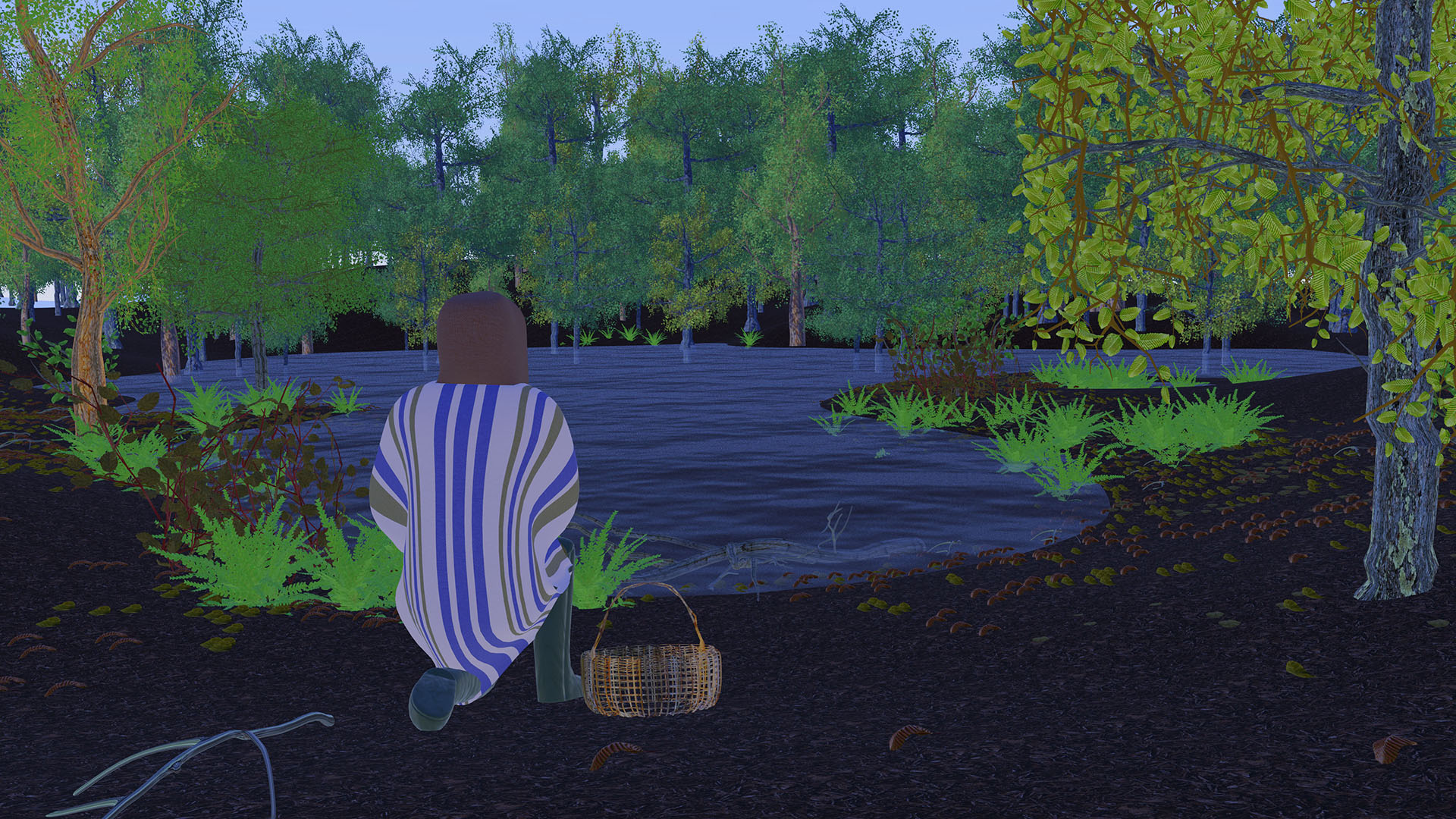
Still from WÜFKO (2019), by Neyen Pailamilla

Curated by Seba Calfuqueo and Ange Cayuman in collaboration with TBA21.


The curatorial approach to Re-presentations of a People of the South: A Mapuche Film Cycle unfolds as a three-act exploration of the historical audiovisual representation of the Mapuche people, both as subjects and as agents of their own narratives. The cycle is part of CAUTÍN, a project by Mapuche artist Seba Calfuqueo, named after the river that flows through Wallmapu, Mapuche territory, from the vast Andes mountain range to the Pacific Ocean. Each screening opens with an audiovisual work by Calfuqueo, whose incisive practice draws on animation and video performance, using her body, voice and movement to engage with contemporary imaginaries of water, memory and our relationship with the world around us.


The final screening, Identity, Diaspora and Return, invites us to consider the journeys away from and back to ancestral territory that have shaped a people forcibly displaced to major cities for economic reasons. It opens with a journey by Sebastiana Calfuqueo, exploring the memory of the land and its vegetation. Neyen Pailamilla examines the relationship between women’s sexuality, the significance of dreams in Mapuche culture and our ongoing dialogue with the landscape of which we are part. José Ancan and Margarita Calfío Montalva portray the everyday realities of diaspora through the story of a young woman reflecting on what it means to be born in a city as Mapuche, and on the possibility of returning south as a way of building her identity. The screening concludes with a feature-length film by Daniel Díaz, who delves into his own family history and the life of his uncle, renowned Mapuche artist Bernardo Oyarzún. The film also explores the complexities of the desire to return to ancestral lands and the use of Mapudungun, the Mapuche language Díaz learned in the city.


Re-presentations of a People of the South: A Mapuche Film Cycle invites audiences to engage with new imaginaries of the Mapuche landscape in all its complexity, bringing together emotions, knowledge and a shared desire for connection.


This project is funded by Fondo Nacional de Desarrollo Cultural y las Artes (FONDART), 2026 Open Call.

THIRD SCREENING:

IDENTITY, DIASPORA, AND RETURN

Date and time: December 17, 7 pm
Venue: Cine Doré, room 2, Madrid
Admission: Tickets available at the box office until capacity is reached. 10% of the venue’s capacity is reserved for visitors wishing to attend without an advance ticket on the day of the event.
Recommended age: All ages
Language: Original version with Spanish subtitles
Screening duration: 1 hour, 39 minutes and 14 seconds


ABOUT THE FILMS

LAS QUILAS (2021), 2 min 30 sec, by Seba Calfuqueo

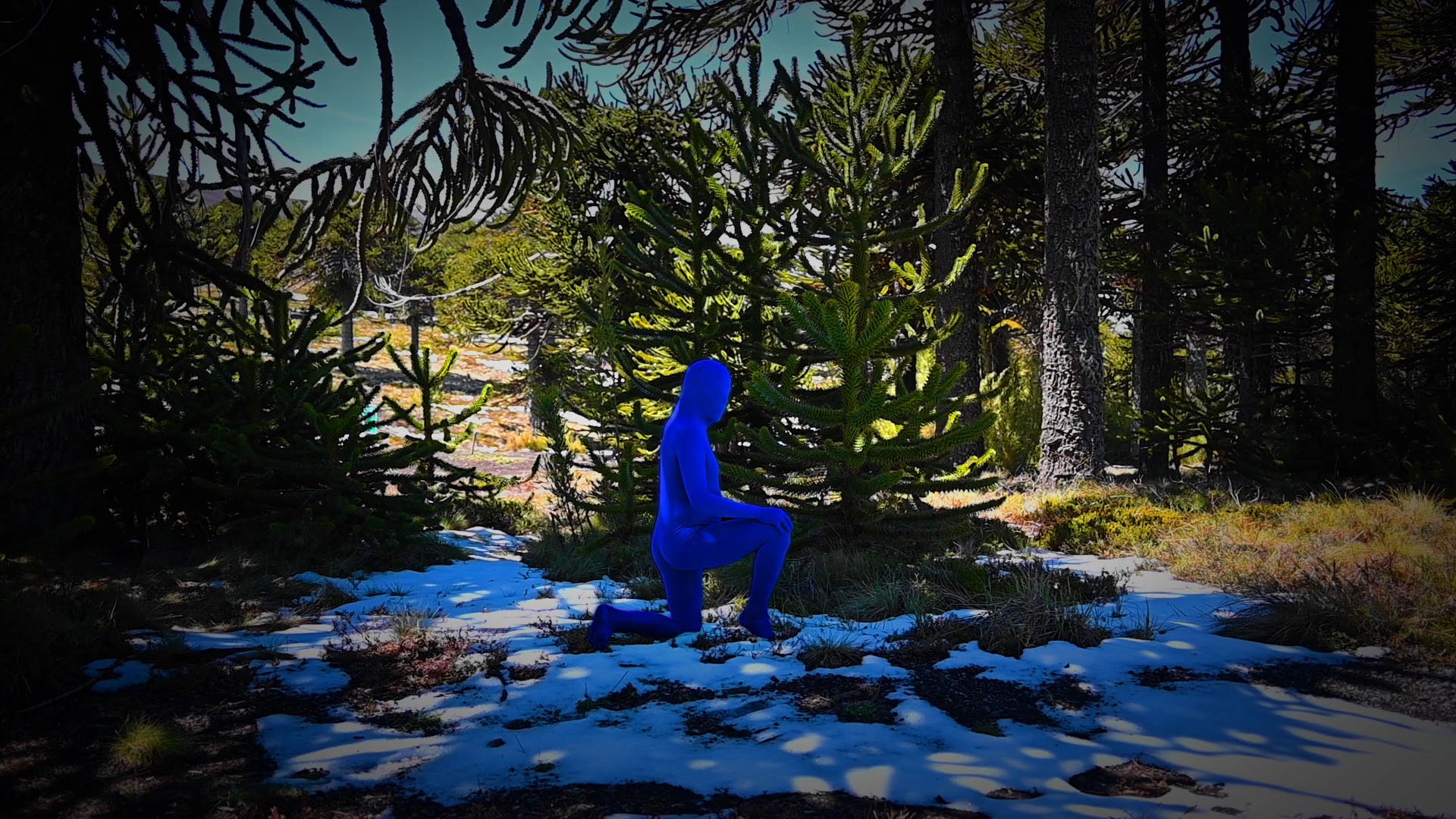
Synopsis: The work explores the relationship between the human body and the quila, a plant native to Wallmapu that is hermaphroditic and bisexual. Its flowering occurs in synchrony with that of other quila plants and signals the end of its life cycle. Quila once formed a natural barrier that helped prevent the colonization of native forests. This video performance challenges the binary logic imposed on nature and bodies, presenting the quila as a source of non-binary possibility.

Language: Sound only, with Spanish text
Format: Video performance


WÜFKO (2019), 3 min 44 sec, by Neyen Pailamilla

Synopsis: As we wander through the native forest, we encounter the wüfko, a natural pool of crystal-clear water surrounded by abundant moisture and lush greenery. An ancient, thick-trunked triwe (laurel) tree takes root on its banks. This is where Gabriela’s dream begins, revealing her deep connection to the land.

Language: Spanish
Format: Video art


REGRESO A LA TIERRA (1994), 25 min, by José Ancan

Synopsis: This documentary explores how young Mapuche people born in Santiago, Chile, construct their identities when their parents have kept their Indigenous heritage from them. The film follows their discovery of their Mapuche identity and the tensions involved in belonging to two cultural traditions.

Language: Spanish and Mapudungun, with Spanish subtitles
Format: Short film


BAJO SOSPECHA: ZOKUNENTU (2022), 68 min, by Daniel Díaz

Synopsis: The practice of “detention on suspicion”—which allowed police to stop and detain people based on their appearance or behavior—led artist Bernardo Oyarzún to portray himself as a “criminal”, reclaiming his Indigenous appearance in the face of racism in Chilean society. His nephew Daniel Díaz, both apprentice and heir to his legacy, guides us through an intimate reflection on his uncle’s career, recounting in Mapudungun his reconnection with his ancestors.

Language: Spanish
Format: Documentary


ABOUT ANGE CAYUMAN

Ange Cayuman is a Mapuche writer, journalist and audiovisual artist whose work focuses on film programming, audience engagement and audiovisual curation, with a particular interest in Indigenous archives, the diaspora of Indigenous Peoples and ancestral communities’ self-representations. Cayuman is a member of the Rangiñtulewfü collective and has been part of the programming team at FICWallmapu (Wallmapu International Indigenous Film Festival).


ABOUT SEBASTIANA (SEBA) CALFUQUEO

Sebastiana (Seba) Calfuqueo is a trans Mapuche artist whose practice challenges the dominant narratives shaped by colonial processes and their effects on contemporary Indigenous and Western societies. She is a curator at Espacio218 and a member of the Mapuche collective Rangiñtulewfü and the magazine Yene. Her work was recently recognized with the Focus Stand Prize at Frieze New York 2026. Calfuqueo has received extensive international recognition, including the Cuervo Prize at Zona Maco (2024), awards from the Ama Amoedo Foundation (2024) and the FAVA Foundation (2018), and the Eyebeam Fractal Fellowship Program (2020). She has participated as a guest artist in the Venice Biennale (2024), the Whitney Biennial (2024), the São Paulo Biennial (2021), the Mercosur Biennial (2020) and the Paiz Art Biennial (2020 and 2025). Her work is held in major international collections, including Tate Modern (United Kingdom), Center Pompidou (France), Denver Art Museum (United States), Museo MALBA (Argentina), TBA21 Thyssen-Bornemisza Art Contemporary, KADIST Collection (France), Museu de Arte Contemporânea do Rio Grande do Sul (Brazil), Museo Nacional de Bellas Artes (Chile) and MAC (Chile).