
Comisión para los Crímenes Contra la Realidad (C.C.C.R)
Public Program — Organismo 2026 | Case Study: The End of the Real
16 April 2026 | 18:30 – 20:30

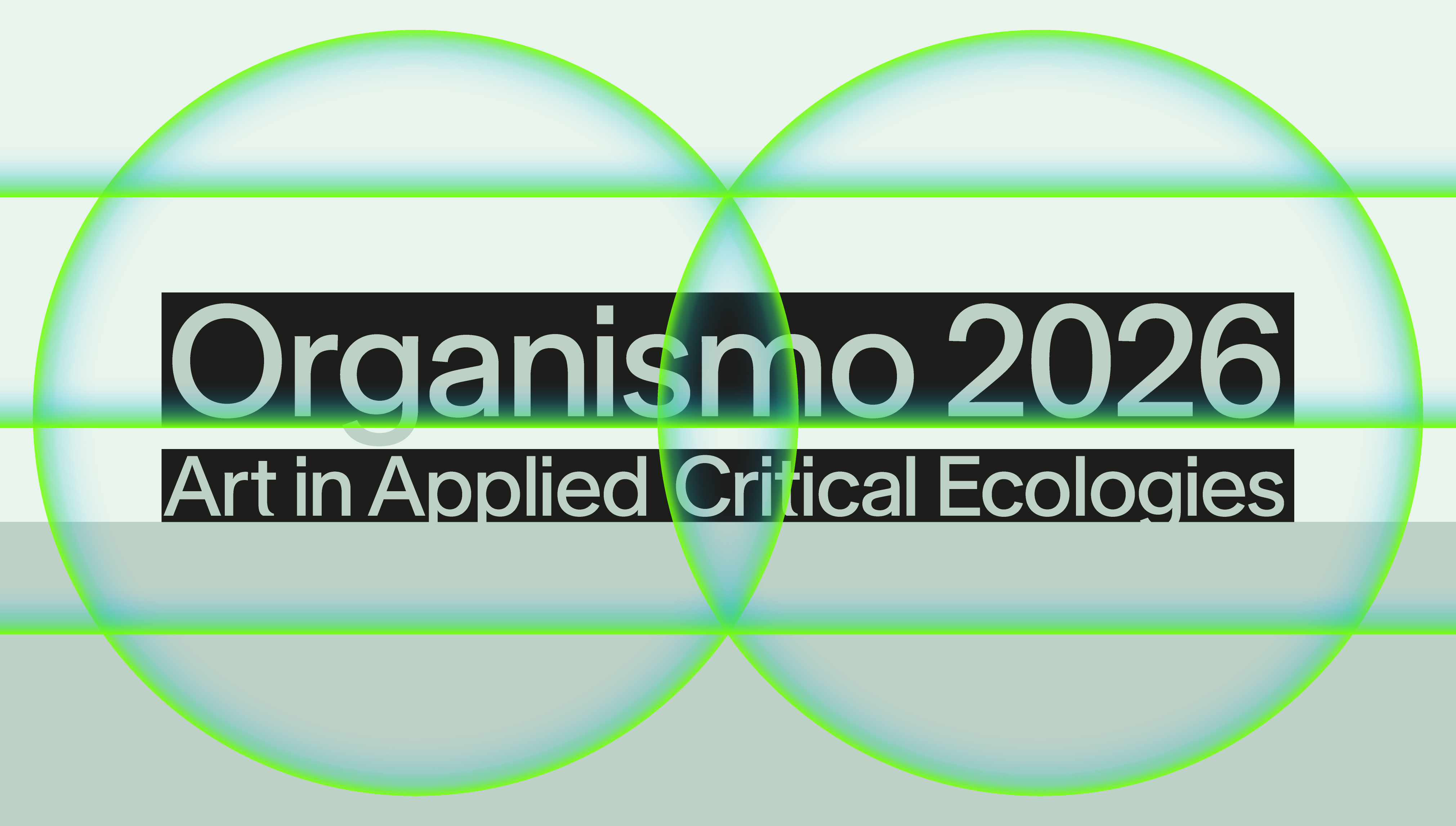
What if reality itself were put on trial? Organismo 2026, the applied research program by TBA21–Academy and the Museo Nacional Thyssen-Bornemisza, launches a cycle of public encounters connected to the case studies of this edition. The first event of this cycle will be dedicated to the case study The End of the Real, titled Comisión para los Crímenes Contra la Realidad (Commission for Crimes Against Reality), and it proposes an experimental format that transforms a public conversation into a simulated political-judicial device.
Rather than a conventional panel, the session is set as a fictional commission, inspired by the procedures of international courts. Participants will collectively investigate how reality itself is increasingly subject to manipulation, contestation, and strategic fabrication in contemporary information ecosystems. The format continues the exploration of performative and discursive devices initiated during the opening press-conference sessions of the program, expanding them into a participatory investigative arena.
The commission will be convened by Uriel Fogué, architect, researcher and professor at Columbia University in the City of New York (GSAPP) and the Universidad Politécnica de Madrid (UPM), acting as secretary of the session. In the role of prosecutors, a group of invited guests will present concrete “cases” illustrating the contemporary erosion of shared truth. Each contribution will function as an evidentiary intervention, bringing forward specific events, technological mechanisms, or political situations that exemplify how reality is increasingly constructed, mediated, or distorted.
Among the confirmed contributors are:
- Máriam Martínez-Bascuñán, political scientist and author of El fin del mundo común (Taurus, 2025), whose work examines the fragility of democratic consensus and the fragmentation of the public sphere.
- Loreto Corredoira, Director of the Observatorio Complutense de la Desinformación, a research initiative investigating the causes, dynamics, and political implications of informational disorder—from deepfakes and hostile narratives to coordinated disinformation campaigns.
- Gabriel Ventura, a poet, although his work extends into other disciplines such as performance and film. He is the author of the book The Best of Impossible Worlds: A Journey into the World of Reality Shifting.
Following the presentation of each case, the session will invite a collective deliberation, moderated by Fogué, where the invited “prosecutors” and the audience reflect on the mechanisms by which truth is produced, circulated, and legitimized in contemporary society.
The event takes place within the broader Organismo 2026 case study, The End of the Real, a research initiative that approaches contemporary information systems as sites of “reality forensics.” Rather than simply debunking misinformation, the project investigates how technological infrastructures (from algorithmic recommendation systems to synthetic media) actively shape perception and manufacture competing versions of reality. By staging a speculative tribunal, the Comisión para los Crímenes Contra la Realidad invites participants to collectively examine these processes as if they were evidence in an ongoing investigation—testing new formats for critical inquiry, public reasoning, and shared sense-making in an era where the very notion of a common reality is increasingly contested.
Registration for the event on Museo Nacional Thyssen-Bornemisza's website.
The activity will be livestreamed via this link on TBA21's YouTube channel.