

Minia Biabiany
dlo a rasin, 2024


Minia Biabiany
dlo a rasin, 2024
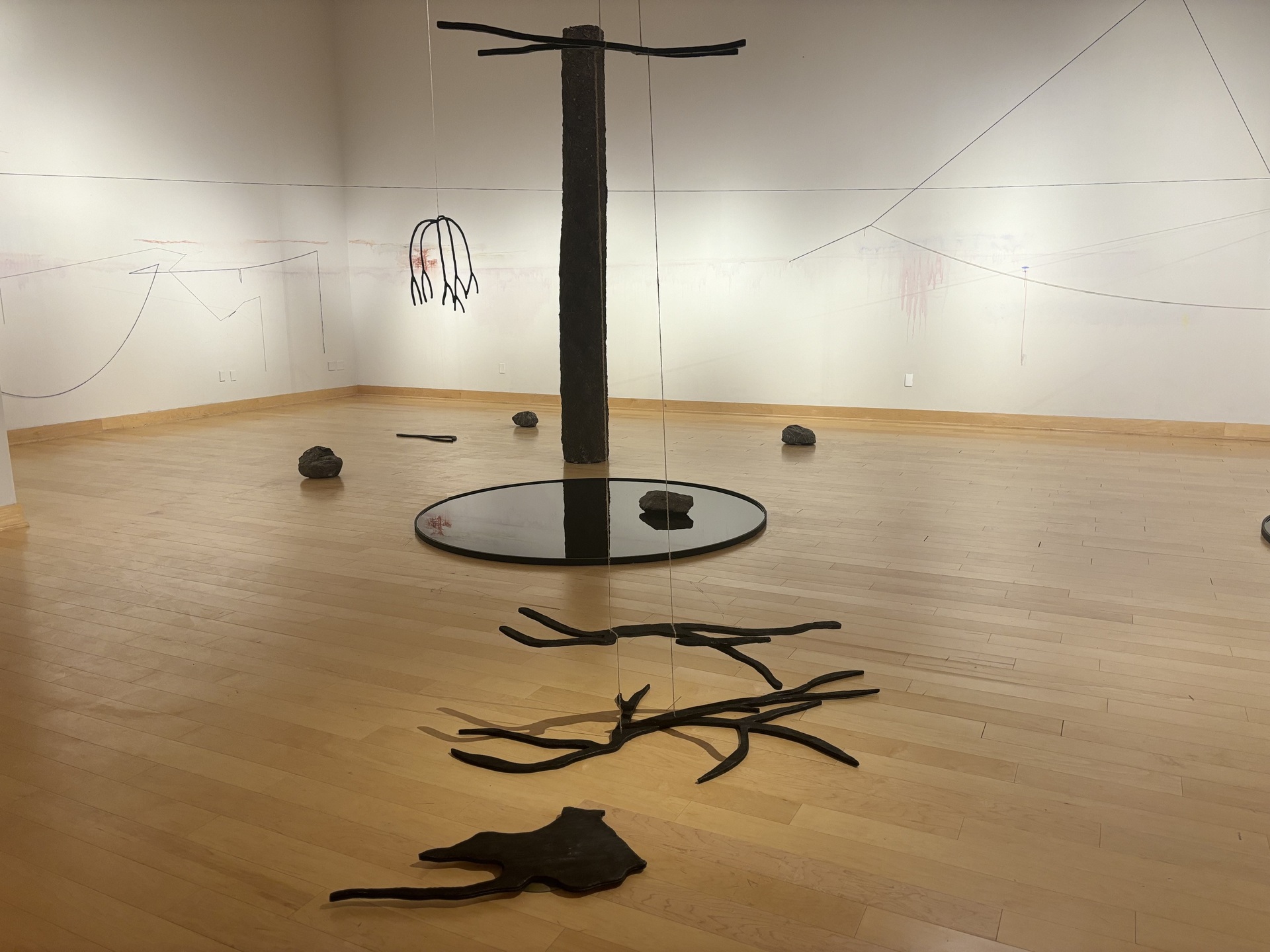
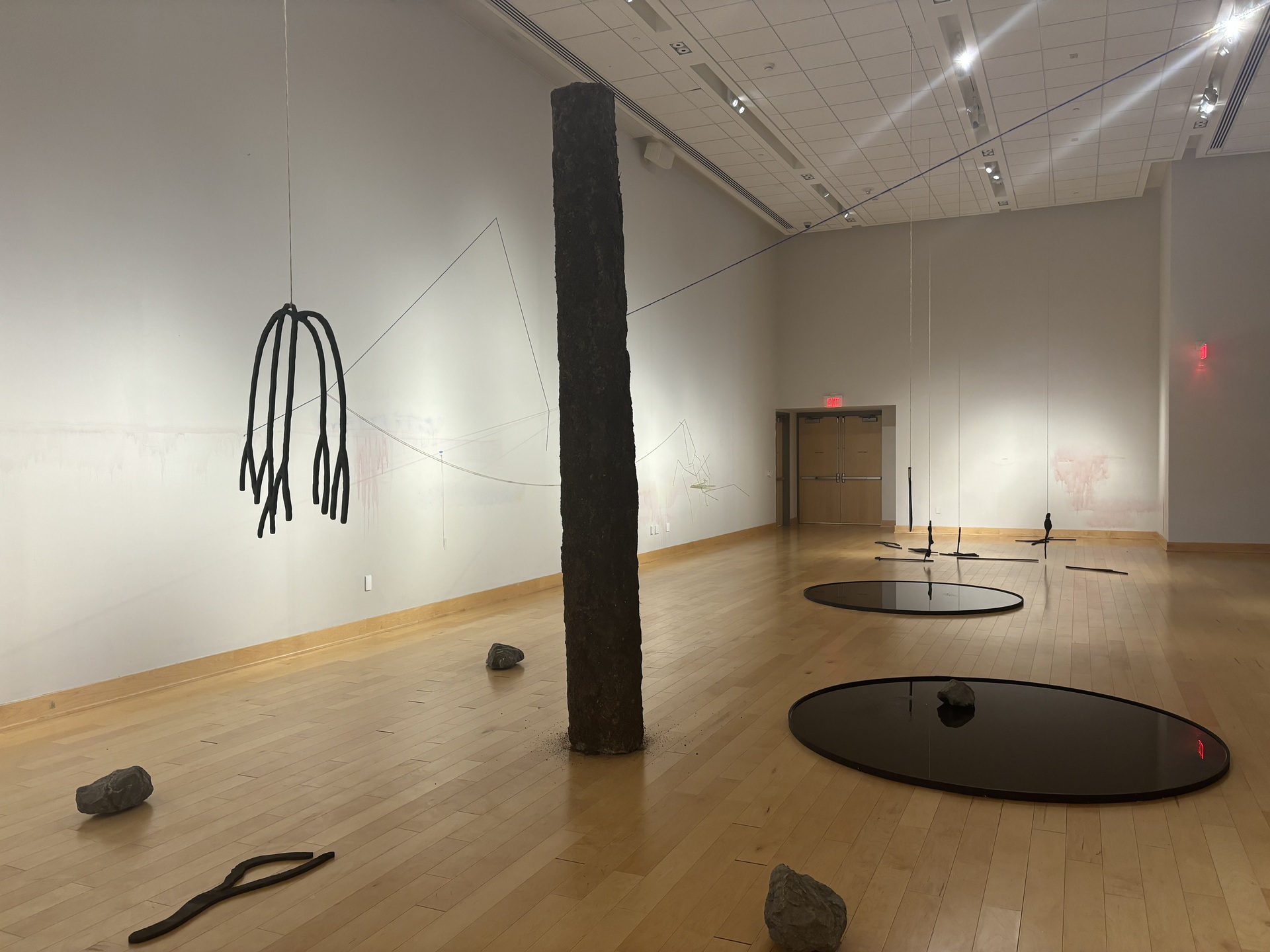
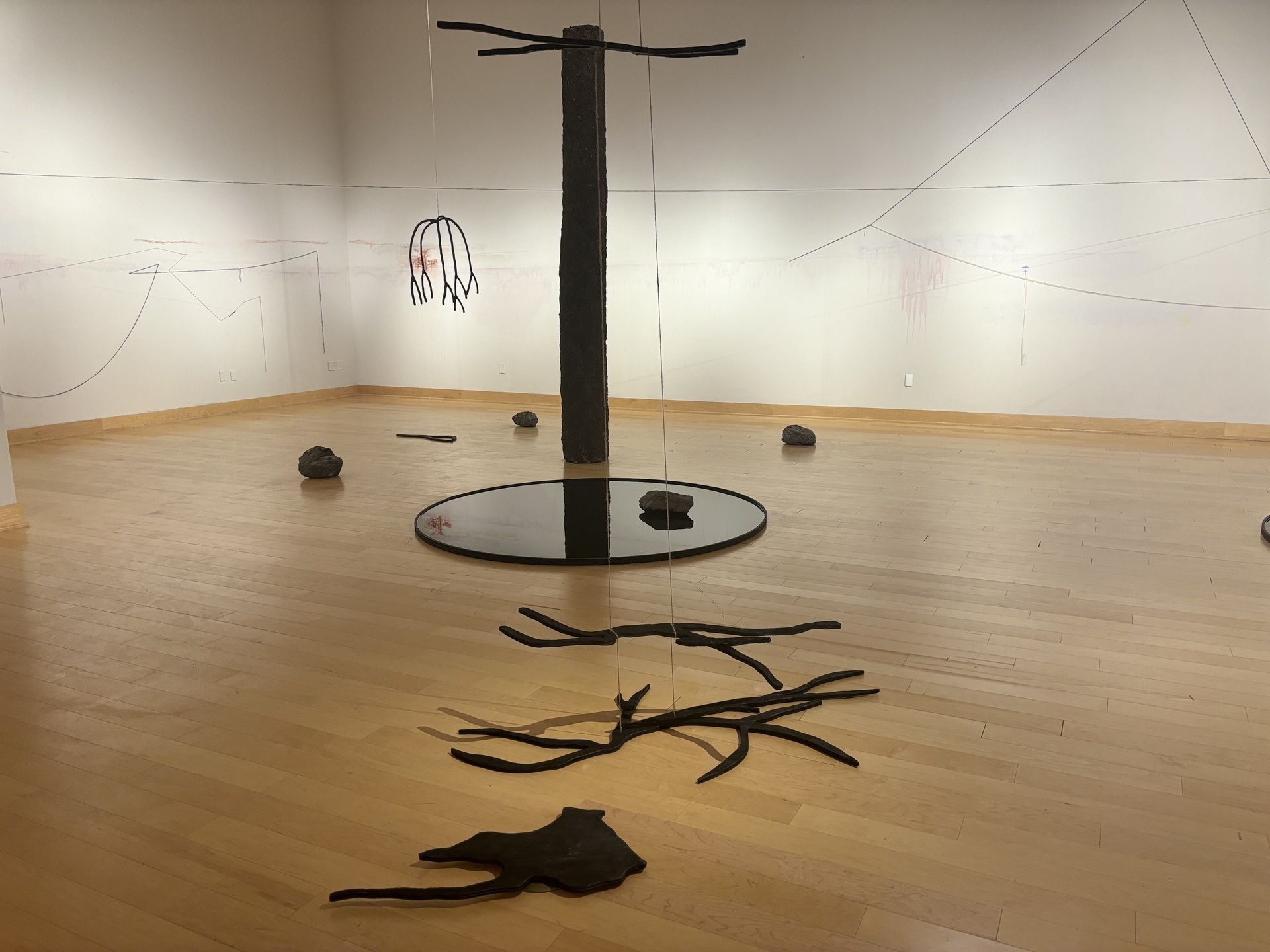
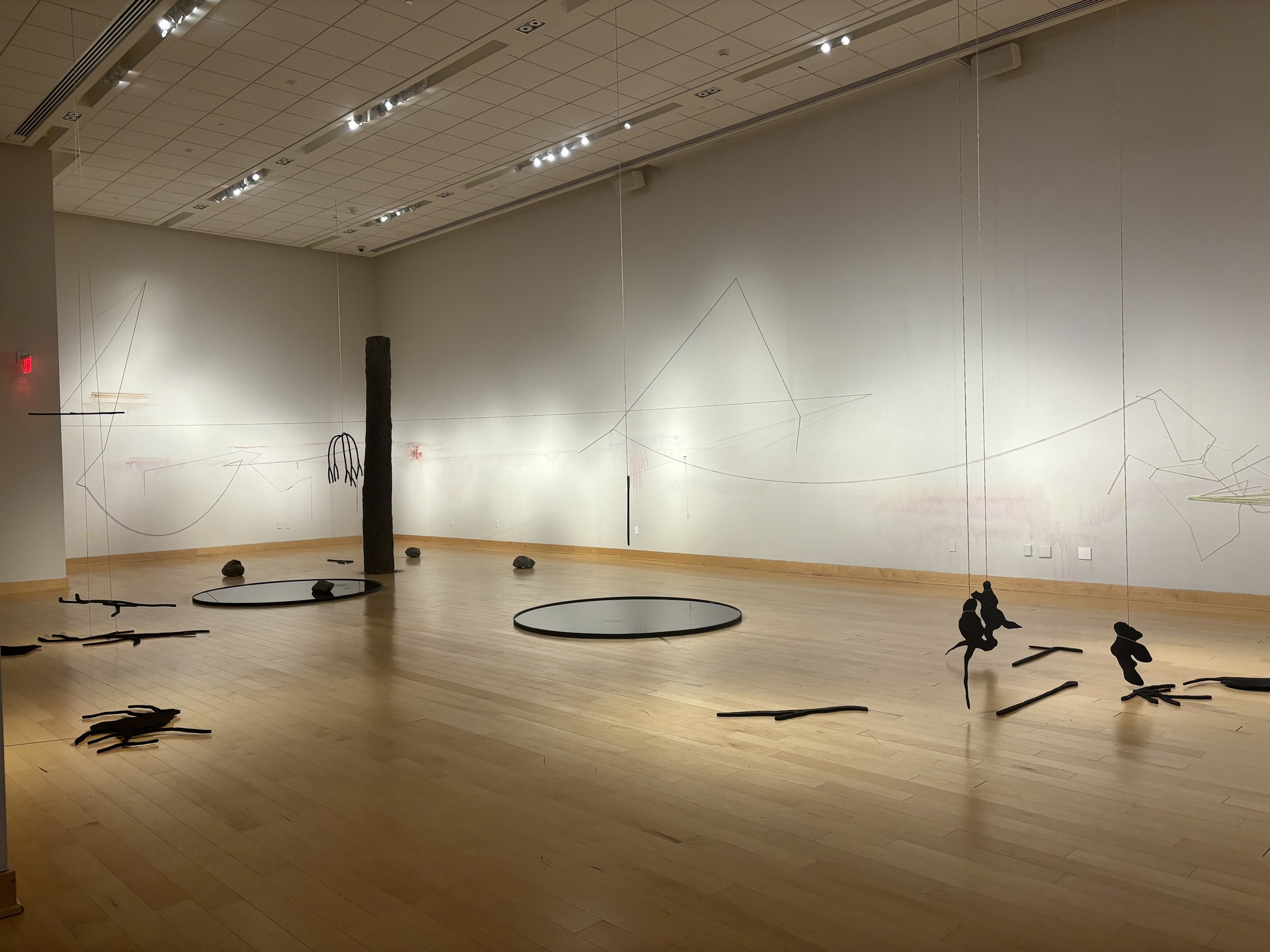
Installation with sculptures in burnt wood, circles of water, columns of soil, drawing on tracing paper, and banana leaves paper
Dimensions variable
Co-produced by TBA21 Thyssen-Bornemisza Art Contemporary, Madrid, and WIELS, Brussels
dlo a rasin addresses the lingering toxicity produced by the agricultural industry. The chemical pesticide chlordecone, also known as Kepone, was widely used in French Caribbean territories, particularly in banana plantations. Despite knowledge about its serious effects on health, it was authorised for decades. It was banned in 1993, but its pollution of the soil, waters, non-humans and humans will continue to be felt for centuries. The work poetically evokes these wounded landscapes and bodies. The tall earthen pole alludes to the Afro-Caribbean potomitan, both a structural element in architecture and a symbol referring to the woman as the pillar of the matrifocal family or the community. It watches over dark, impenetrable waters and the carbonised roots of a damaged yet resilient ecosystem whose ability to heal manifests in a series of drawings of endemic medicinal plants traditionally used to remedies from poisoning.
This installation was first made in Virginia, on the invitation of Beth Hinderliter, director of the Duke Hall Gallery, connecting the contamination of Hopewell, Virginia where the pesticide that contaminated Guadeloupe was first produced. Dlo a rasin is both a poetical and political take on the relation with soil, land and life cycles framed in the Guadeloupean context where the edible roots but also the drinking water network that are now contaminating the population affecting health, social habits, marine life. A column made of soil materializes the "potomitan", female central figure of decision and care in the matrifocal society.
CURRENTLY ON VIEW:
Group show: Magical Realism: Imagining Natural Dis/order
Curators: Sofia Dati, Helena Kritis, Dirk Snauwaert
Venue: Wiels, Brussels
Date: May 29, 2025 - September 28, 2025