

Designing with life, not against it: When buildings learn from bacteria
Book presentation at La Casa de la Arquitectura
14 January 2026
English and Spanish without translation nor interpretation / Free entrance with prior registration here.
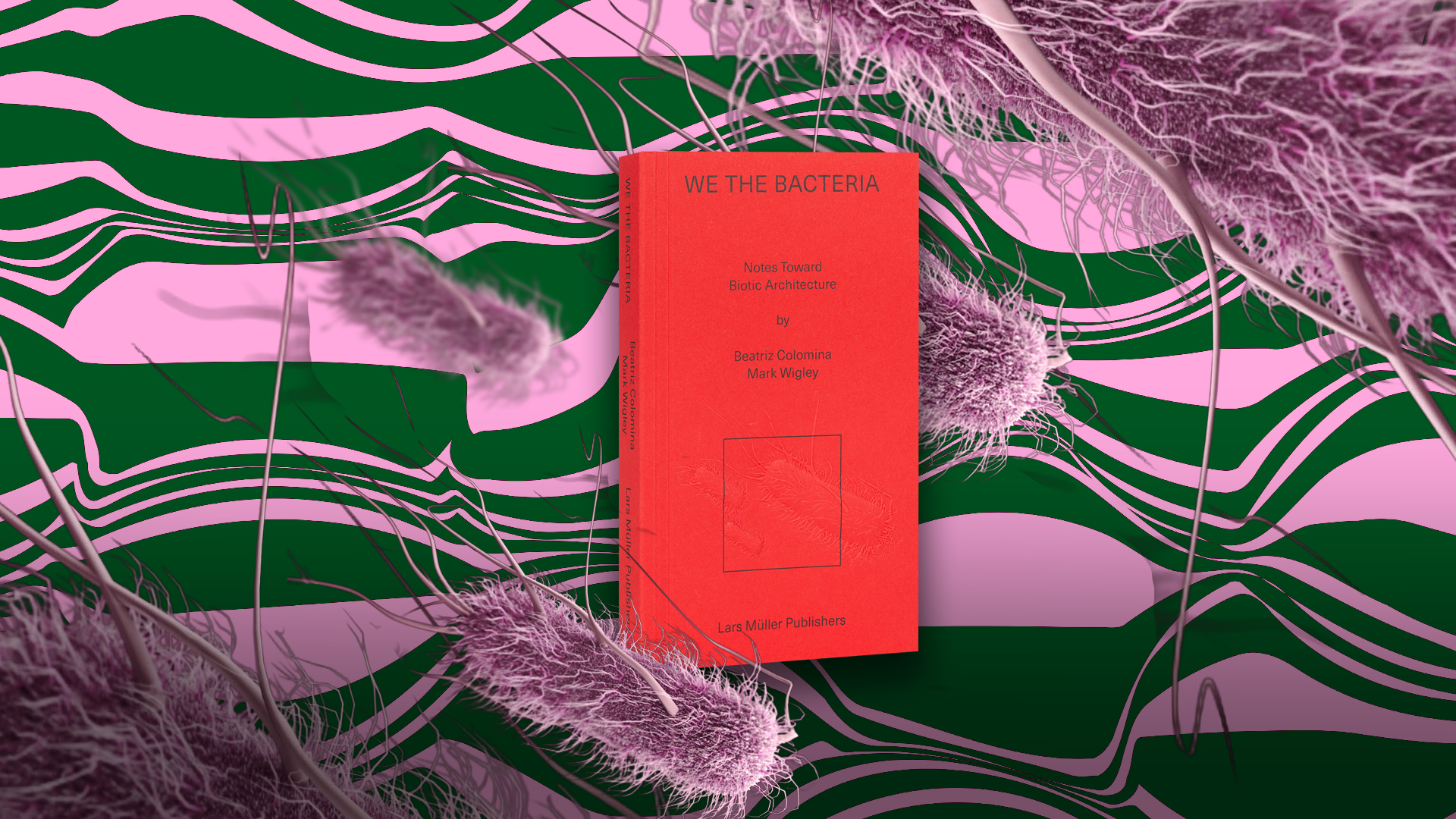
Beatriz Colomina and Mark Wigley present We the Bacteria. Notes Toward Biotic Architecture, a timely and provocative manifesto for rethinking architecture through a biological lens. Drawing on recent research into microbial life, the authors propose a shift in perspective that recognizes bacteria not as enemies of architecture, but as its fundamental agents, shaping how buildings are constructed, inhabited, maintained, and understood. By tracing the deep entanglement of microbes, bodies, and buildings over the past 10,000 years, the book reframes the history of architecture and questions its antibiotic-driven paradigms.
At its core, the publication argues that many of today’s global crises, from declining biodiversity to antibiotic resistance, are inseparable from the way we design and inhabit the built environment. It calls for a transition from architectures rooted in fear, sterility, and exclusion toward forms of shelter based on coexistence, care, and symbiosis with microbial life. This vision resonates strongly with the work of TBA21, whose artistic and research-driven programs explore the interdependencies between humans, nonhuman life, and systems of our planet.
The contributors of this presentation include Iñaqui Carnicero (Secretary General for Urban Agenda, Housing and Architecture at the Ministry of Transport, Mobility and Urban Agenda), Andrés Jaque (Spanish architect, scholar, writer and curator) and Uriel Fogué (Spanish Architect, researcher and professor).