

To carry what we can
On confluencing between the Tigris and the Spree

September 2026
By Katarina Rakušček
“To be a body of water means to always both remember and forget. To carry waters, to confluence, means the obligation of carrying not only the weight of time and memory, but the weight of dissolution too.”
—Astrida Neimanis, opening keynote of the 2026 Confluence
All bodies are water bodies. All dwellings are water dwellings—not only in the evidently amphibious places, like lagoons, coastlines, and archipelagos, but even in an ostensibly terrestrial environment, infamous for the various fluxes, flows, moves, and grooves of its human inhabitants. The city of Berlin lies in a glacial valley carved during the last ice age—about twenty thousand years ago—as enormous volumes of water drained along the edge of retreating ice sheets. It sits on a former marshy lowland, its name allegedly derived from berl-/birl, an old Slavic word for swamp, which is a curious name for a city perhaps best known for being the site of a long (and thankfully unsuccessful) experiment to halt porosity between two worlds. Dig a hole anywhere in Berlin, and you will likely reach groundwater after two or three meters. But before that, you reach an unstable layer of sludge, moraine soils, and sandstones, which makes construction tricky to this day (perhaps one of the reasons for Berlin’s spongy underground?). Through the city flows the river Spree, a lifeblood, Berlin’s main source of drinking water, an urban cooling system, a transport vein, a pathway, a connector, a divider, a carrier of bodies—those that live, and those no longer present.[1] Berlin as we know it is formed by these forces: the ancient glacier, the trickster swamp, the transient river. Its restless foundations seem to show that water bodies (be it human or more-than) don't like being tamed. We’d do better learning how to flow together freely instead.
The Confluence of European Water Bodies is a transnational network, founded in 2023 by the Embassy of the North Sea, TBA21–Academy & ILP Mar Menor, that connects more than 50 water bodies all across Europe and beyond. Each edition of the yearly gathering, hosted by another aquatic entity, welcomes new waters, communities, and practices, building on a rapidly emerging movement that advocates for the political, cultural, and spiritual representation of water through art, science, advocacy, and community engagement. This year’s edition—following the first one on the shores of the Mar Menor in 2023, the second in Venice hosted by TBA21–Academy in 2024, and a third in Amsterdam and Bergen aan Zee, hosted by the Embassy of the North Sea—gathered participants on the shores of the river Spree under the careful curation of Symbiotic Lab, a Berlin-based interdisciplinary design studio working at the intersection of ecology, art, and urbanism.
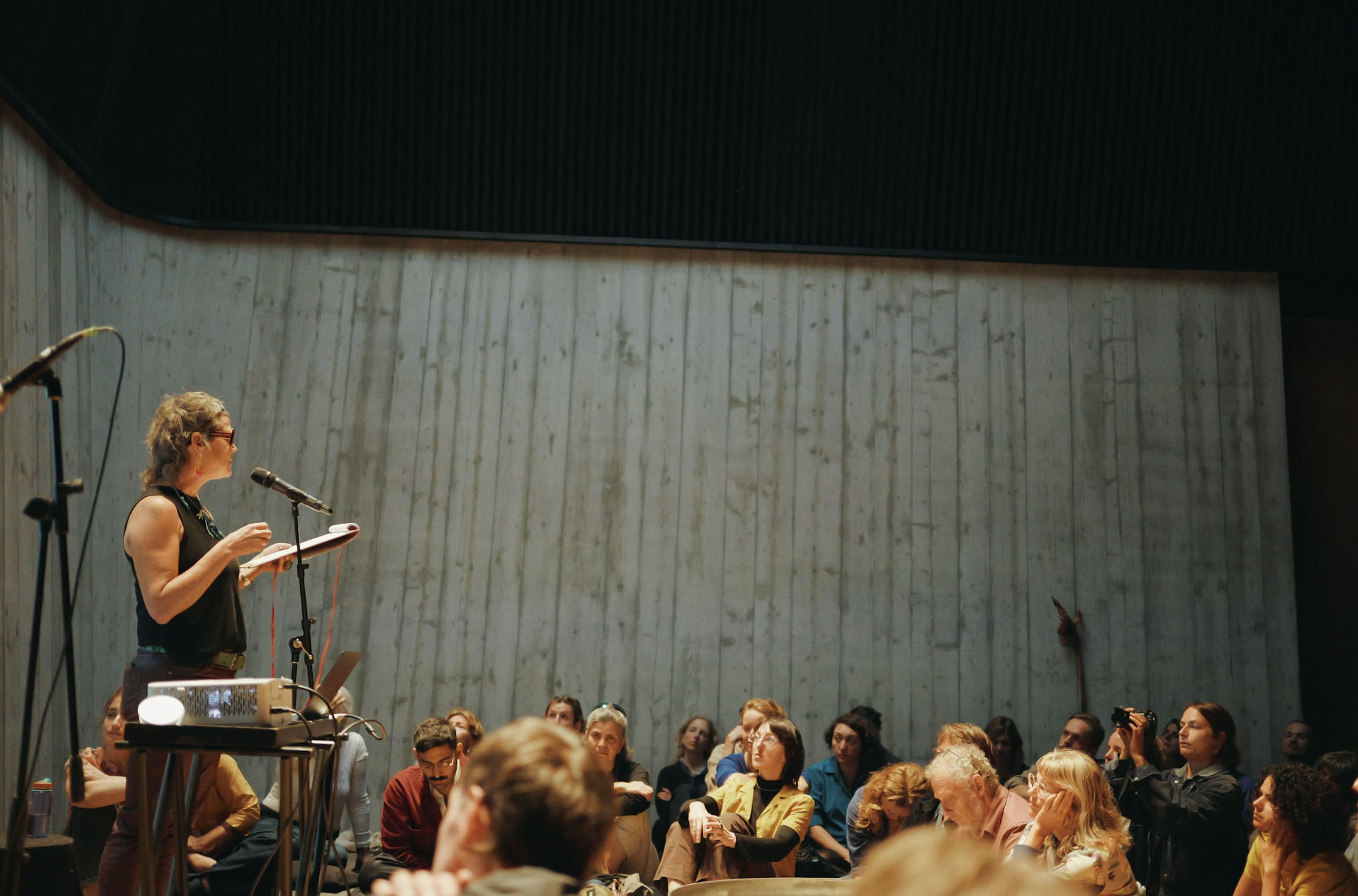
Over four days, representatives of rivers, lakes, coastlines, glaciers, wetlands, and other water bodies from 18 countries gathered along the Spree in Berlin: at FLUSSBAD Campus, SPORE Initiative, Spreepark Art Space, and at Floating University Berlin. “We meet at a time when water has become one of Europe's defining questions, following what may become one of the hottest and driest summers on record,” note the curators Léon Gross and Jakob Kukula. Switzerland, the United Kingdom, Belgium, France, and Hungary, among others, reported record-high heat and drought, and uneasy headlines call Europe “the most unusually hot place this summer.”[2] Therefore, the agency of water is not only a spiritual aspiration but a material necessity. This was clear in the rigorous, spirited conversations of the assembled group of artists, scientists, Indigenous representatives, lawyers, designers, policymakers, and locals, who came to ponder the gathering’s guiding questions: How can Europe's waters shape their own futures? What does it mean to represent a water body? What new cultural, legal, and political practices are required when rivers, lakes, and seas become political actors?[3]
Attuning to waters
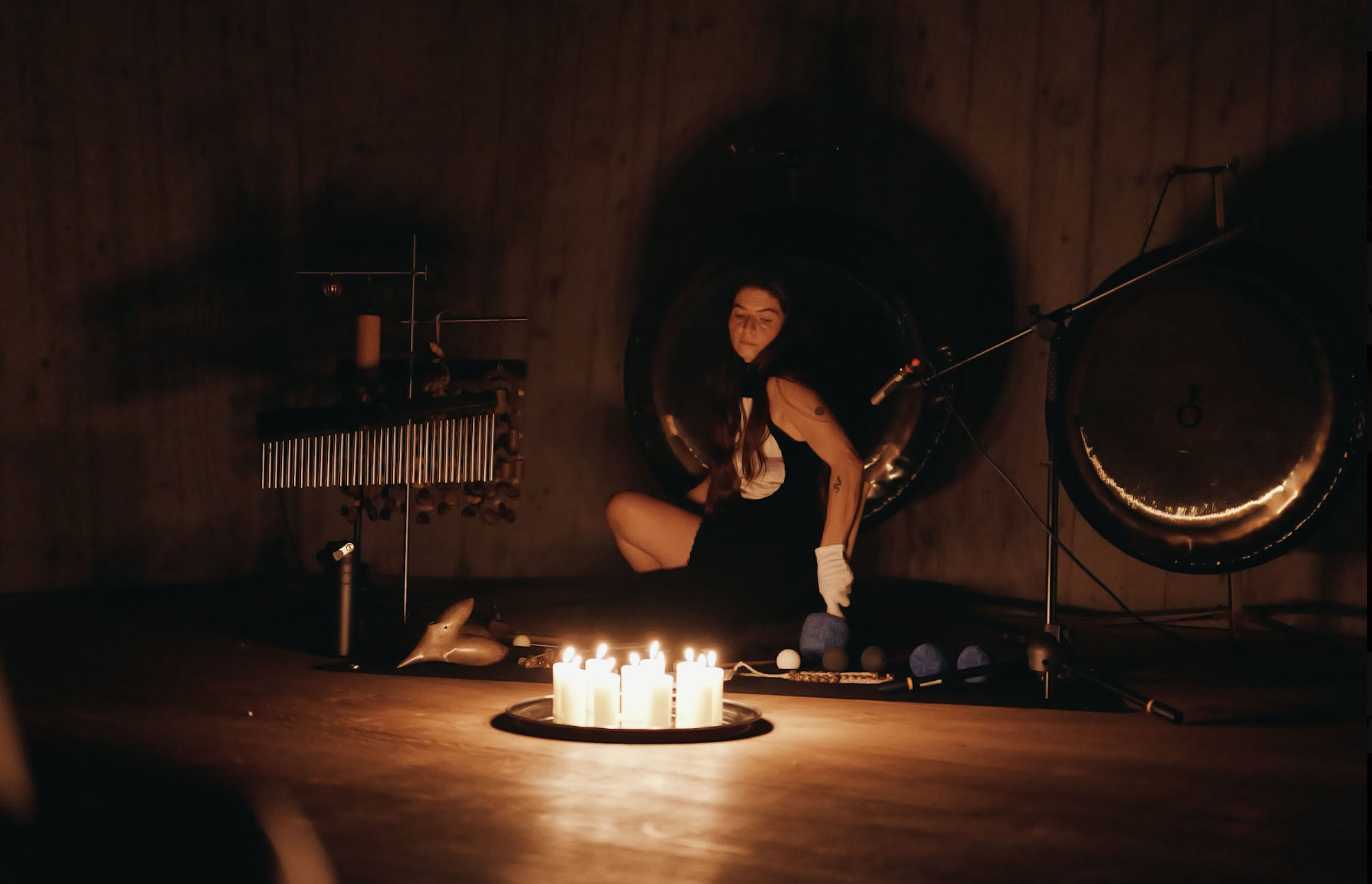
The task at hand is not simple. Before attempting a new vision for Europe’s aquasphere, one needs to attune to the water: the opening evening of the Confluence thus took place at Flussbad Berlin, a campus built on the site of historic Weimar-era river baths, with a lecture-performance by Astrida Neimanis, the hydrofeminist thinker who inspired the waterthought of many of us. Her words on thick confluencing guide us throughout the entire collective endeavor: “As water bodies, we are bringing our waters into contact with other bodies of water, all the time. It is sometimes deliberate, sometimes unintentional, sometimes unavoidable. But in each of these encounters, we are bringing something of ourselves to the waters we meet, and we are always leaving something of ourselves behind.” This is exactly what confluencing is, as framed by this year’s curators: a practice “bringing ideas, methods, and experiences into conversation and travel between places, disciplines, and watersheds with the aim of regenerating water ecosystems.”[4]
From Mar Menor to the Mesopotamian Basin
To ground the perceptual attunement, knowledge exchange was one of the anchoring aspects of the program. The hosting river, the Spree, held a panel exchange with the trailblazing Mar Menor, the first ecosystem in Europe to be granted legal personhood. Alianza Mar Menor activists Julia Albaladejo and Teresa Conesa, alongside legal scholar and Goldman Prize winner Teresa Vicente and researcher Julian Purrmann, shared learnings on how Mar Menor attained legal personhood and how it is embedded in the legal-political sphere in a panel discussion moderated by Imke Horstmannshoff. Representatives of the Rechte der Spree Initiative join them to listen and learn from the Mar Menor case, bringing the River Spree's own journey toward legal personhood into conversation with one of Europe’s pioneering milestones for ecosystem representation.
In fact, many of the representatives present have initiated legislative change within their own communities. The Polish Odra River, the rivers Ouse, Reuss, and Seine, lake Vättern, and the Venice Lagoon have already established advocacy campaigns or citizen declarations of their own. This year, the Sámi Parliament of Sweden, established in 2018, voted to endorse the rights of Lake Storsjön. The Danube is working on a citizen initiative entitled Citizen Danube, and the Snæfellsjökull glacier will run for president for the second time in 2028. The deep sea and Antarctica are two places that might seem remote, but are anything but: without a local human community of their own, they rely on transnational initiatives to have their voices heard. A strong bioregional approach drives the work in the Embassy of the Baltic Sea, the Mediterranean rights declaration, and the initiative for the Dogger Bank. Some water bodies are champions of artistic and cultural approaches, like the Wistula with River Sisters (who have created the iconic blue signs for all the participating water bodies), the Meuse with Maas Lab, the waters of Genova with Corpi Idrici, and the Mtkvari with wit[h]nessing. Alongside all of these, the European alliance also welcomes the inextricably linked rivers of the world, as water is known for not being concerned with national or continental boundaries: Whanganui Te Tupua Awa—the first ecosystem in the world to be granted legal personhood—, rivers of the Andes, Tigris, and Euphrates, and the Caspian Sea, among others. All of the planetary waters are in touch.
The weight of touch
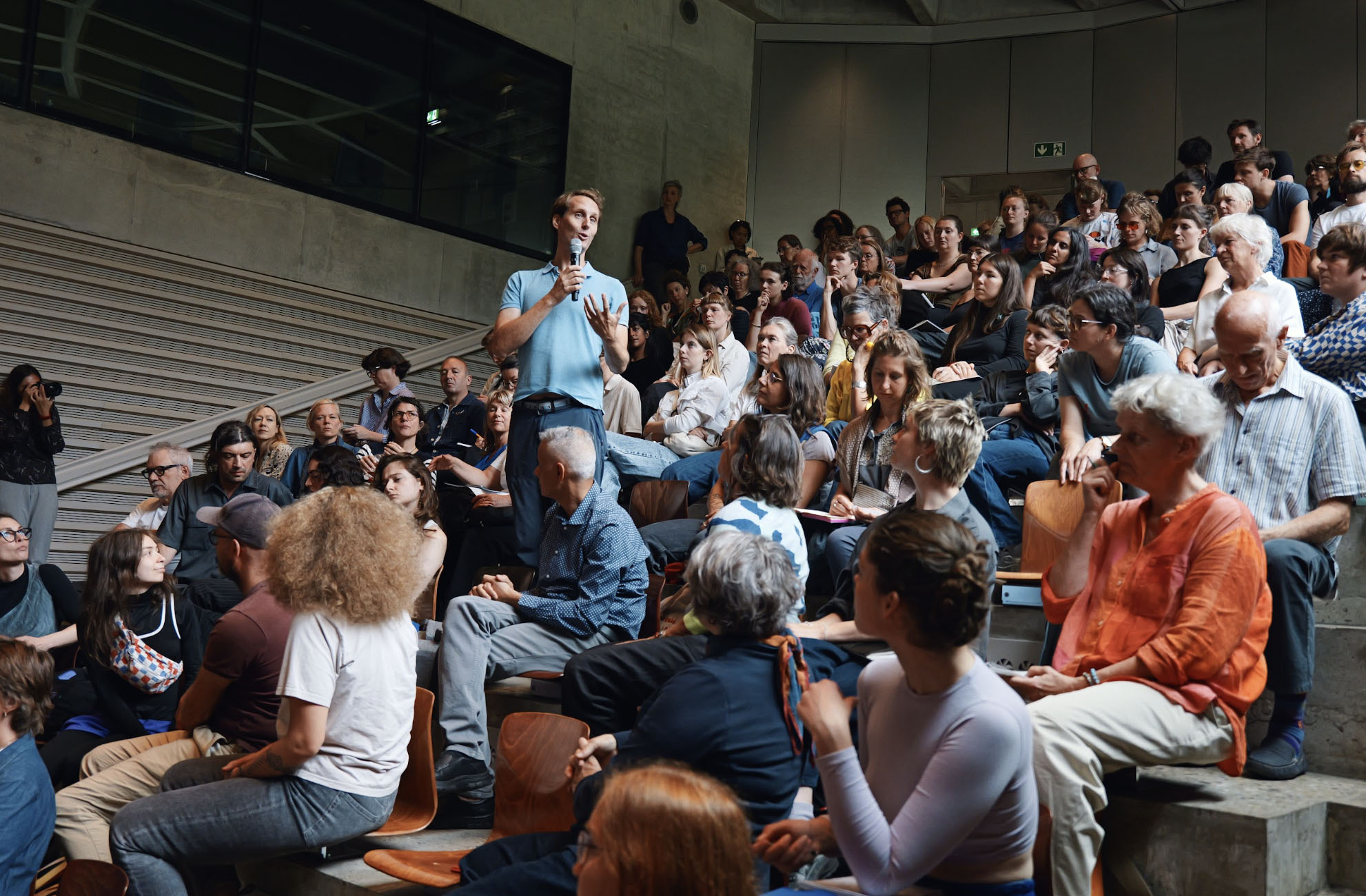
The word “contingency” denotes a possible future event or problem that cannot be predicted with certainty. Neimanis proposes another possible reading of contingency as deriving from the Latin con-tangere, a place of meeting and touch: “contingency, like confluence, is a meeting, a proximity, a mingling, an in-between time and space, where nothing is guaranteed. And as we know, nothing is guaranteed right now,” she notes, referring to the impending climate collapse, democratic breakdown, ongoing war and genocide, and the looming rise in techno-oligarchic control. Not all proximities are consensual, not all contingencies are caring, and water bodies have long played a role in territorial disputes, displacement, and historical trauma. “The Spree will always remember bodies, violence, and technologies—just as much as the will to live a free life,” notes political scientist Barbara Unmüßig during the opening lecture, and it is not the only one with a complex experience: Danube served a lifeline of Axis powers during WWII, as well as collateral damage of NATO’s campaign against Yugoslavia in response to the ethnic cleansing in Kosovo in the nineties; the Scheldt river estuary in the Netherlands saw devastating storm surges that swallowed entire villages—over 170 of them; the Mediterranean is dubbed the deadliest sea crossing for displaced people—not to mention the role of Europe’s ports in the armament of Israeli military forces in their genocide of the Palestinian people. The Baltic Sea is under pressure from possible geopolitical escalation from Russia, while water systems in Ukraine are facing systematic attacks since the beginning of the full-scale invasion. “Water is a memory aid,” Astrida Neimanis reminds us; it carries the “weight of time and memory”. This weight is not to be taken lightly.
Why do we then insist on coming together in such vulnerable times? And more importantly, how to carry these stories forward, beyond the community of convinced conspirators? Can waters finally become arteries of peace (as brought forward by Ismaeel Dawood of Save the Tigris Foundation)? In a workshop on transnational water cooperation, Dawood highlighted how the ancient rivers of Mesopotamia are integral to the identity of the population, even as modern states such as Turkey, Iran, Syria, and Iraq use large-scale infrastructure to assert political hegemony rather than support ecological health.
Europe is no stranger to these procedures either. This year, a legal shift in Germany reclassified water infrastructure as critical and of military relevance. On March 17, 2026, the KRITIS Umbrella Act entered into force, implementing the European Union’s Critical Entities Resilience (CER) Directive, fundamentally reshaping Germany’s legal framework to treat water, transport, and energy networks as vital components of national defense and physical security. This shift is in line with the EU’s recent reallocation of capacity and funding from local development and regional aid (including environmental funds) towards military mobility and defense, as is also evident in reallocations across the UK, Italy, the Netherlands, Poland, Sweden, and Finland, among others. To counter the failed state-to-state negotiations and hard infrastructural obstacles, Dawood described the development of "people-to-people" or "third track" diplomacy through initiatives like the Mesopotamia Water Forum, a movement that connects local authorities, universities, artists, and activists across borders without relying on official government invitations.
An ever-present thought emerged through these discussions: the notion that shared cultural narratives and connectivities (dare we say confluences?) crucially influence environmental protection. How can we, then, reconnect with some of these deep, elemental histories—especially those predating modern nationalisms—to create a more inclusive environmental identity without falling into the trap of romanticizing nature or cultural appropriation?
Desire stories
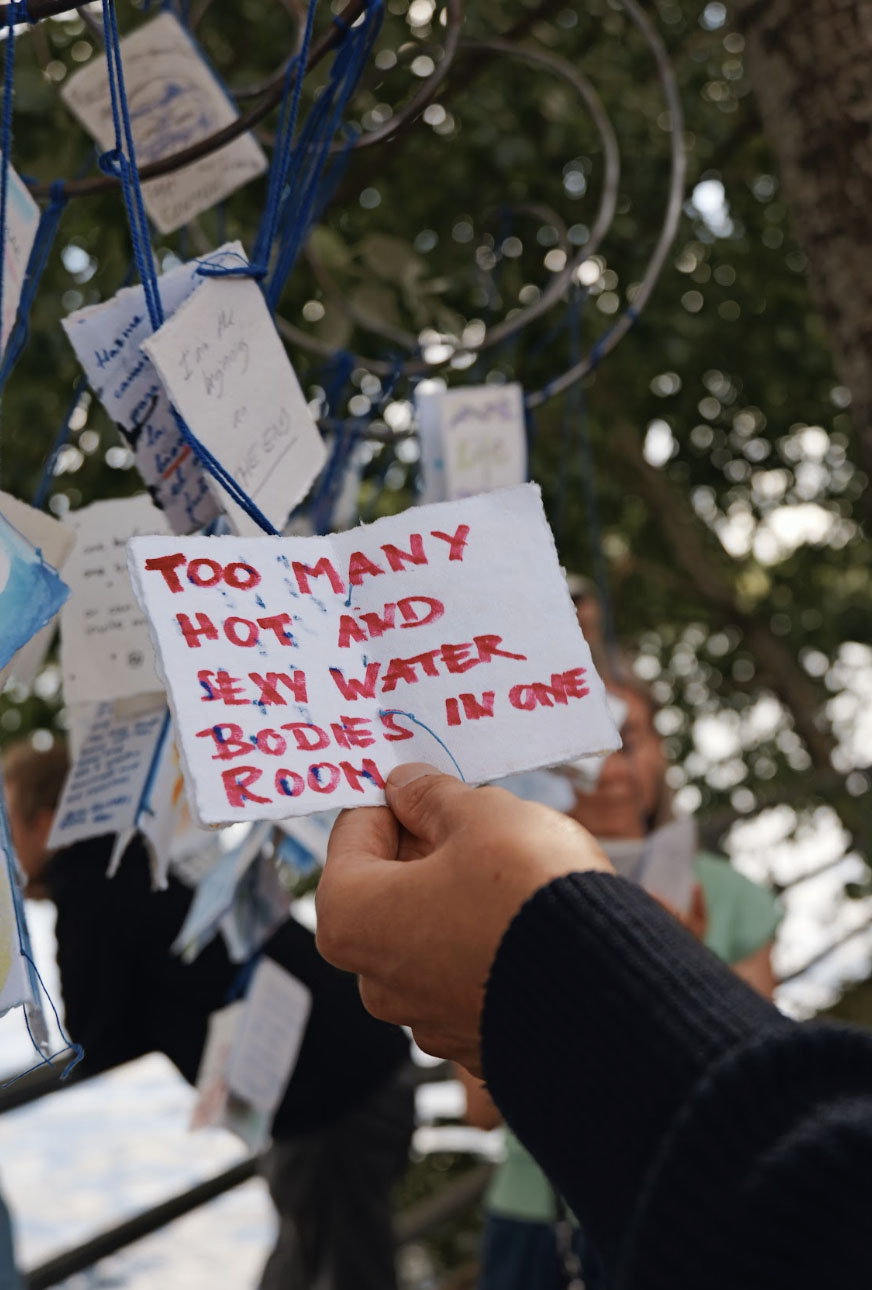
In her keynote, Astrida Neimanis brings to attention Suspending Damage: A letter to Communities, an open letter by Eve Tuck, Associate Professor of Critical Race and Indigenous Studies at the Ontario Institute for Studies in Education, in which Tuck calls on communities, researchers, and educators to reconsider the long-term impact of “damage-centered” research[5] that focuses on documenting marginalized peoples’ pain in order to hold those in power accountable for their oppression. As an alternative, Tuck proposes a “desire-based research framework (...) concerned with understanding complexity, contradiction, and the self-determination of lived lives. “Desire stories”, summarizes Neimanis, “are not denial stories.” These are stories that stay with the trouble sincerely, but refuse to essentialize the marginalized through their abjection. “Desire, yes, accounts for the loss and despair, but also the hope, the visions, the wisdom of lived lives and communities.”[6]
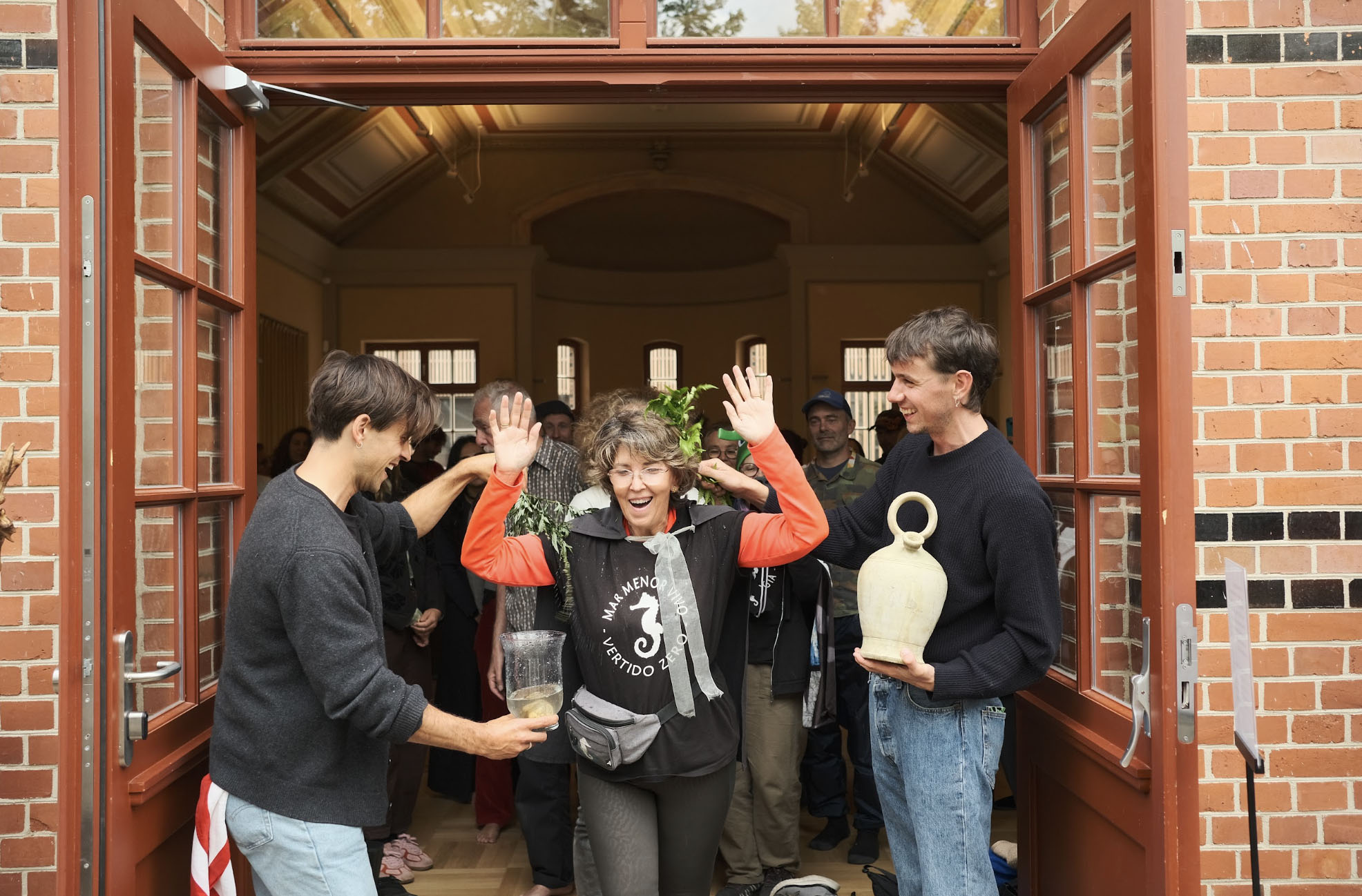
We can learn from this perspective—the pull of water can certainly be one of desire, complexity, and contradiction. “What body of water do you love?” asks the United Kingdom's first River Bride, Mrs. Meg Avon. Departing from this question, the participants of her workshop reflected on their own relationships with rivers, exploring possibilities for connections among personal ritual, activism, and legal change. Following this drive for embodiment, the water bodies united with the Spree, kayaking, looking at its water under microscopes, tracing rainwater through the urban landscapes, and inaugurating Berlin’s first pop-up river bath after a long ban on swimming in the city. At the core of every Confluence is also a Joining the Waters Ceremony, in which the representatives of rivers, seas, lakes, lagoons, and glaciers pour water from their own water bodies into the shared vessel of the Diplomatic Suitcase. The mixed waters are then returned to the host—gifted to the Spree, in a symbolic act of interspecies solidarity and transnational environmental care.
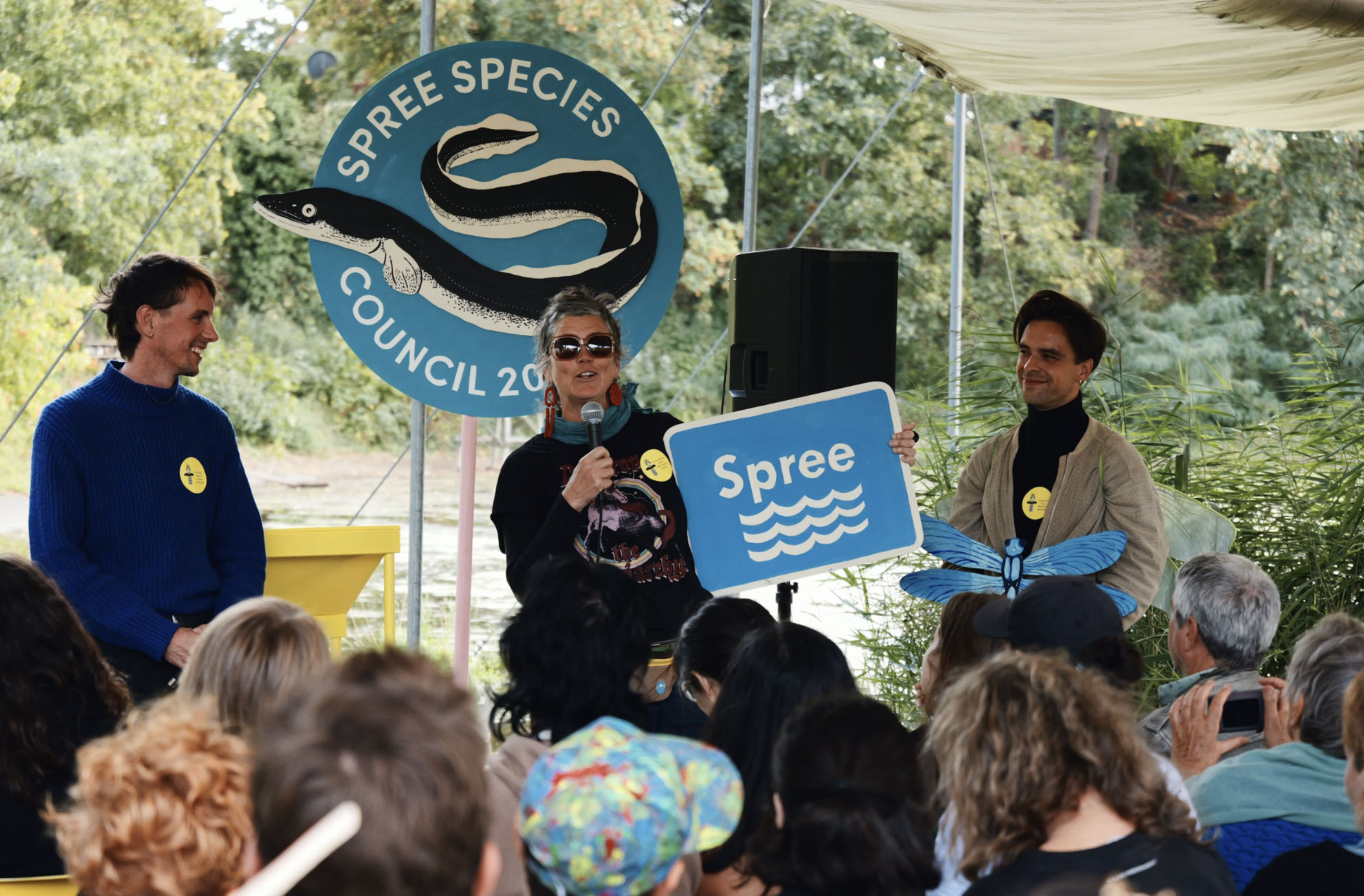
Cyanobacteria into Parliament!
How, then, to embody desire stories in our very own ways, allowing for contradictions and complexity, as well as a radical inclusivity of diverse human and other-than-human voices? And, more importantly, how do we implement these within existing legal structures to give the more-than-human some agency while we build towards the emergence of another, more equitable world? The water bodies have some ideas on how to get people on board: lawyer Emmanuel Schlichter and Stella Bongiorno (GARN) presented an invitation to the European Citizens' Initiative for the Rights of Nature, which will open for signatures in October 2026, exploring how local action and European cooperation can reinforce one another. Greet Brauwers and Raf Custers presented the performative workshop A Seat for the Sea, which explored how multisensory engagement can become a tool for reconnecting with bodies of water, specifically the deep sea. The program also brought together Berlin’s first Spree Species Parliament, developed by the artist collective Club Real, which invited participants to take on the role of one of the hundreds of species inhabiting the Spree ecosystem in a performative multispecies assembly, blending artistic performance, scientific research, and democratic experimentation to rehearse possible answers to the question of what if political rights were not reserved for humans alone?
Let’s imagine together. In a more-than-human society, these exercises are no longer (only) artistic performances, but become earnest governance. Access to safe and welcoming waters for drinking and cooling is universal. The words genocide, fossil fuels, and data centers are considered archaisms from a distant past. Waterways are classified as not military-essential, but life-essential. Indigenous land is under Indigenous governance, housing is a human right, and exploitation of labor, land, or other life is considered inconceivable.
Imagine it in detail, this then. Now, let's look at the now, and let's not be discouraged. There is both a will and a way, and now, we are rehearsing the in-between: through imagining, speculating, provoking, advocating, and collectively organizing. Let’s conclude, again, with Astrida Nemanis, as the water bodies know what to do: “to attend to damage, and never let go of desire. To carry what we can, and to offer something useful.”[7]
[1] During the division of Berlin, the Spree served as a heavily militarized boundary. Many attempts to escape across the Spree ended in loss of life. Nowadays, one of the rare stretches of the Berlin wall still preserved runs along the Spree river, nicknamed East Side Gallery.
[2] Europe was the most unusually hot place on the planet this summer, Euronews, September 2026.
[3] Gross, Léon & Kukula, Jakob (2026). Confluence of European Water Bodies 2026 – Brochure. Berlin: Symbiotic Lab
[4] Gross, Léon & Kukula, Jakob (2026). Confluence of European Water Bodies 2026 – Brochure. Berlin: Symbiotic Lab.
[5] “This kind of research operates with a flawed theory of change: it is often used to leverage reparations or resources for marginalized communities yet simultaneously reinforces and reiscribes a one-dimensional notion of these people as depleted, ruined, and hopeless. Tuck urges communities to institute a moratorium on damage centered research to reformulate the ways research is framed and conducted and to reimagine how findings might be used by, for, and with communities.” Tuck, Eve (2009). Suspending damage: A letter to communities. Harvard Educational Review, 79(3), 409
[6] Tuck, Eve (2009). Suspending damage: A letter to communities. Harvard Educational Review, 79(3), 417
[7] Astrida Neimanis in her opening lecture-performance at the Confluence of European Water Bodies in Berlin, September 3, 2026.