

Transforming into a cluster of dinoflagellates
Navigations below the surface with Susanne M. Winterling

In a crisis of care, alliance-building is of utmost importance. The artist Susanne M. Winterling is no stranger to this, as their work, grounded in a critical feminist consciousness, often highlights the relational interactions among species, materials, and other planetary agents. These agents tend to exercise a will of their own by initiating interspecies collaborations, as was the case with bioluminescent dinoflagellates: microscopic, single-celled aquatic organisms that are part of the plankton in both salt and fresh water. About fifteen years ago, a cluster of these creatures, “with the force of their toxic and magical qualities, kidnapped the artist and made her work for them”.
For several years, Winterling’s research has focused on these organic bodies that light up when touched or moved, evocative of the touchscreens that adorn most of our devices these days. In collaboration with an interdisciplinary group of artists, scientists, researchers, fisherfolk, poets, and—naturally—dinoflagellates, the project planetary sensing: navigations below the surface interweaves research on bioluminescence with investigations on environmental violence, bio-sensing, and citizen science.
Recently, an application was submitted to UNESCO as part of the project, aiming for a designation as a national and eventually world heritage site for Oyster Bay in Jamaica, a specific habitat of bioluminescent dinoflagellates. Through its multispecies entanglements, this artistic research project adopts a radical, relational ethics that brushes aside the conventional distinctions between living and non-living matter.
Interview conducted by Katarina Rakušček
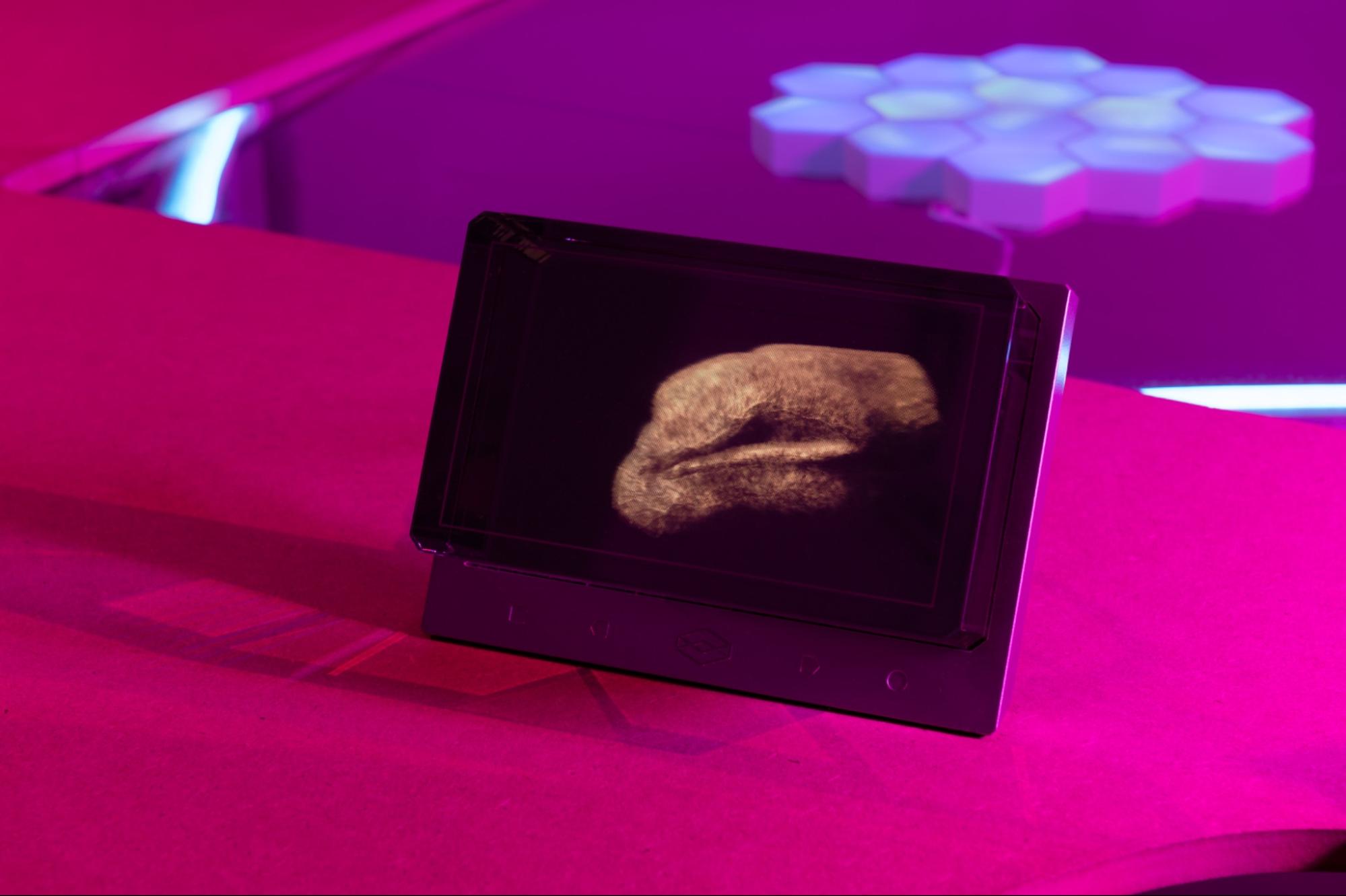
Can you speak a bit more about the “kidnapping”, the inception of your work with dinoflagellates?
SMW: Beginnings are difficult to pin down when we take the interconnectedness of the planetary system for real, but the first spark of serious interest in bioluminescence as a magical experience shaped up through stories from Puerto Rican curators in a residency with a private museum in Miami. In 2014, I was asked to develop an installation at Frieze Frame for the Frieze London art fair, and I really wanted to work with bioluminescence, imagining a lifelike exhibit that looked poetically at light and images in biology, with the species at the fair in London.
As always in my work, the dynamics of materializing representations of reality and cosmology were core. But I was dreaming too far, too idealistic—within the timeframe I had, growing the glowing microorganisms in a home lab was not possible, and arranging to have them in central London for one week would have been a nightmare of care and maintenance, as in, actual trouble with security and technical organization. However, around the fair and later in a group exhibition in Mexico, I met a collector from Puerto Rico who was also on the board of an amazing residency, Betalocal in San Juan. They liked my work and offered me a residency to explore the biobays in Puerto Rico. There, I was introduced to the broad scope and beautiful realm of ecosystems that contain and hopefully maintain bioluminescence in microorganisms.
At the same time, the colonial and military violence that dominated the community there made me realize that the human realm is especially dependent on the health of coastal areas. It is not only economically, spiritually, and materially dependent, but in its complete existence. Planetary precarity is a fact: it was a given in my upbringing and where I come from, so I never had to use the concept or the words for it.
Conventional approaches to conservation and tourism perpetuate colonial patterns. The fancy tourist brochures and celebrity images of the Caribbean are where a lot of the problems of the Anthropocene, as it's still called, are evident, and planetary futures are at stake. These images hide and accelerate patterns of toxic new forms of colonialism despite a glitzy tourist façade, and that's why it's important to start there, with the Caribbean, but also with the fact that while we talk about a species of microorganisms, we are always talking about issues of human exceptionalism and inherent extractivism. The Atlantic and the Caribbean are sedimented with the history of slavery and oppression to this day, so anything that looks into the entanglements of multispecies justice, ecology, and structures of solidarity carries that sediment as well. While the art world—market-oriented, of course—always needs communities and other disciplines to thrive off, many of the observations and encounters at this time shaped the weaving of the entire planetary sensing project—including the installations, sculptures, and recently the opera—that are drifting in and out of the art world, with multispecies justice, antifascism, and new insights to planetary futures.
The stubbornness of kind
glistening troubles also developed through a residency, actually the first TBA21–Academy residency at the Alligator Head Foundation—a Jamaican-based project that focuses on the intersection of science, art, and community that was launched in 2016 with the support of TBA21. Can you explain how the troubles developed and how they relate to the broader planetary sensing framework?
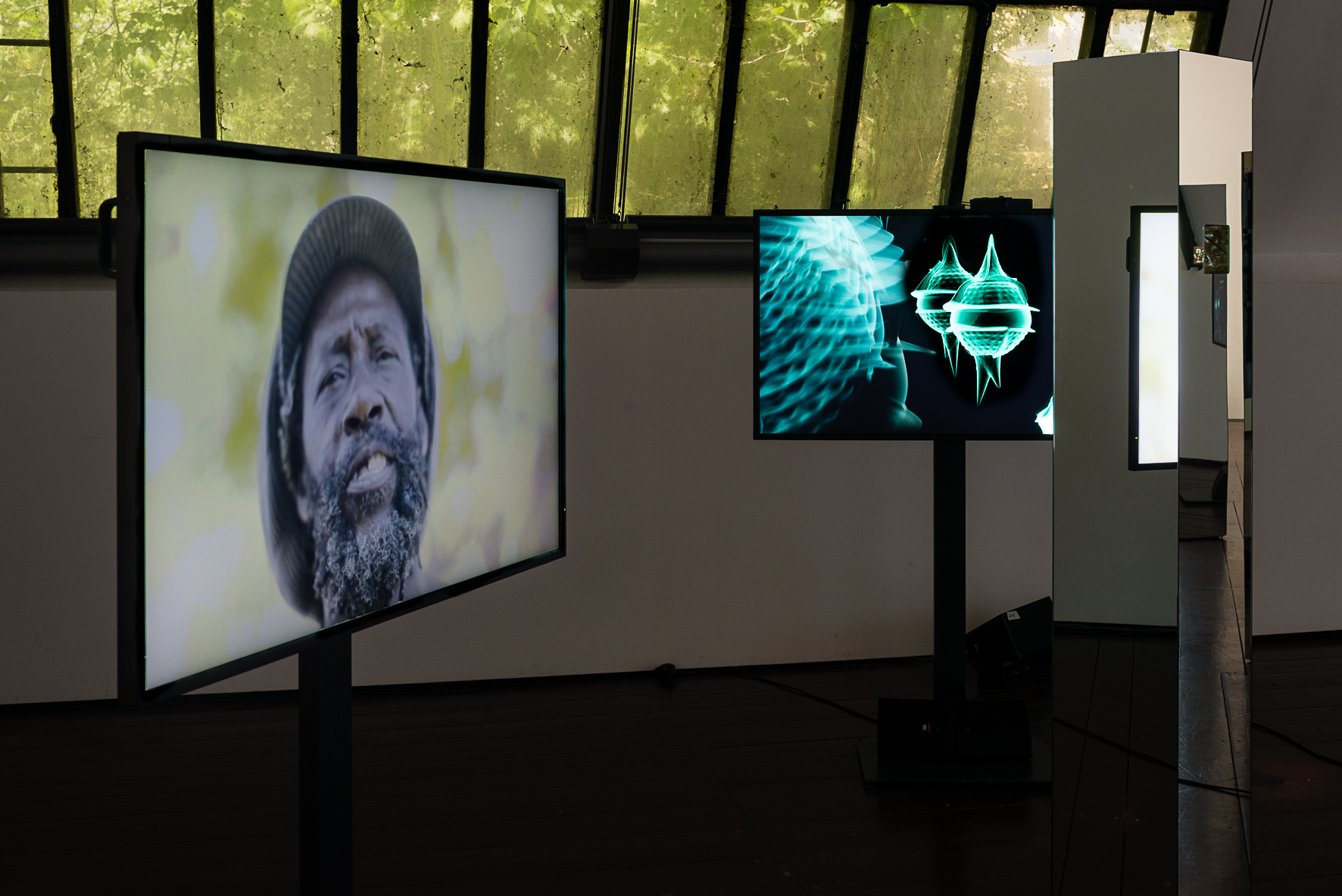
SMW: The installation called glistening troubles has been commissioned for the Contour Biennale and has allowed me to develop a new work over nearly two years. The co-commissioning with TBA21–Academy gave me the opportunity to bring my experiences to Jamaica and expand the network, which then actually became the growing seed for planetary sensing: navigations below the surface.
TBA21–Academy and the Alligator Head Foundation had many synergies that met with the early outline of the research project. One of them was exploring national and international heritage protection and the entanglements of natural and cultural heritage and community, human and non-human.
Actually being on site and meeting very different kinds of people, from poets to unions and young fisherfolk who re-explore the craft of fishing on the adjacent beaches, became the most important part: relations and listening, from stories about the alligators at the fishing beaches to the importance of radio as a medium and the amazing crafts practiced. This has been key to my practice since childhood, learning from nature, dynamics, and especially relations—to weather, currents, energy, and technologies.
I learned about the coral reef that was moved[1] and the origins of the Discovery Bay Marine Lab, as well as the many precarious struggles the community in Rock faces with infrastructure and the lack of regulations for tour guides, but most importantly, I made friends and meaningful relationships, not only from my perspective. As Tao Goffe[2] remarks in her field trips, sometimes the informal conversations with a basketweaver, a driver, or someone waiting with you at the bus are the conversations where living culture is transformative and shared more than the archives and endless bureaucratic top-down commands of regulations. I remember a driver who wasn't actually a driver but helped his brother, who got sick. On a long drive, as a road was closed and we had to take a detour, we talked a lot, and at the end the driver said, “Please come back, we need people like you in Jamaica.”
Now that I am writing a research paper, I recognize how many unexpected and unforeseeable paths were taken because of listening and being with people. But the point is, unlike social scientists or geographers, I was open to something nearly impossible: to listen to the dinoflagellates (as I was kidnapped and they made me their barrister for multispecies justice in an ongoing court case), which allowed me to relate in various ways. One of the marine biologists I met was super supportive and said to me: “You can ask questions and bring things together that we as scientists can not.”
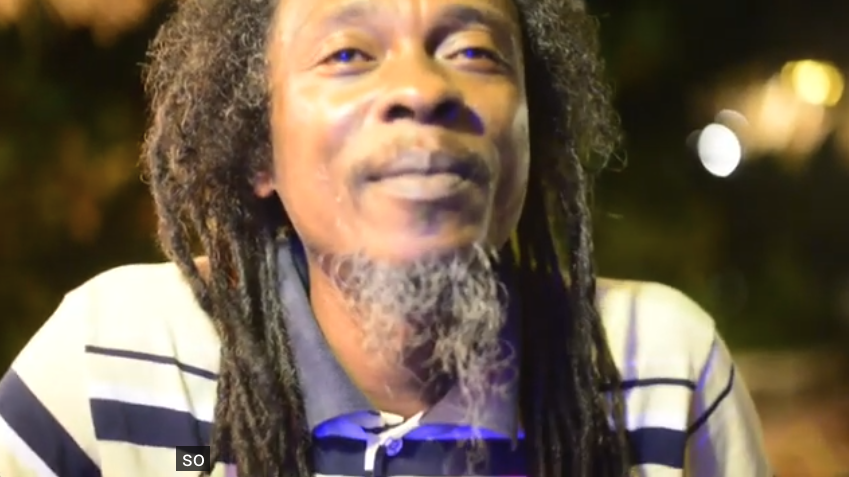
This was a moment of empowerment, like a portal: at the beginning of the project, I was not even sure it all made sense, and the leading scientist at the closest marine biology laboratory even deemed the starting point of our inquiry necessary. There were many encounters that fostered continuity through meaningful relationships rather than through any achievement. On the contrary, the current dynamics of militarization have pushed attention and research funding in different directions. From an artist's position, often the intensity of the falling rain or the breathing of a horse against your neck and, of course, the experience of swimming in the glowing water of dinoflagellate clusters under a star-filled sky are experiences that drive the work. The moments of turtle hatchings on a small beach I was able to be present for, but also stories that entangle the past and present with rhythm and flow, like the interview with Ras Rod, a Jamaican poet.
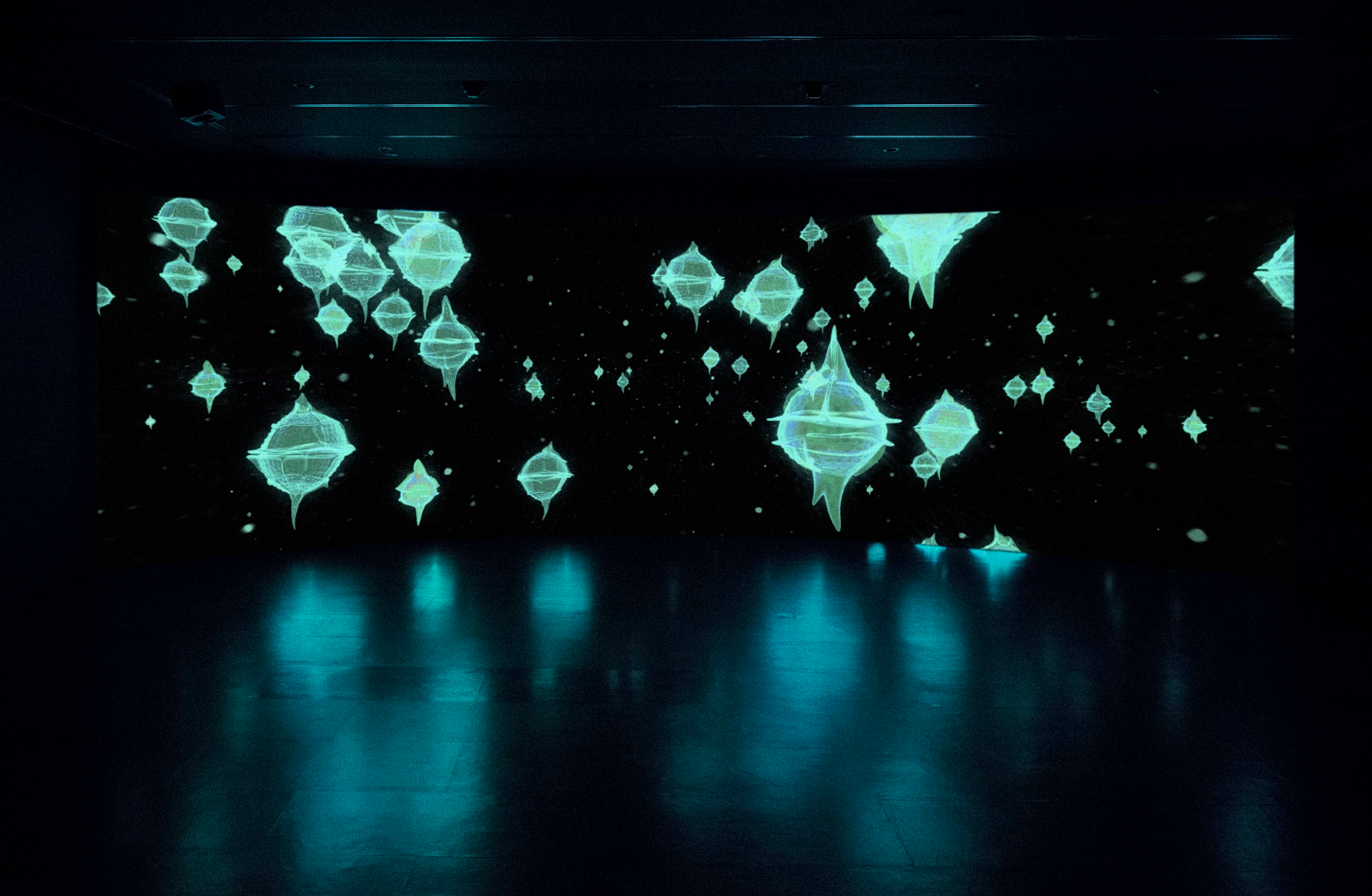
The work was exhibited in various iterations and contexts within and beyond TBA21, for example, in the Academy’s very first exhibition, Tidalectics, curated by Stefanie Hessler, first at Augarten in Vienna, then traveling to Le Fresnoy and Dubrovnik. In 2023, it was part of the exhibition Abundant Futures at C3A in Cordoba, curated by Daniela Zyman, and in 2025, of Becoming Ocean at Villa Arson in Nice, France, organized in conjunction with the 3rd United Nations Ocean Conference. planetary opera and planetary loop of gravitation divided by the current were also featured in the exhibition Terraphilia at Museo Nacional Thyssen-Bornemisza. Did the work evolve throughout these iterations? Or did your relationship to the work evolve? How do you reflect on these different contexts?
SMW: The work was first commissioned for the Contour Biennale, with early talks and involvement of the curator Stefanie Hessler for the Tidalectics exhibitions, which traveled to different venues. The reception of the work was amazing, maybe exactly because it showed the complicated and beautifully connected relations of the bioluminescence and its company, the humans and non-humans. So the concept and context of Abundant Futures and last year's Becoming Ocean were perfect occasions to install the work—as you might say, it also evolves with the audience and framework. On each occasion, the work took on slightly different features in relation to the space. In 2016, when we started working with it, ecological justice was not seen by everyone as on an equal level with social justice. Now, not only in the wake of our climate disaster reality but also as we find strategies for repair, sensing, and convivial living, it is a necessity to connect the ecological to and within the social, racial, and political.
The planetary opera, composed of a soundscape and a 4K CGI animation for a large curved projection, was developed through the research project and premiered in Hong Kong in 2018, with Empty Gallery as a co-commissioner. In the years after its premiere, it was shown at the Montreal Biennale and at the Sligo Museum of Contemporary Art in Ireland, among others. The opera evolved through a residency and commission in Hong Kong, an environment that was complementary to the research in Jamaica. There are interesting connections between Jamaica and Hong Kong in the past and in the present to the future. I spent most of my time in Hong Kong on an island, a sacred island for its biodiversity, with many ghosts and elderly people, a silent, very calm place to listen. Situated opposite the gallery, and not far from the busy cyber-city and the larger skyscrapers, it was a place to see what observations were also valid in another very specific context with another species of dinoflagellates. The other part of the research was defined by humans and networks of environmental hacker spaces and activists there. That was another very important portal: the power of DIY technology and activist contexts. This became a turning point for the work with sensors and also a sculptural part in the exhibition.
But maybe most importantly, I took the concept of positionality into account in choosing the medium: the opera is the grand spectacle of art forms for the human species. Also, I come from a village very close to Bayreuth, the place where the art of opera is celebrated even in a political context.
While working in Hong Kong, it was the time of a devastating hurricane, and a sort of lockdown left me spending some time, as I call it, in the eye of the storm. I stayed in the gallery placed on the 23rd floor at a coastal proximity to the water, and the elevators were hardly functioning, as well as electricity power outages...and I was drawing a map of the currents at the same time.
The trouble in theory (& practice)
Your work, thought, and language seem to be in dialogue with many thinkers of new materialisms and beyond, from Karen River Barad’s “having-the-other-in-one ’s-skin”, Donna Haraway’s naturecultural entanglements, Félix Guattari’s three ecologies, Elizabeth Povinelli’s “geontology” and “embankments”. How do you work with these conceptual anchors? The art world seemed to be under the spell of new materialisms over the past few years, a welcome conceptual development; however, how do we make them resonate in practice?
SMW: It is a little bit the other way round. As someone trained in philosophy and collective self-organization, often on the blurry line between art and activism, the concepts were carved out of practice. The term new materialism is not my favorite and is often used now as a strange bag. If you need to use the way-too-broad term, we have even more connection to historical materialism. But River Barad's position has been very important because it's a queer position that analyses quantum physics with a sharp eye and with a clear perspective, asking: where is justice? Barad is thoroughly scientific and very eloquently sharp, and we are super thankful for that, because when new materialism tries to disregard the political in these concepts, it becomes more of an extractive endeavor, and we are, again, on the opposite end of that effort. The practice demanded that we expand the framework for planetary sensing from the beginning to concepts like deep implicancy by Denise Ferreira da Silva and the chutulucene by Donna Haraway. Both these positions have a strong hold and analysis of the violent pasts that brought us into the colonial and extractive contemporary times. So, Malcolm Ferdinand’s decolonial ecologies have become even more important in recent years, as they speak particularly from the Caribbean.
The term embankments, for example, stems from dialogues with Elizabeth Povinelli, such as the one in Vienna[3], but it's important to note that there were many before in seminars, lectures, and correspondence with her, as well as with Denise Ferreira da Silva[4] and Laleta Davis Mattis[5]. The concepts evolving from Povinelli's geontological framework, such as embankment, have now also expanded to incorporate more specific geographical details, as you might see, for example, in reading Kathryn Yusoff.
The bay in Jamaica we have been centered on is a geographical material embankment. It's a bay largely composed of sediments, some floating and changing, but some compositions in the parameters the microorganism needs to thrive and glow are the same. So it is a real embankment, and that's why the term fits so well and even allows going into more detail, like how specific embankments define specific currents. In the later part of planetary sensing, which is our practical and conceptual umbrella project, the currents became so much more important. You can say that was a conceptual term that arose from investigating the actual conditions of the bay and from fisherfolk telling us about their day-to-day experiences, including all the precarities.
The biosphere, the technosphere
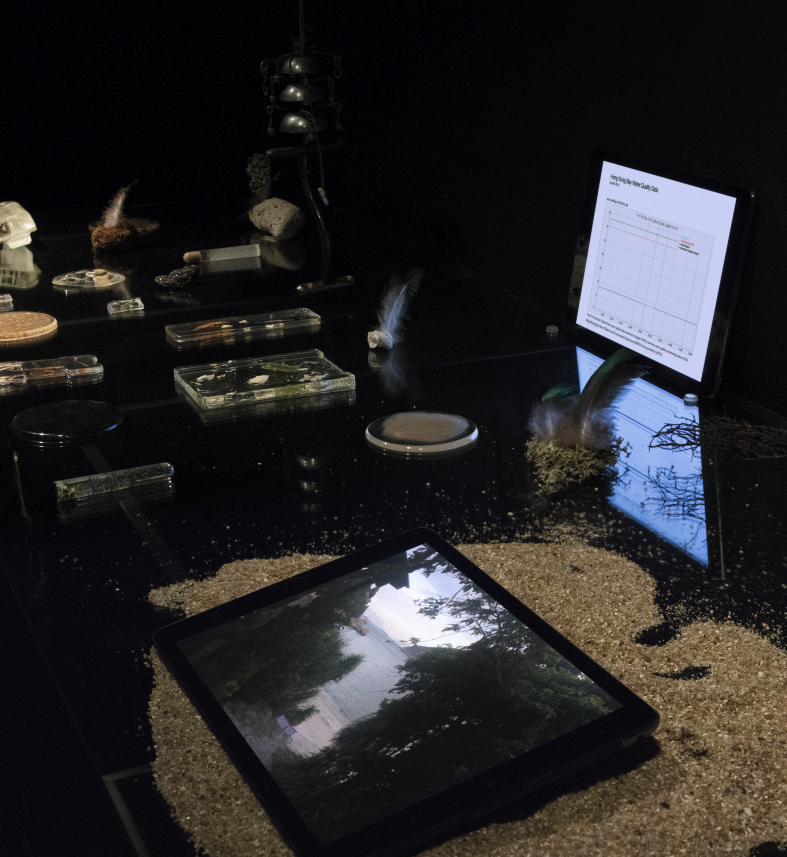
The analogy you make between bioluminescence and touchscreens invites a reflection on the role of technology in the more-than-human milieu. Is the cyborg still relevant after all?
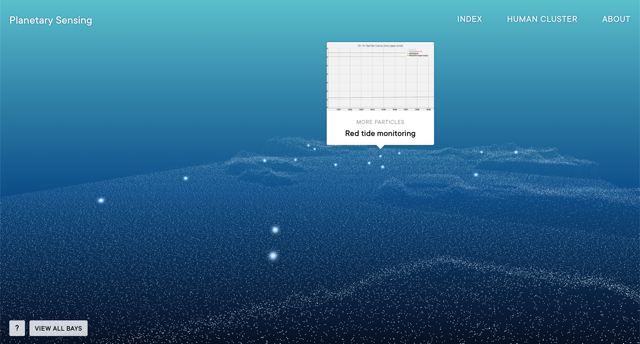
SMW: Haha, yeah, the cyborg, or maybe now the centaur, as Cory Doctorow describes one option of framing AI[6]. But first, yes, the technological aspects have been very relevant, not only in the high-speed feedback mechanism that the glow of a cluster of dinoflagellates is, as a chemical reaction, and which technological feedback systems wish to imitate. It also became an important line in our investigations and installations, from bacterial carriers in nanoresearch to biosensors, and where and which data contributes; and also in the way a research project can become a sensing organ, an alarm, or a mission to sensibilize. We have recently made a virtual reality application based on the bioluminescence experience. However, as a takeaway, I would say our approach has always praised the still more sophisticated technology in nature than in human-made systems, from the epiphyte to the transforming dogs of Mumbai or the camel's nose.
The human cluster
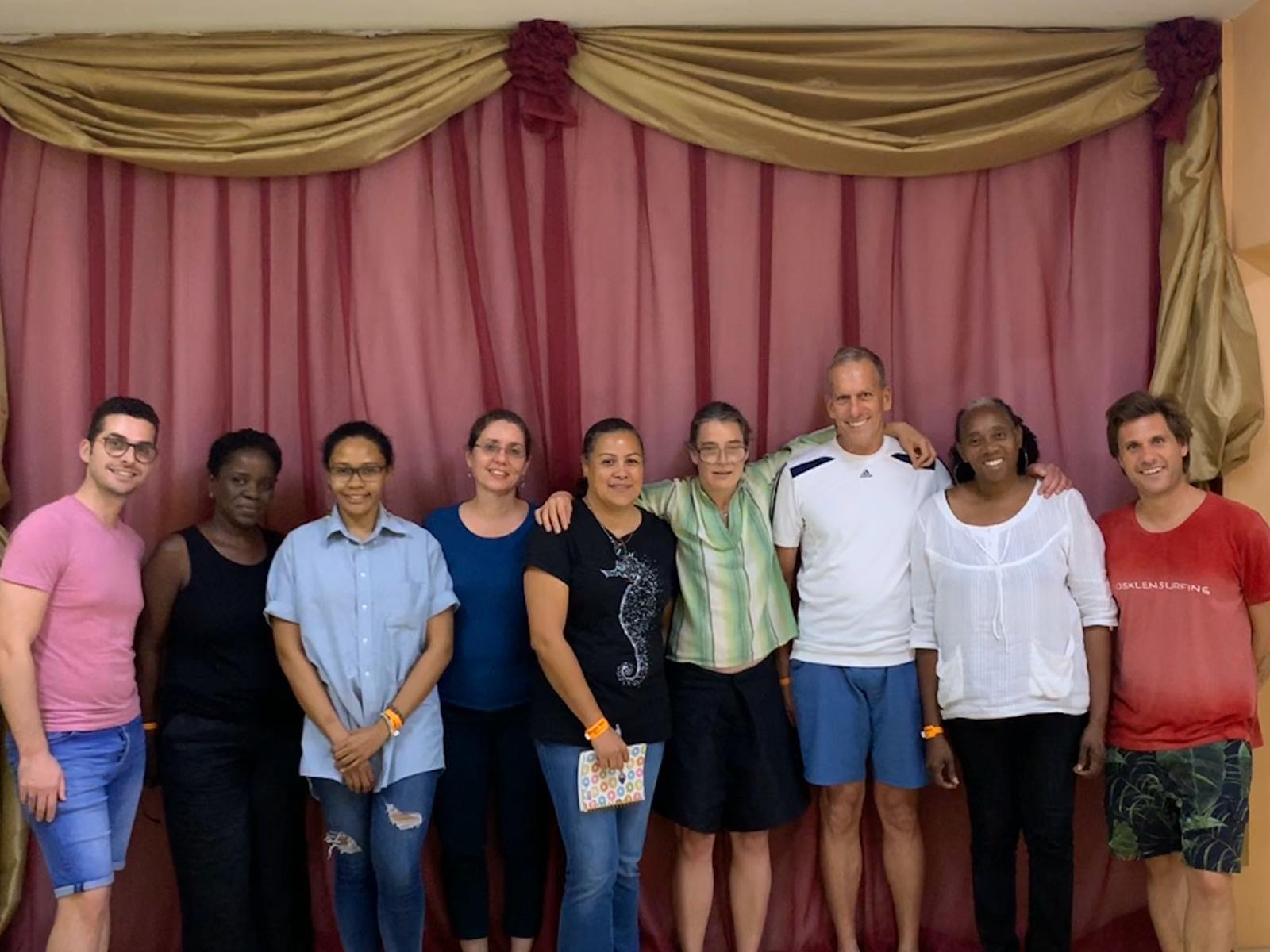
glistening troubles emerged as a collaboration from the very beginning, with the dinoflagellates, as well as with a “human cluster” of collaborators and exchanges. You mention Denise Ferreia da Silva, Laleta Davis-Mattis, Michael Latz, the fishermen in Jamaica, and many others. How did this community come to life? How have you embedded yourself in the local community in Oyster Bay and built a sense of kinship?
SMW: That is a very good question, as today I met a researcher from the Arctic Center working on artifacts, whom I just invited for a lecture, and when she described her methods, which were basically making relations that can be meaningful for all parties involved, it felt like a revelation because this is how we operated. It's not just about mere relations, as that can again be a very extractive setup; it's about ensuring they're meaningful and make sense for all parties involved. It's something we also use as a matrix with the perspective of the more-than-human. A biosensor is not just a provider of data; it also should be a voice, as you can say, and many differently oriented cosmologies would demand and have demanded for ages.
We always have these buzzwords: companion, kinship, convivial, and so on, but the basis is that the foundation is a relation that goes both ways, or ideally, many yet unknown ways. Again, that is also why River Barad's agential realism is so precise and asks for a perspective of justice, not a mere new materialism. Obligation and accountability play into a higher degree than the blank concept does, the closer you look at it.
In particular, we would like to highlight Nickie Myers' insistence on transformation instead of transaction[7]. Based on Rastafarian cosmology as a portal, this became a strong guideline. Another example is Ras Rod's rhythmic explanations and physical poetics of time travel. Taking these voices in the project as important as the other concepts, I developed the term portal for my practice in general with key importance. And this very much resonated with aspects of multispecies justice and nature-as-technology we can learn from.
A step towards planetary heritage
How did the opportunity for a National Heritage (and later World Heritage) site come about? Although traditional conservation models have many shortcomings, could this designation be a tangible step toward protecting the bay?
SMW: We mapped the application at the very beginning of the project as a trajectory because there is already a natural/cultural designated site, the Blue and John Crow Mountains (inscribed in 2015) in Jamaica, that prohibits mining and extraction, so you can see this designation as a shield. Again, thanks to the collaboration with TBA21–Academy and the Alligator Head Foundation, I was able to explore that site myself on a tour.
The designation as a UNESCO heritage site, on a very basic argument, signals a need for serious protection, but it does not give much more than a name. In our case, the process and the path to a meaningful discussion, as we achieved at the symposium, which was called The Glowing Legacy of Peace, were the most important. Bringing these people together to listen to one another was groundbreaking, especially within the framework of the Institute of Jamaica and with the support of UNESCO. It connected organizations, showed shared interests, plus it inspired them to do more. Thus, we are currently working with more scientists from the University of the West Indies to implement longer-term effects and echoes of what our project has achieved. This is the most important part—to enable and empower future research as locally based and managed.
It is very clear that this can never be the solution, not even partially; however, it can be a legal and distribution-of-attention instrument. On the one hand, it is just a designation, and obviously, it would need not just maintenance but also expansion on the educational and conservation sides for it to be anything of value. On the other hand, as we had this as a goal, or a carrot for the rabbit, it means some acknowledgment with at least possible consequences on paper. For example, in that concrete case, it would make it harder for further development to cut off the community’s access to the coastal areas, which is a huge issue that derives from a tricky legal foundation.
How do you look at this endeavor in light of wider political & planetary currents: the US implementing massive funding cuts to science and education (creating deficits for environmental initiatives as well), a reactionary political wave spreading through Europe, not to mention the blatant disregard for life in countless places around the world, such as Palestine, Sudan, and the Congo, to name a few. How does this work fit into a wider project of cultivating a critical planetary consciousness?
This is a wide-scope question, but let me first say that the time when we started the project was also one of urgency and geopolitics, being maybe not that planetary, but you could already sense it (to play on that term) through voices from different cosmologies like The Falling Sky by Davi Kopenawa from 2010—and I take the publishing date before it became a bestseller. For the ones who sense the violence has accelerated but still has the same patterns: extractive mind- and soul-sets, you can say.
Our ties and relations to Palestine, as well as my antifascist past and now—if you want the terms—an anticolonial, or better, abolitionist position, have deep roots not just in blood and non-blood family.
A new, in-your-face colonialism and fascism is now more and more visible in the media, but it was and is there, since modernism, and before. It might, and will, further challenge what we make with our sensing organs and what we sense. For example, the increasing militarization everywhere, also in Norway, affords us a critical attitude to uncover all the companies claiming to work for peace but in reality expand war machines on many levels: psychological, colonial, economic, and sociopolitical. To do this kind of critical work and not stop believing in infrastructures of support for all kinds of living and non-living entities as a counterbalance is a never-ending story; it might be a condition of this strange species called humans—but as you know, I am slowly transforming into a dinoflagellate.
Footnotes
[1] The coral relocation project for the Falmouth Cruise Ship Terminal in Jamaica—conducted initially around 2009–2010 during the terminal's construction and later revisited with revised plans like the one by Smith Warner International in 2018—is widely cited by environmental groups as a failure. See more about the project here.
[2] Dr. Tao Leigh Goffe is a writer, theorist, and artist whose work bridges geology, climate justice, gender, and Afro-Asian diasporic thought.
[3] ephemeropteræ 2017/#10, Elizabeth A. Povinelli & Susanne M. Winterling, TBA21.
[4] Fractal sensing/thinking on a planetary scale. Denise Ferreira da Silva and Susanne M. Winterling, Pandora’s Box.
[5] To change the rules…/… for the voiceless…./… the beautiful ones are not yet born² … and the duty to care. Laleta Davis Mattis & Susanne Winterling, Pandora’s Box.
[6] Cory Doctorow: The Reverse-Centaur’s Guide to Criticizing AI
[7] Nickie Myers on collaborative powers and the non-transactional.
References
Ferreira da Silva, D. (2025) Ancestral claims: negative accumulation, deep implicancy & the case for general emancipation. Cult Dyn. 37(3) https://doi.org/10.1177/09213740251363556
Goffe, T.L. (2025). Dark Laboratory on Columbus, the Caribbean, and the origins of the climate crisis. Doubleday. New York
Goffe, T.L. (2023) 'Not another lab: the forever crisis of incentivizing collaboration in the humanities,' ASAP/Journal, 8(2), pp. 248–254. https://doi.org/10.1353/asa.2023.a910055.
Chevalier, C. 2026. The Ocean Is Not a Machine: A Feminist Media Analysis of Oceanographic Models, Simulations, and Futures. World Futures Review, 0(0). https://doi.org/10.1177/19467567261443105