
Listening as Care and Ecological Disobedience
Meet Robertina Šebjanič, Ocean-Archive.org’s 2026 Digital Resident and artistic lead of OCEAN / UNI Activations Sound Ecologies

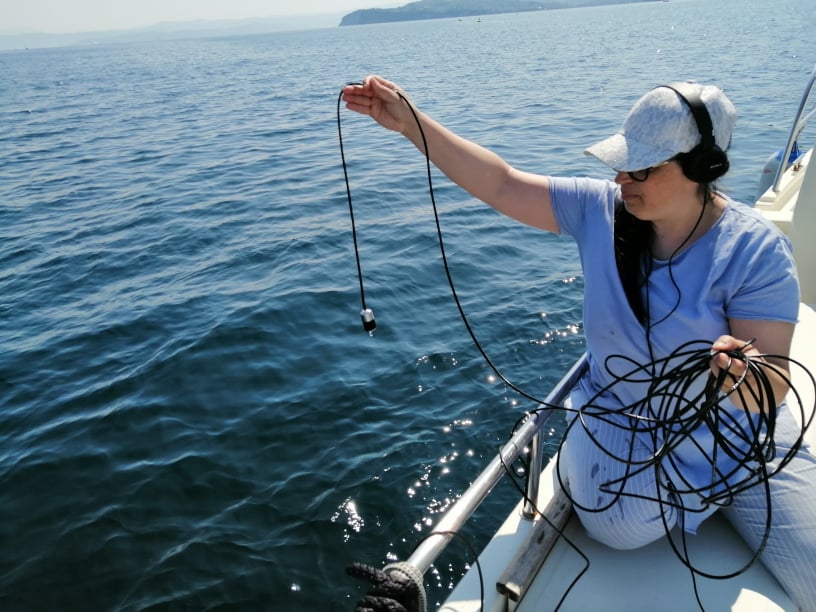
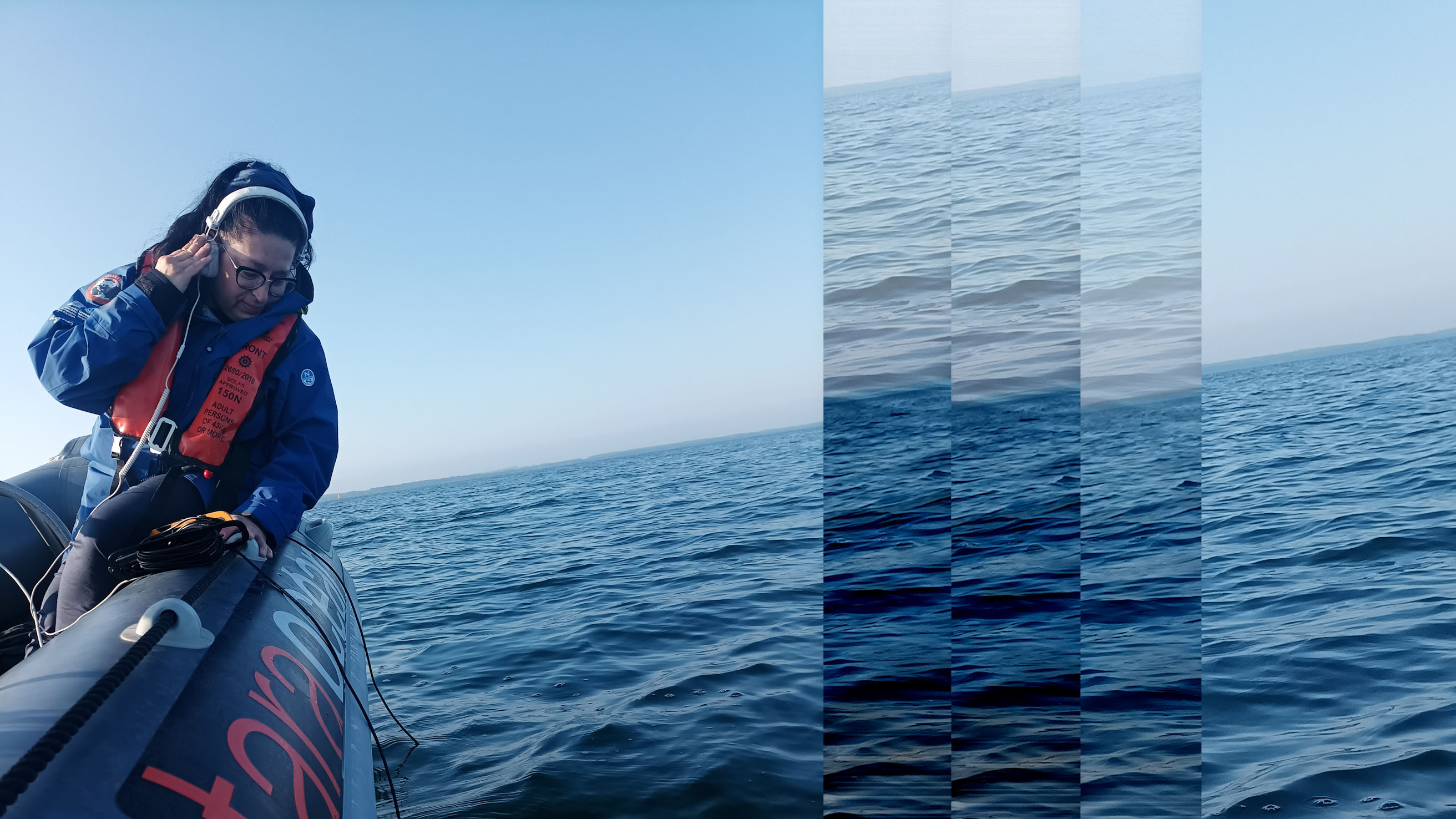
Robertina Šebjanič is most at home in the porosity between spaces. An artist and researcher whose practice drifts through the fluid thresholds of ecology, (geo)politics, and arts, attuned to the rhythms and ruptures of aquatic worlds, her award-winning works navigate the intertidal zones between species and bring to the surface the submerged voices of oceans and rivers. Her Ocean-Archive.org digital residency will unfold as a sonic ecological practice, carefully listening to aquatic, aerial, and botanic entanglements to reveal their hidden vulnerabilities and interdependencies. Alongside the residency, Robertina serves as the artistic lead for this semester’s OCEAN / UNI Activations, a hands-on workshop series exploring the relationship between biodiversity, investigative listening, and ecoacoustics. She enjoys listening to chatty fish, snapping shrimps, and other marine life she has had the chance to encounter while eavesdropping with a hydrophone as an artist-in-residence aboard scientific research vessels, including the Celtic Explorer in the North Atlantic and the Tara schooner in the Baltic Sea, among others.
Your work often explores multispecies relationships, empathy, and possible ways of coexistence, especially in aquatic environments. What draws you to the underwater worlds?
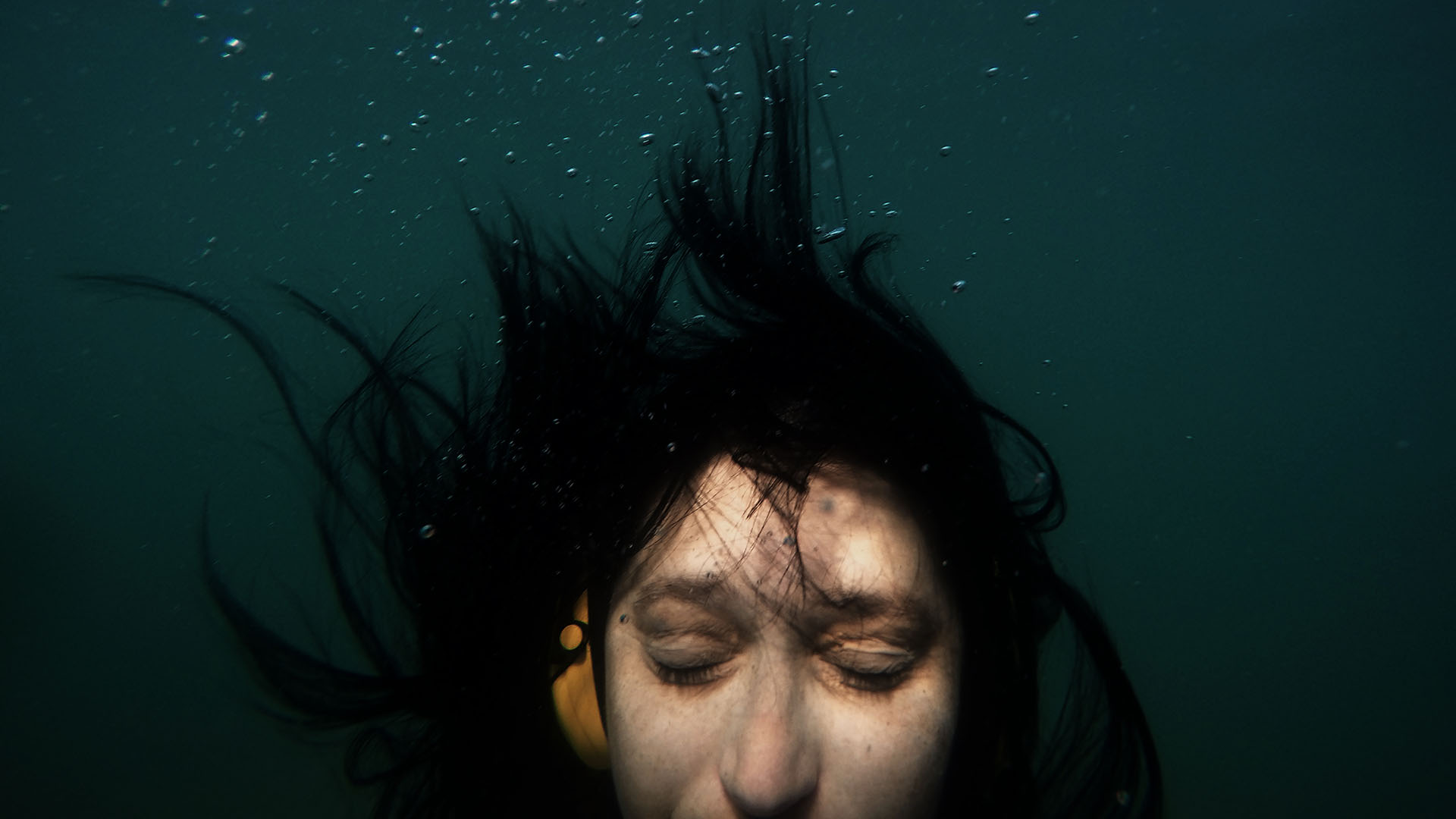
My entry into underwater worlds began with curiosity, or better to say, with a desire to inhabit environments where my body must relearn how to exist, move, and perceive. To enter these spaces is to experience a form of suspension, almost a levitation, where gravity loosens its grip, and the familiar coordinates of orientation dissolve. In these submerged environments, our human perception quickly reaches its limits. Sonic communication is one of the main orientation points, as it is stronger and wider than in our terrestrial space. Sound travels differently, bodies move differently, and visibility is radically reduced. These conditions disrupt habitual ways of sensing, inviting us into a deeper attentiveness to the more-than-human rhythms, presences, and forms of life.
Aquatic ecologies are deeply entangled with atmospheric systems, river flows, and human infrastructures. Yet they remain largely absent from dominant political and economic frameworks. Through hydroacoustic listening, I approach these environments not as resources to be extracted, but as relational systems - as active, sensing, and responsive entities.
Water also carries traces of human presence, such as industrial histories, military activity—as geopolitical tensions are in constant flux—and accelerating extraction. My work engages with these layered temporalities and with forms of communication that exceed human-centered perception. This positions empathy not as a metaphorical gesture, but as a situated mode of attention and care.
How do your long-term research interests in hydrogeological systems and ecology shape your artistic methodology and inform your engagement with more-than-human life?
Over the past decade, my practice has expanded across changing hydrogeological systems, shifting morphologies, and ecologically sensitive zones, while remaining attentive to the more-than-human entities encountered within these environments. My research engages with sound and noise pollution in the oceans through the framework of the Aquatocene, * as well as with the chemical presence of leaking military waste on the seafloor; remains of geopolitical conflicts that continue to contaminate marine ecosystems, long after the conflicts are gone. These concerns are central to my latest series, Echoes of the Abyss (started at TARA Ocean Foundation in 2023).
Through my research, I examine how toxic and acoustic traces reveal the persistence of human violence in multiple, often invisible forms, shaping the lives of more-than-human organisms and transforming fragile ecological systems. I am deeply inspired by the multipresence and extraordinary biodiversity of diverse geopolitical and environmental contexts, from the Adriatic Sea and the Galápagos Islands to the North Atlantic Ocean, lakes in Mexico, caves in Slovenia, the shores of Busan, and beyond.
Within these environments, I have worked with a wide range of species, such as the moon jellyfish—which was the first organism I incorporated into my artistic work—, basking sharks, axolotls, proteus, and other vulnerable or overlooked, but absolutely fascinating organisms, as main protagonists in processes of research and artistic inquiry. These encounters invite me to rethink cultural, industrial, and scientific representations of more-than-human life, and to question how human-centered narratives shape our understanding of biodiversity.
Rather than translating these beings into familiar metaphors, I am interested in how their sensory worlds, rhythms, and modes of existence challenge our human dominant ways of knowing. Through sound, imaging, touch, and embodied practices, I seek to attune to their perceptual registers and sensitivities, cultivating forms of listening that move beyond human-centered interpretation.
In your Ocean-Archive.org residency, “Shadows Above My Window”, you set out to approach listening as both a practice of care and as ecological disobedience. How do these approaches work together, or in parallel?
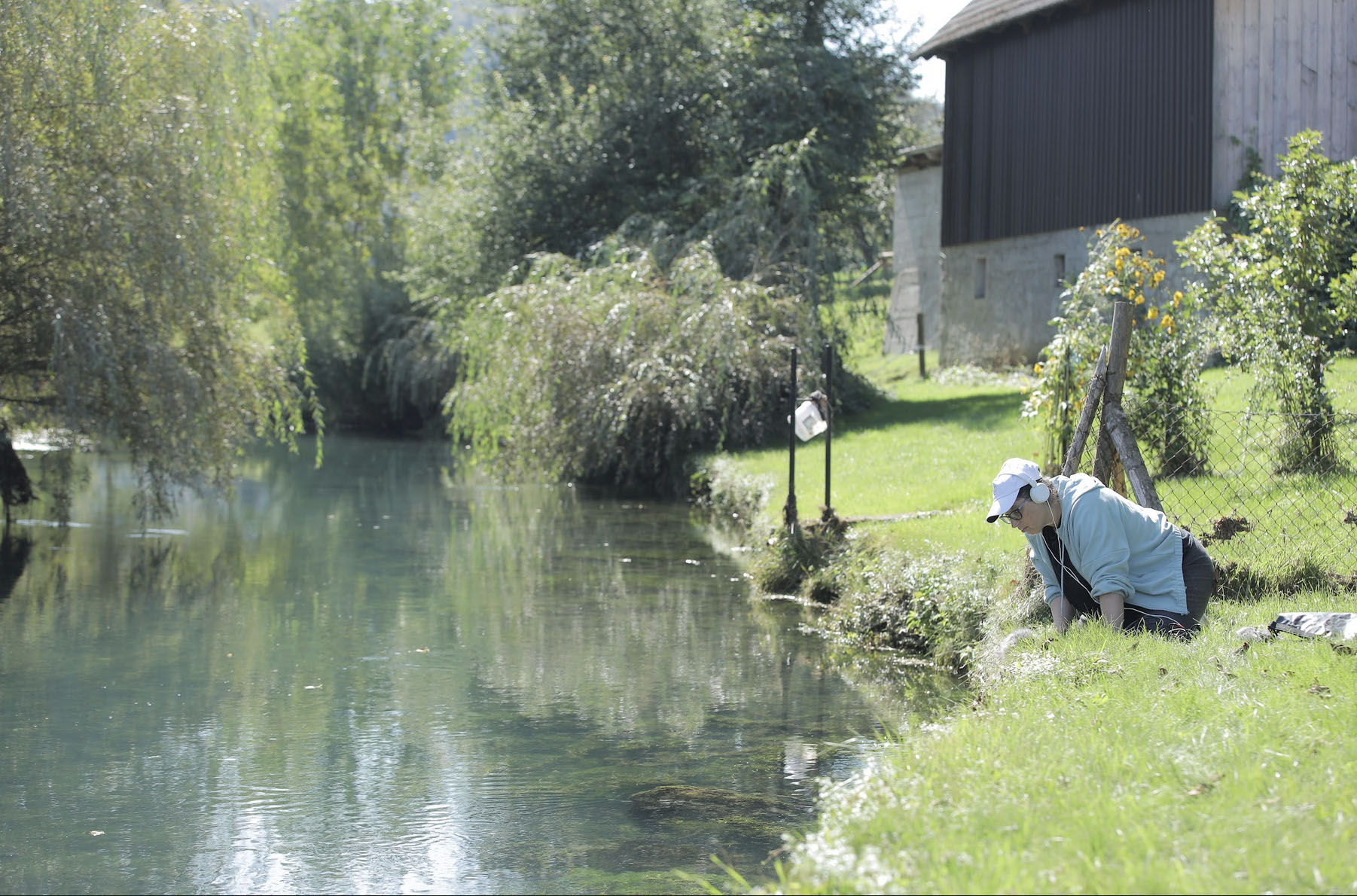
I think that listening as care begins with slowing down: learning how to approach complex, fragile, and often damaged environments without immediately turning them into something to be used, or of use. It requires long-term engagement, reciprocity with local ecologies, and collaboration with those who live and work closely with these waters.
At the same time, attentive listening can become a form of ecological disobedience. Within extractive systems, environments are often treated as objects of optimization/control. By insisting on listening as relational, embodied, and affective, I try to resist these instrumental logics. Through hydroacoustic listening, I try to engage with underwater environments not as resources, but as sensing, relational systems.
I think that care and disobedience operate together - care grounds the work ethically, while disobedience challenges the geopolitical, industrial, and economic structures that normalize environmental degradation. Listening becomes both a mode of protection and a form of refusal.
What is the role of myth (you specifically mention the Slavic water spirit Vodník) in underwater imaginaries? How do different knowledge systems converge in your work?
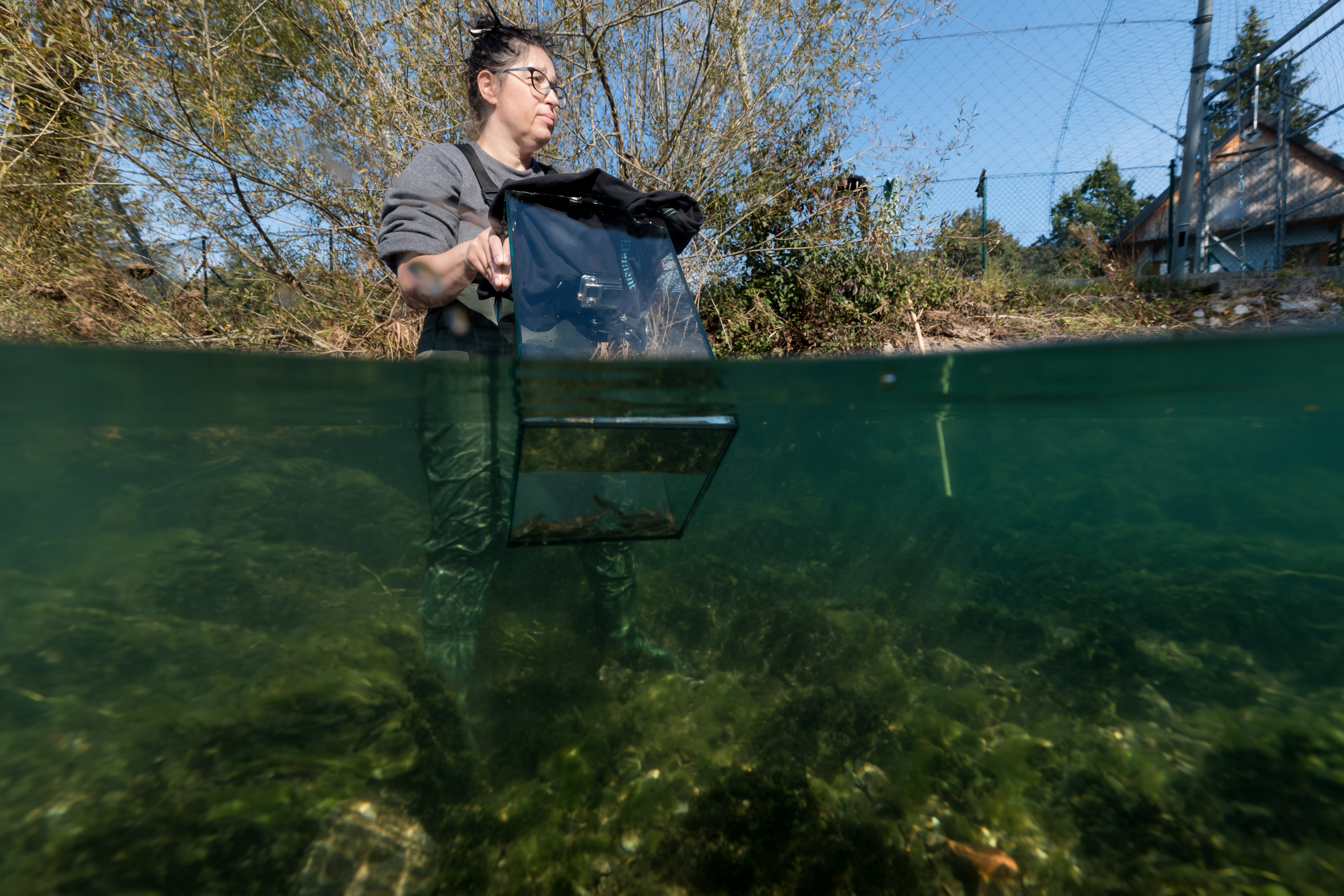
Myth offers a way of understanding ecological relationships not through control or ownership, but through coexistence, respect, and responsibility. In the work that I am currently developing within Ocean-Archive.org’s 2026 digital residency, I engage with several mythological creatures and stories, placing them in contraposition to environmental data and scientific research. As the digital residency engages with the landscapes of the Czech Republic, Slovenia, and the Mediterranean Sea, I will closely examine these environments to connect hydro-, atmo-, and terra-spheric spaces.
To mention a few, I was deeply inspired when looking into the Czech folk tales, where a friend pointed out to me the Vodník**, who appears as a guardian and mediator between human and aquatic worlds, carrying cultural memory embedded in rivers, lakes, and wetlands. Alongside the Vodník, I was looking into ferns, which are associated in Slavic mythology (especially in Slovenia, where I come from) with invisibility and hidden knowledge, acting as terrestrial witnesses. Together, these figures connect water and land through shared forms of attention. As in mythological or folk storytelling, they appear to be mediators between more-than-human and human worlds, which I then also connected with a personal memory from my childhood that captures this vividly. My aunt used to tell me that on Midsummer’s Eve, if fern spores fall into your shoes, you can understand the conversations of animals. As a child, I would place fern “seeds” in my shoes, hoping it might be true. At the time, we called them seeds, even though ferns have spores. This story has stayed with me, shaping my curiosity and my attentiveness to more-than-human ways of knowing.
For me, myth does not oppose science; it complements it. Scientific data offers precision and, at the same time, calls for care, while myth carries emotional, ethical, and intergenerational knowledge. By bringing together hydroacoustics, satellite data, environmental measurements, ethnography, and mythological narratives, I aim to build hybrid ways of knowing that hold both material processes and cultural meaning.
You are also acting as the artistic lead for the OCEAN / UNI Activation series "Sound Ecologies." How are you approaching this collective process?
I approach this process as a form of shared listening, a common entry point into the layered exploration of atmo-hydro-terra-sphere(s). Rather than imposing a fixed artistic framework, we will work to create conditions for exchange between researchers, artists, and participants.
The emphasis is on transdisciplinary translation: learning how different fields listen, measure, interpret, and narrate environmental phenomena. Sound then becomes a common language that allows these perspectives to meet.
Care is central here as well, care for collaborators, for local contexts, and for the environments and beings that live in the places we engage with. The process is iterative and adaptive, shaped by dialogue and mutual exchange and enhancement rather than predetermined outcomes.
What are you most looking forward to?
I am most looking forward to moments when different sensing systems begin to resonate with one another, when hydroacoustic recordings, atmospheric data, mythological references, vegetal listening, and human voices intersect.
These moments often produce unexpected forms of understanding and emotional connection. They can shift how we relate to rivers, oceans, forests, and atmospheric systems. That's why the subtitle of the project is: Hydro/Terra/Atmo _Sphere(s) <> rivers to forests, oceans to clouds, data to myth.
It is also why I work with the idea of shadows—such as acoustic shadows—which trace the spaces where sound fades, reflects, and lingers. These sonic traces reveal hidden rhythms within rivers, forests, and atmospheres
I look forward to entering this new project as a space of shared inquiry, where, through activation sessions, we can develop a perspective of co-creation. At the same time, it offers me the opportunity to further shape my research and develop a new methodological framework focused on creating spaces in which listening becomes transformative.
Through this work, I will use listening to activate responsibility, solidarity, and new imaginaries of more-than-human coexistence in times of ecological, geopolitical, and infrastructural change and uncertainty.
*Aquatocene is an artistic project and conceptual framework developed by Robertina Šebjanič that addresses the transformations and challenges of aquatic environments in the context of ecological, technological, and geopolitical change.
**The Vodnik is a prominent water spirit in Slavic mythology, often depicted as a malevolent, shape-shifting entity that resides in rivers, lakes, and ponds, particularly near water mills.