
Friction is Needed: Mapping the Intangible Impacts of Art–Science Encounters
A chronicle of the ArtScience × Ars Biologica Town Hall at Ars Electronica 2026

September 2026
By Petra Linhartová and Laura Welzenbach
What actually happens in the space between an artist and a scientist? Exhibitions, papers, and prototypes are often the visible results of art–science collaboration. The changes that happen along the way are harder to see: a scientist asks a question differently, or an artist starts to perceive a landscape through data. These shifts rarely make it into a final output, and they rarely appear in a funding report.
Building on the Ars Biologica project of České Budějovice – European Capital of Culture 2028, and on the extensive experience of its partners Ars Electronica and TBA21–Academy in cultivating transdisciplinary research and practice, the event explored how bringing artistic and scientific methodologies into genuine dialogue can transform public engagement, reframe scientific inquiry, and seed long-term ecological awareness.
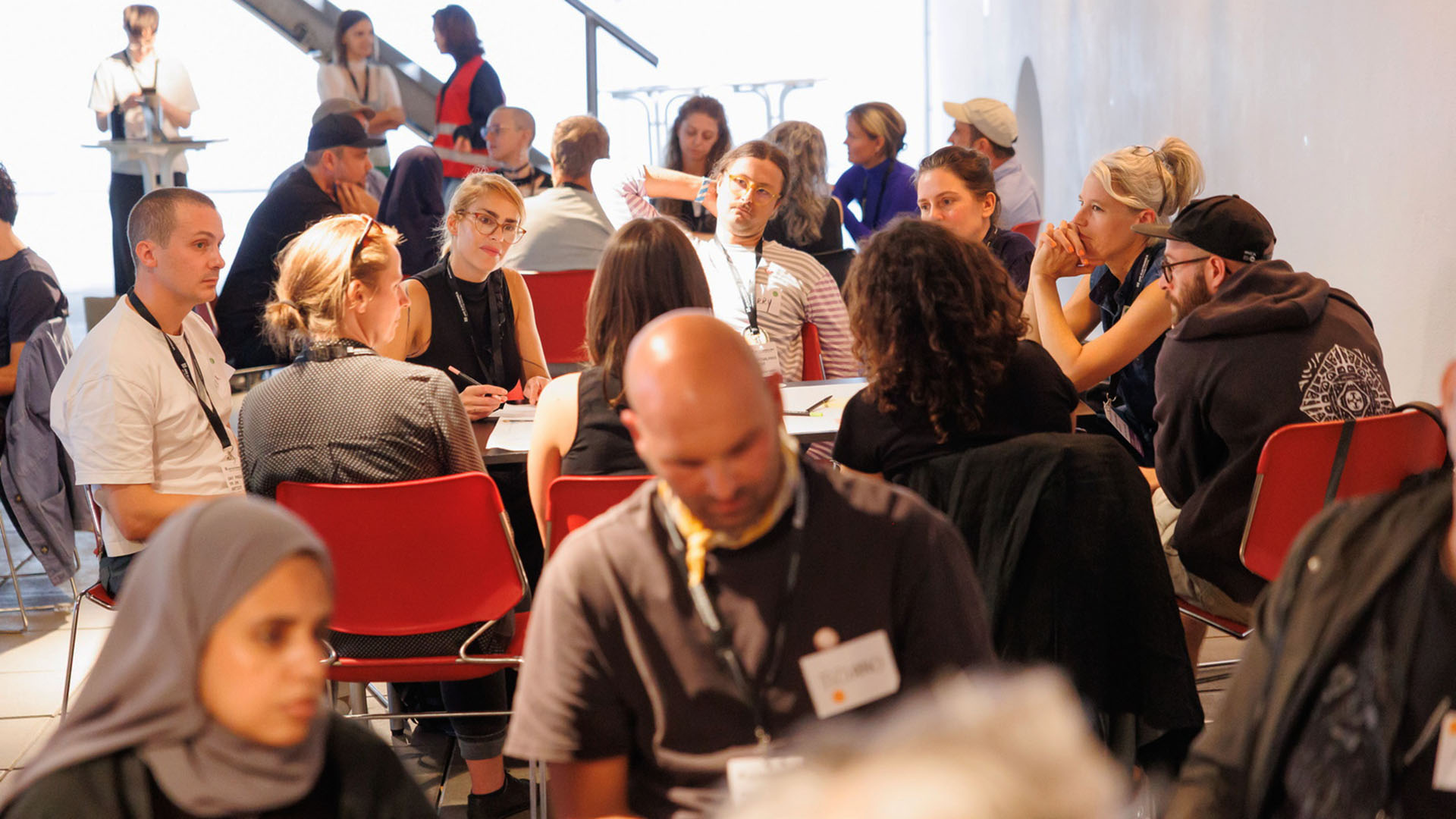
On September 9, 2026, around 50 invited stakeholders and festival visitors gathered at OK Linz to examine these impacts. The town hall meeting, Mapping the Intangible Impacts of Art–Science Encounters, took place during Ars Electronica Festival 2026, titled Negotiating Humanity. Rather than simply cataloging finished projects, the event set out to map what collaborations change in the people, methods, and institutions involved, and what is needed to ensure the long-term sustainability of art–science collaborations.
Context
The session has built on Ars Biologica, an environmental project that brings together artistic and scientific ways of knowing. It aims to develop shared understandings of landscapes, reflect on the (agri)cultural traditions of South Bohemia, and seek responses to climate change. As one of the flagship projects of České Budějovice – European Capital of Culture 2028, it connects art and science research institutions with local and international artistic collectives and experts. Partners range from the Biology Center of the Czech Academy of Sciences and the University of South Bohemia to Ars Electronica or TBA21–Academy.
Ars Biologica unfolds through several strands. The Ars Biologica ArtXScience Residency, developed with Ars Electronica, connects artists, scientists, and local experts. Together, they develop projects at the intersection of art, science, and local practice, explore environmental issues in the region, and create public programs that open these issues to wider audiences. The Ars Biologica Independent Studies (ABIS) is an international art–science program of practice-based inquiry into the entanglements and tensions of living systems, technologies, and cultures. It runs as a yearly series of workshops, field trips, lectures, seminars, collaborative experiments, and a summer school. Another strand is Urban Field, a project aimed at establishing an agricultural plot of land managed by broad urban communities. Urban Field seeks to illuminate how we relate to land and food production in an urban context, as well as what it means to reach agreement on a topic that intersects spatial planning, community practice, environmental issues and even leisure time.
Ars Electronica has spent decades bringing artistic and scientific practices together through its festival, prize, and residencies. TBA21–Academy has built a long-term, Ocean-centered practice of transdisciplinary research that connects artists, scientists, policy makers and communities. Within Ars Biologica, it collaborates with ABIS through OCEAN / UNI, its initiative for art, activism, and science that uses the Ocean to think beyond the binaries of land and sea. OCEAN / UNI's curriculum of live sessions and other online activations is freely available on Ocean-Archive.org. The collaboration centers on OCEAN / UNI's Sound Ecologies program and the related digital artist and researcher in residency, Robertina Šebjanič.
The intention of the town hall meeting was deliberately constructive. Avoiding simplification in critique funding schemes or institutional framework, the participants were asked to imagine best practice. They mapped expectations, assumptions, reality checks, and obstacles, along with ways of overcoming them. The findings will inform the next stages of Ars Biologica on the way to 2028.
The format
The room was divided into five color-coded tables, each led by a host and each dedicated to a single but multilayered leading question. Every table followed the same sequence. Participants spent a few minutes writing silently on post-its, then shared ideas in a circle where each new contribution picked up the thread of the last. After 30 minutes, each table presented its findings to the whole room in three minutes. Free discussion and networking followed.
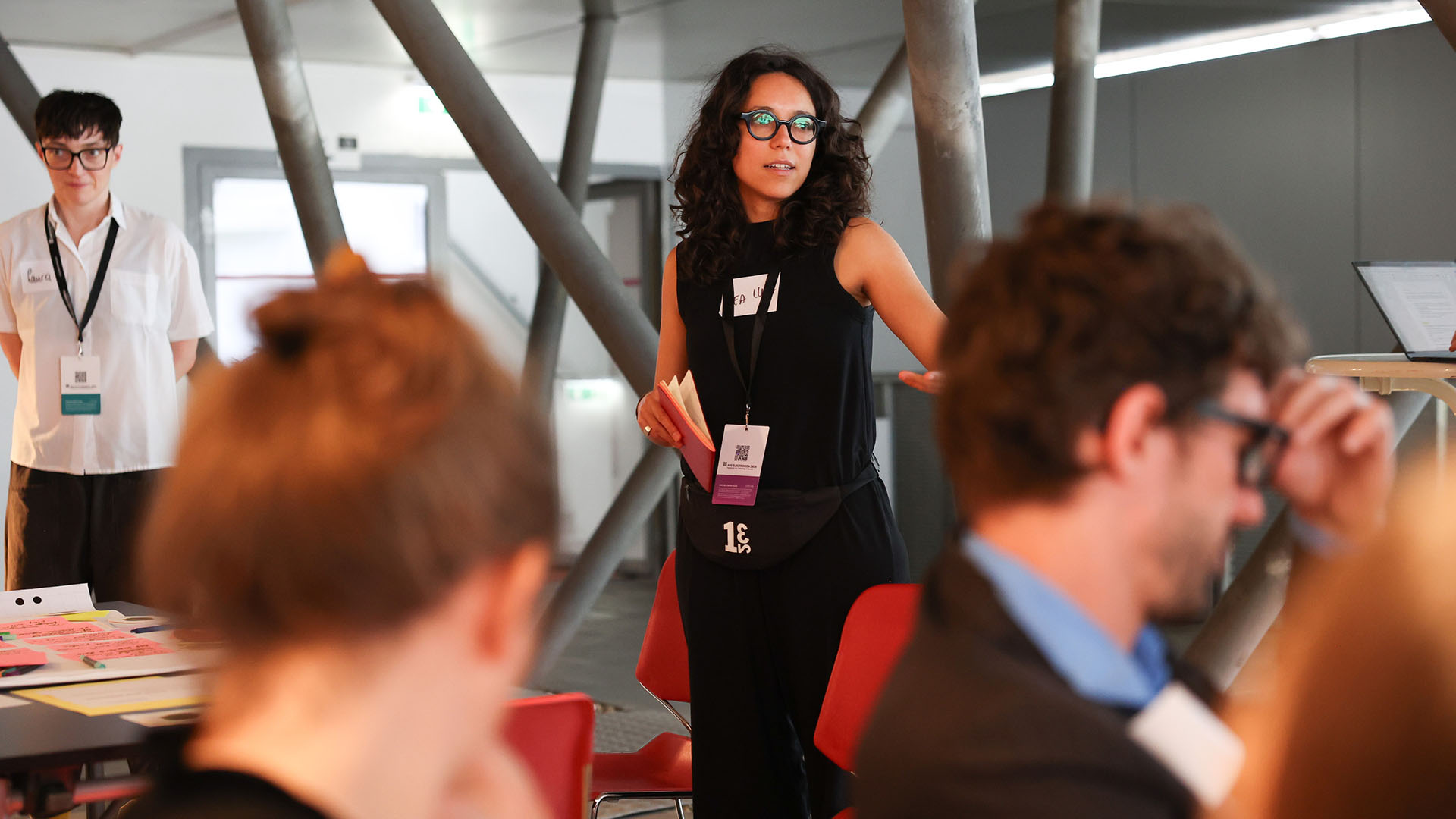
Table 1: Impact on the artists and scientists themselves
Host: Dr. Lea Luka Sikau, Curator at ZKM | Hertzlab and Media Artist/Researcher, together with Denisa Půbalová, Ars Biologica Curated Resident
This table has asked how internal transformations can be acknowledged, documented, and valued: a shift in an artist's perspective, or a new way for a scientist to frame a question. The group spoke of an "impact beyond the impact": the small, unexpected, often embodied moments that emerge in a collaboration. They described these as somatic glimpses that may never appear in the finished work.
Curiosity was named as the foundation of any encounter. Participants also drew a distinction between working with data and working with people. For them, the real exchange happens with the scientists embodying the knowledge, not only with the data they produce. The group was frank about the emotional side of collaboration. Conflict, discomfort, uncertainty, and moments of being overwhelmed were seen as potentially productive parts of the process. Several participants pointed to a tension between the open-ended "unproductivity" these encounters need and the research agendas scientists must follow. Fulfilling a measurable goal, the table suggested, may not be the most important thing. The encounter itself has value, and changes in perspective and ways of thinking deserve recognition as outcomes in their own right.
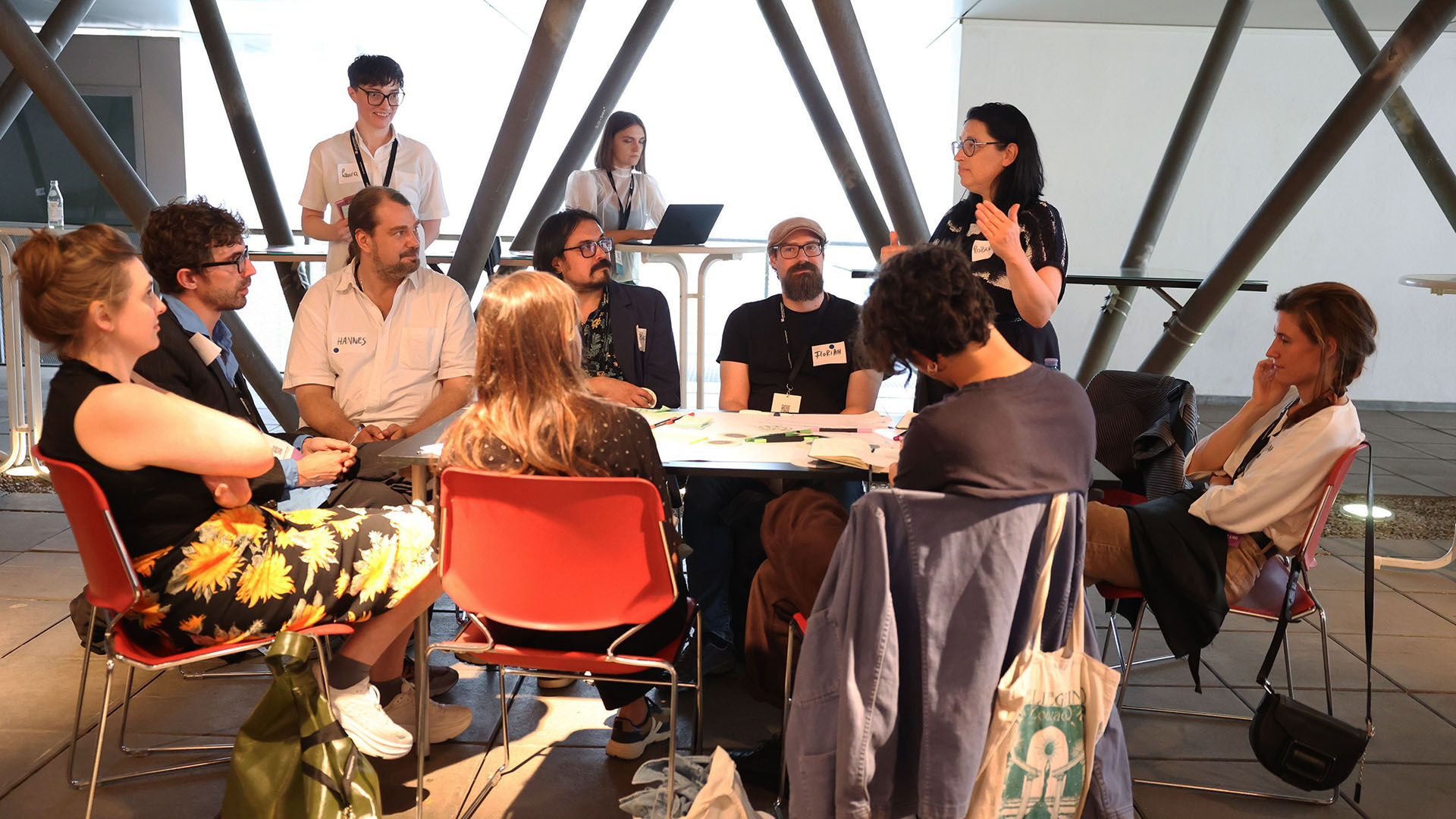
Table 2: Frictions and fluencies
Host: Robertina Šebjanič, artist and researcher; TBA21–Academy Digital Resident 2026; Ars Biologica Prototype Residency Participant in 2025
The second table asked which frictions are most productive, and how artists and scientists move past early misunderstandings toward a shared vocabulary. Its answer became one of the session's most repeated phrases: friction is needed. Friction gives both sides the chance to question their own assumptions, methods, and habits. The group framed this as embracing otherness rather than smoothing it away.
Participants noted that a shared vocabulary can be an illusion. Artists and scientists often use the same words to mean different things. For an artist, "experimenting" may describe a single, open gesture. For a scientist, it implies a repeatable procedure. Translation is therefore needed even when everyone seems to be speaking the same language.
Data was a recurring subject. The group emphasized the story behind the data and the many ways of reading it, from mathematical structures to visual and sensory forms. They also proposed understanding data not as something fixed but as an unstable, in-between space that emerges, circulates, transforms, disappears, and reappears. Questions of how data is archived and who owns it followed. Frictions were not only conceptual: participants named emotional and practical tensions, and in one case, geopolitical conflict, as part of their experience.
One participant described their biggest friction as an internal one. It lies between themselves as an artist who arrives with a plan and likes to act, and a scientist who observes and reacts. In the end, they wrote, this friction led them to an understanding of "correspondence, response-ability". The table closed with a question for the future of education: how can people be prepared to work across disciplinary boundaries rather than within them?
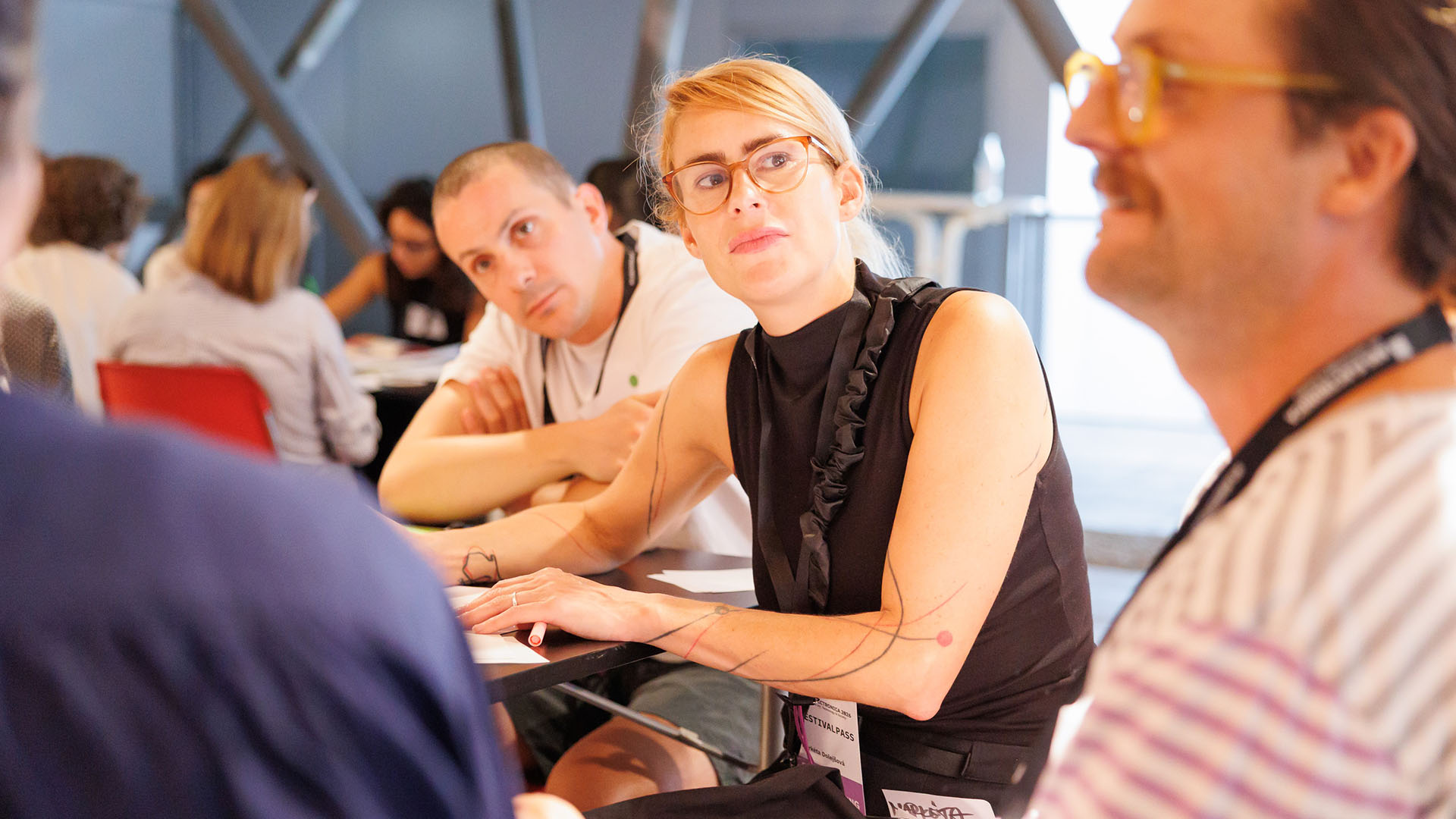
Table 3: Altered methodologies
Host: Dr. Markéta Dolejšová, Curator ABIS and Head of the Doctoral Research Department and Assistant Professor at The Academy of Fine Arts in Prague
The third table asked what happens to scientific inquiry when artistic methods enter it, such as deep listening, acoustic ecology, or speculative mapping. It also asked how sensing and feeling might be treated as rigorous tools. The discussion kept returning to conditions: where and when such methods can take hold.
When it comes to place, the group argued for "neutral" spaces that are neither the studio nor the laboratory. In a shared environment of this kind, neither discipline is automatically dominant. In regard to time, participants noted that art–science collaboration needs time in every direction. Yet both artistic and scientific environments are under strong time pressure. Institutional structures and scientific work cultures often make it hard for scientists to commit to open-ended processes.
The table also questioned the balance of exchange. Artists, participants said, should be more than visitors in the lab. In practice, scientists are more often the ones proposing a technology or research tool, and artists are less often introducing alternative methods or questions into scientific work. The goal is reciprocity: both disciplines allow their methods to be altered by the encounter. That does not mean dissolving boundaries. The artist can remain an artist and the scientist a scientist, and both can still be transformed. For this group, process is method.
Participants also warned about how the field is sometimes used. "Art–Science" can become a trendy label for outreach, and artistic labor can end up serving spectacle rather than meaningful science.
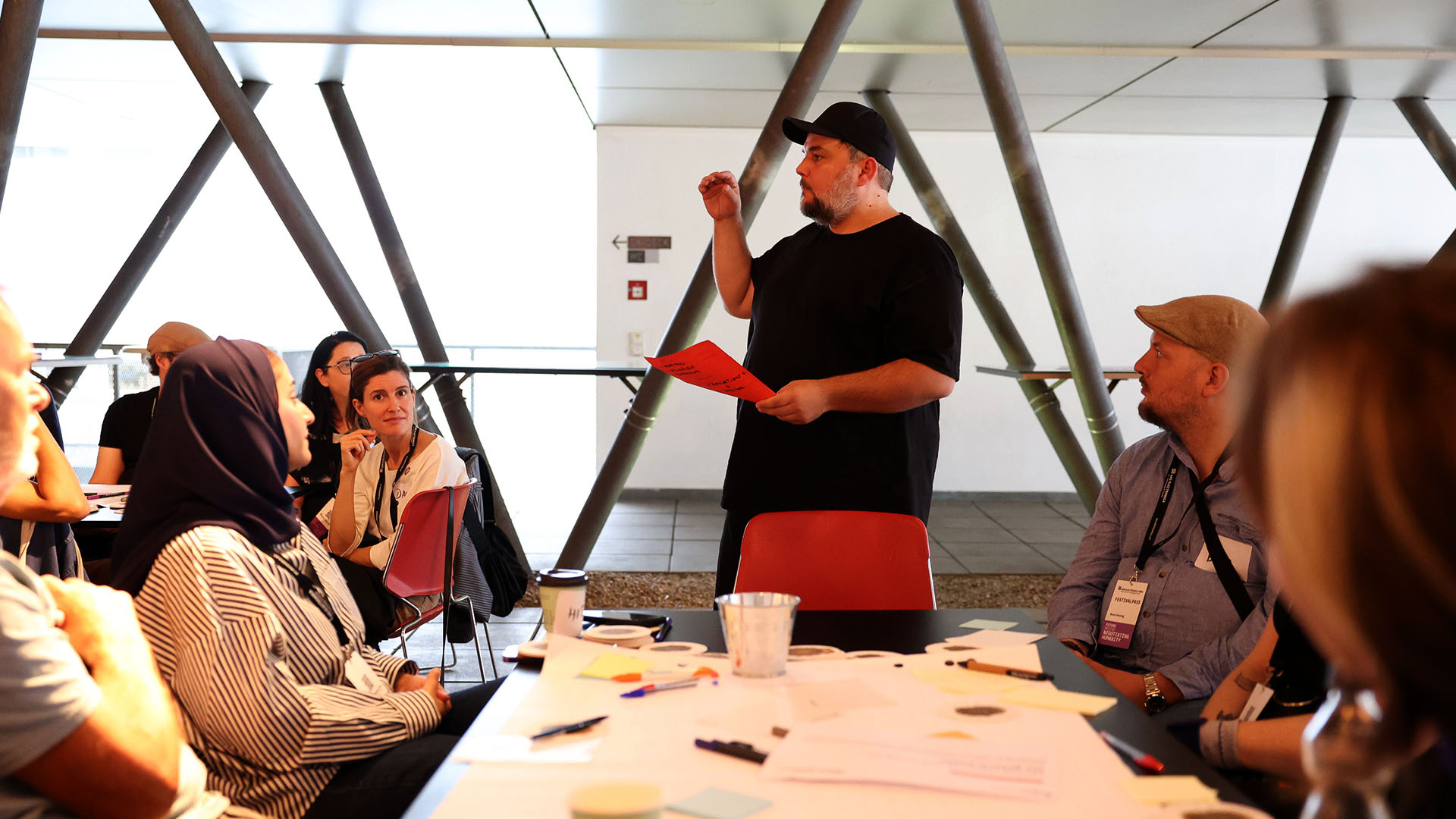
Table 4: Lasting impact on the public
Host: Michal Kučerák, ABIS curator; TBA21–Academy Digital Program Manager
The fourth table asked how transdisciplinary projects can move beyond illustrating scientific facts to spark lasting ecological empathy and action. It looked especially at remote and digital projects. The group's central finding was that impact comes from embodied experience and active, physical participation, not from presenting another layer of knowledge. Content matters too. Public-facing material can be political, so the approach has to be chosen with care.
On method, participants discussed residencies in both on-site and online formats. They also discussed micro-expeditions built on location-based and project-based learning, and artistic practice as a way of diving deep and sparking curiosity. A key observation was that the general public cares less about expert knowledge itself than about being able to use it. Impact happens when people can do something with what is in front of them. Outputs, therefore, need to be accessible and engaging, take many forms, and always involve translation between frameworks and languages.
One project offered a concrete model. Buen-TEK brought in a third partner alongside the artist and scientist: a representative of the local community. Citizen science was not discussed directly, but community involvement emerged as a strong route to public engagement. The goal, the group concluded, is to build a bridge with practical value.
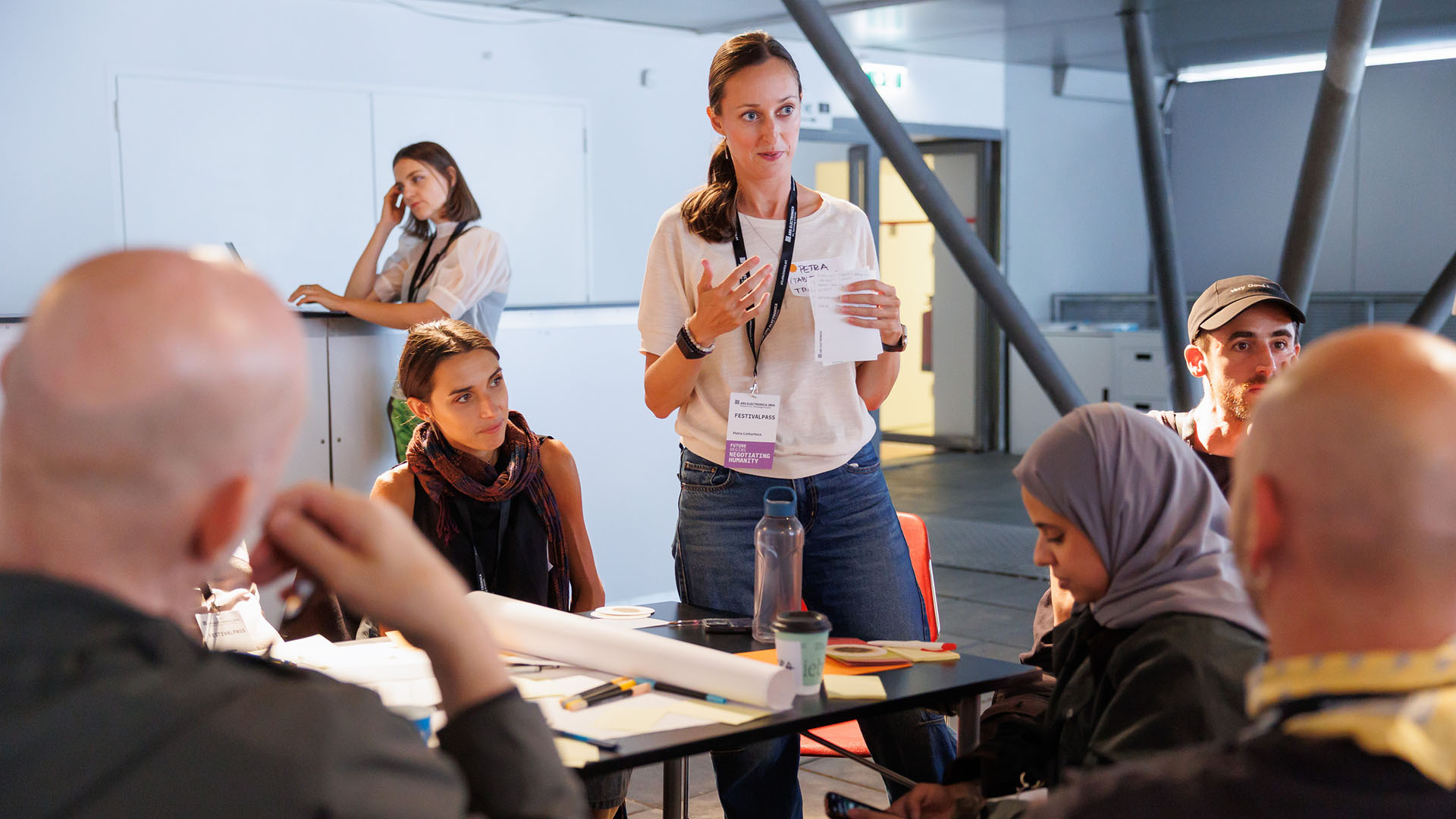
Table 5: Infrastructure and institutions
Host: Petra Linhartová, TBA21–Academy Digital Program Director
The fifth table asked what long-term support is needed to sustain art–science encounters over years rather than months, through infrastructure, physical space, and facilitation. Participants were asked to go beyond "we need more funding" and name concrete structures, and to say whose job it would be to build them.
The group started from the different natures of artistic and scientific work, and the clashes these differences can cause once a collaboration is underway. Artists and scientists often bring a different set of interests and expectations about outputs, timelines, processes, and communication. Bridging these differences is rarely fluent, so the table argued it is an institutional responsibility. Institutions should have dedicated and trained staff, managers, and facilitators who act as mediators and translators. These people need to understand that the work is an open collaboration. It is not the illustration of a scientific process, and scientific work infused with artistic practice and research does not lose its scientific relevance. Thoughtful matchmaking between partners and educational programs was named as part of the same infrastructure.
Space came up again, both literally and metaphorically. Participants called for physical places where artists and scientists can work together beyond formal meetings and project deadlines. Just as important was space in the sense of an open mind: a shared openness among the people involved, and a willingness to meet the other discipline on its own terms. They stressed that openness alone is not enough, though. Collaborations also need stable structures, resources, and continuity. Staff turnover in partner institutions can quickly undo a relationship that took years to build.
The table also asked what counts as the success of art–science encounters. Institutions often have to demonstrate outcomes, and there is strong pressure on output, but art–science does not need to result in an artwork. A meaningful result does not have to be exhibited or put on a pedestal. It might be a scientific paper, a tangible object, or simply a changed way of thinking. When funding and evaluation hinge on a measurable, exhibitable result, collaborations tend to steer toward it from the start, leaving little room for the open-ended exploration where the most fertile frictions happen. Participants saw this pressure as one of the main obstacles to genuine collaboration, echoing Table 1's call to value "unproductive" time and Table 3's warning against artistic labor serving spectacle. Reducing it, they suggested, would make room for the transformations the whole session was trying to map.
Two further questions were raised: who owns the intellectual property of a collaboration (artist, institution, or scientist), and how can the field guard against artwashing?
Threads across the tables
The tables each started from a separate question, but several ideas ran through all of them. The first was that friction was treated as productive. It appeared on Table 2 as a principle, on Table 1 as the emotional discomfort of collaboration, and on Table 5 as the differing interests and expectations built into artistic and scientific work. Across the room, friction was understood as the material from which transformation is made.
The second was that time and space are preconditions. Table 3 called for a neutral ground between the studio and lab. Table 5 called for dedicated, permanent spaces. Nearly every table named time as the resource in shortest supply.
The third was that translation is real work. Table 2 noted that shared words hide different meanings. Tables 4 and 5 described translation between frameworks and languages as a task that needs dedicated people, not goodwill alone.
Finally, the tables shifted from outputs to transformation. The session began with a question about intangible impacts. Its answers pointed to changes in perspective, embodied experience, and the value of the encounter itself, and to the need for institutions to learn to recognize these as outcomes. Standing in the way, at several tables, was the pressure to deliver measurable, exhibitable outputs. Participants named it as one of the strongest obstacles to productive collaboration, because it steers projects toward a predictable result before the encounter has had the chance to change anyone.
Looking ahead
One of the biggest lessons for facilitating art–science collaborations—one that will shape the upcoming stages of Ars Biologica—is the ability to respond to individual needs. There is no single format that fits every art–science collaboration. A general framework can offer stability, but what matters most is remaining agile to respond to the reality of each person's life. Finding the right measure of flexibility and agility, without losing the plot, will be the challenge.
In the coming programs, we will work with possible answers and strategies to the questions that surfaced across the tables: who owns what a collaboration produces, whose job it is to count a changed way of thinking as success, and how community and citizen participation can be built in from the start. We know these answers will look different from group to group, from collaborators to collaborators, from one year to another—and that, too, is part of the agility we are learning.
Friction, in the end, is unavoidable pretty much everywhere. We believe the strategies developed within art–science collaborations can also help us navigate friction beyond them. This, perhaps, is the real skill these encounters cultivate: learning to work with the discomfort of difference rather than around it. If the town hall showed one thing, it is that transformation does not happen despite friction but through it. So as we move toward 2028, we will take the session's most repeated phrase as both a finding and a method: friction is needed.
Mapping the Intangible Impacts of Art–Science Encounters took place on September 9, 2026, at OK Linz as part of the Ars Electronica Festival, organized by Ars Electronica. The event was hosted by Petra Linhartová, Laura Welzenbach and Daniela Duca De Tey.
Table hosts: Dr. Lea Luka Sikau, Robertina Šebjanič, Dr. Markéta Dolejšová, Michal Kučerák, and Petra Linhartová. Moderation: Laura Welzenbach and Daniela Duca De Tey.
test