
Europe launches the New European Bauhaus Ocean, Coastal and Island Communities Lab
As Washington retreats from ocean science, Europe is building the civic foundation that keeps it alive
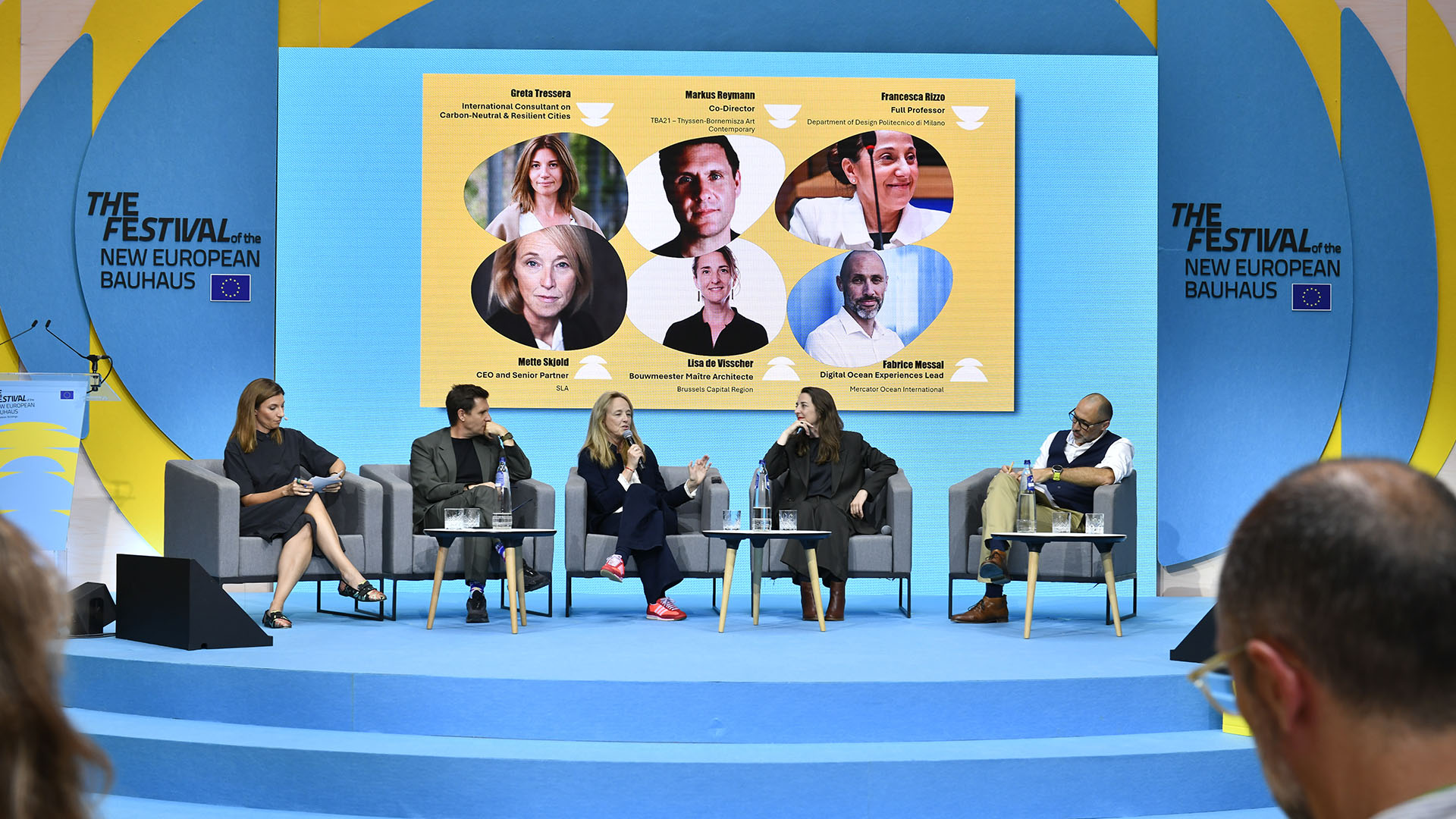
The New European Bauhaus (NEB) Ocean, Coastal and Island Communities Lab was officially launched at the New European Bauhaus Festival in Brussels (9–13 June 2026). Conceived as a pan-European “think-and-do tank,” the Lab places art, culture, science and education at the centre of how citizens see, sense and relate to the ocean, and how institutions govern it.
Anchored at Ocean Space in Venice and connected to the EU institutions in Brussels, the Lab is founded by three partners who bring together cultural, academic and territorial expertise: TBA21 Thyssen-Bornemisza Art Contemporary, the Universidade de Lisboa (through its Instituto Superior Técnico) and the Municipality of Oeiras.
A Lab named at the heart of EU ocean policy
The launch follows a significant moment of institutional recognition. On 3 June 2026, at the official presentation of the OceanEye Communication, Commissioner for Fisheries and Oceans Costas Kadis referenced the NEB Ocean, Coastal and Island Communities Lab directly in his remarks. OceanEye, a flagship program of the von der Leyen Commission, aims to strengthen the EU’s ocean observation capacities while bridging science, culture and civic engagement around the ocean.
“We also aim to ensure a stronger connection between the Ocean and people and to develop an educational, cultural and outreach dimension, bridging science, art, education and society. We should not forget that for our policies to be more effective they need to be implemented by citizens that demonstrate awareness and a sense of responsibility for the ocean. To that extent, we will amongst others launch the New European Bauhaus Ocean, Coastal and Island Communities Lab.”
— Costas Kadis, European Commissioner for Fisheries and Oceans, 3 June 2026
The Lab is designed to function as the cultural infrastructure of OceanEye’s third dimension, the educational, cultural and outreach pillar dedicated to collective shared responsibility of the ocean. Its mission is to mainstream the New European Bauhaus approach across EU ocean policies, enabling art, culture, science and education to transform how Europe’s citizens understand and care for the sea.
At the very moment the United States is dismantling its $386 million Ocean Observatories Initiative, with the National Science Foundation beginning in June 2026 to pull some 900 deep-sea instruments from the Pacific and Atlantic, Europe's commitment to building OceanEye stands out as a counter-signal: that the world's ocean observation capacity is worth defending and expanding, not abandoning. But the US retreat also exposes a deeper truth that the NEB Ocean, Coastal and Island Communities Lab is built to address. Sustained ocean observation does not survive on scientific merit alone; it survives when societies understand why it matters and demand that their institutions protect it. By bridging science, art, education and society, the Lab works to build exactly the public awareness, cultural meaning and civic constituency that turns ocean observation from a fragile budget line into a durable public commitment, the very foundation that, once eroded, allows a monitoring network to be switched off.
The legacy of the Bauhaus of the Seas Sails
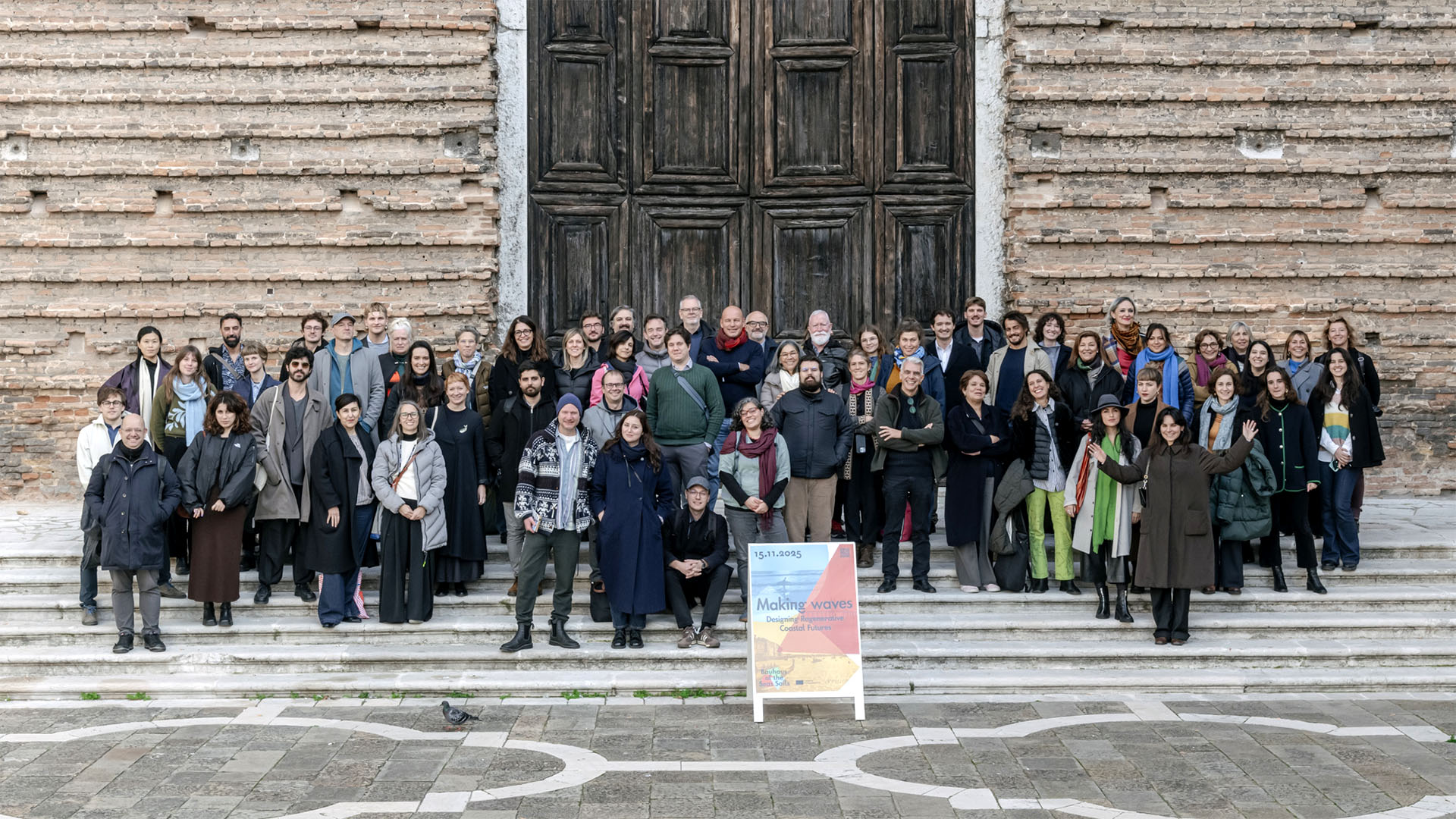
The NEB Ocean, Coastal and Island Communities Lab is the direct result and permanent institutional legacy of the Bauhaus of the Seas Sails, one of the first “lighthouse demonstrators” of the New European Bauhaus initiative. Funded under Horizon Europe and coordinated by the Interactive Technologies Institute of the Universidade de Lisboa’s Instituto Superior Técnico, the consortium brought together eighteen academic, cultural and territorial partners including TBA21 and the Municipality of Oeiras among others, across seven European coastal cities and four aquatic ecosystems.
Over three years, the Bauhaus of the Seas Sails developed a proven methodology, long-form, place-based, co-produced engagement that embeds artists, designers and communities directly into the process of understanding and shaping their relationship with the sea. Rather than treating culture as a way to illustrate scientific conclusions, the consortium positioned creative practice at the beginning of the process, as a co-producer of the questions themselves. Its pilot projects in cities such as Lisbon, Oeiras, Venice and Malmö demonstrated how cultural work can become governance input. In Malmö, the consortium built an underwater park—a living reef of eelgrass and bladderwrack in a former industrial dock basin, with children constructing the stone foundations and sound artists turning the basin's underwater acoustics into public performances—which became the foundation of a permanent Ocean Culture Hub backed by the municipality. In Lisbon, the pilot introduced regenerative menus designed around the health of the Tagus estuary into school canteens and museum cafeterias, an approach now shaping the city's forthcoming Blue Hub. In Venice, the Blue Seniors pilot worked with elderly residents of the San Basilio district to document their embodied knowledge of how the lagoon moves and floods, translating it into tools and feasibility studies that are now informing the renewal plans of the North Adriatic Sea Port Authority, the City of Venice, and local universities. In Oeiras, the Ocean Literacy pilot used sound and listening to reconnect the community with the ocean and its living beings, through residencies, performances and exhibitions at the historic Vasco da Gama Aquarium that let the public experience the underwater world while reshaping how the aquarium tells its story and seeding a permanent art-and-science educational approach that feeds into the city's plans for a future sea museum.
The Lab carries this methodology forward as a durable, pan-European platform: preserving and expanding the partnerships, methods and community networks built through the Bauhaus of the Seas Sails, and offering a continuing ecosystem for art–science–society exchange at European scale.
The three founders
TBA21 Thyssen-Bornemisza Art Contemporary
TBA21 is a leading international art and advocacy foundation established in 2002 by philanthropist and art patron Francesca Thyssen-Bornemisza. Based in Madrid and anchored in Venice through its Ocean Space, TBA21 works at the intersection of contemporary art, environmental and social justice, and cultural experimentation. A co-founder of the Bauhaus of the Seas Sails consortium and a permanent observer at the International Seabed Authority, TBA21 brings to the Lab its transdisciplinary practice, its artistic production programme and its experience operating at the interface of art, science and governance.
Universidade de Lisboa
The Universidade de Lisboa — through the Interactive Technologies Institute of its Instituto Superior Técnico — coordinated the Bauhaus of the Seas Sails consortium, the only lighthouse demonstrator led by Portugal. As founder of the Lab, the University contributes its scientific and academic leadership, its experience in interdisciplinary research and technology, and its proven capacity to coordinate complex European consortia bridging research, design and community engagement.
Municipality of Oeiras
Located on the Atlantic Ocean at the mouth of the Tagus River, the Municipality of Oeiras was a territorial partner in the Bauhaus of the Seas Sails, where it developed an ocean literacy strategy reconnecting local populations with the sea through awareness of aquatic ecosystems and maritime heritage. As founder of the Lab, Oeiras brings the perspective of a coastal community and local authority committed to placing citizens and place-based knowledge at the centre of ocean governance — ensuring that coastal and island communities are recognised as knowledge-holders, not merely beneficiaries.
Looking ahead
From its launch at the NEB Festival, the Lab opens a call for supporter organisations and begins building a durable European community of artists, cultural institutions, researchers, policymakers, coastal communities and philanthropies dedicated to the ocean. Its first gathering is planned for Venice later in 2026, with activities reaching toward major milestones including the EU Ocean Act process, the International Seabed Authority, and the 2028 United Nations Ocean Conference.
The New European Bauhaus Ocean, Coastal and Island Communities Lab is a pan-European platform where artists, scientists, coastal communities and policymakers collaborate to transform how we understand, govern and relate to our ocean. Anchored in Venice and connected to EU institutions in Brussels, the Lab builds on the legacy of the Bauhaus of the Seas Sails to place culture at the centre of Europe’s response to the ocean crisis — shaping not only what we know about the ocean, but how we feel about it, how we govern it, and who gets to speak for it.