
The Many Venices. A walk with Megnaa Mehtta and Him Uddin
19 June 2026 | 18:00 – 20:00
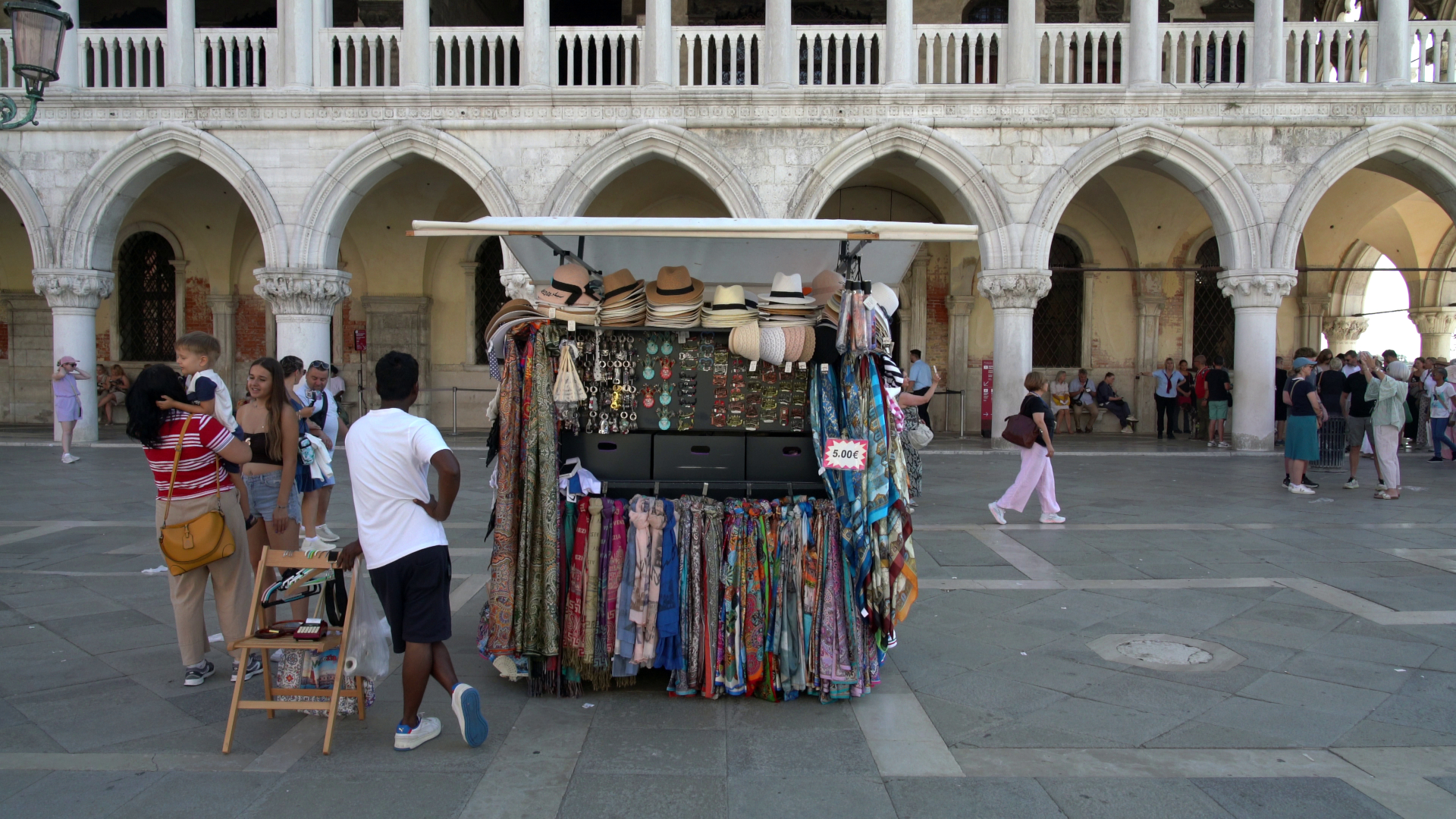
Continuing our journey through The Many Venices program, we’ll venture beyond Venice’s historic center, crossing the Ponte della Libertà toward Mestre.
Joining us will be cultural anthropologist Megnaa Mehtta, whose anthropological study Banglascapes of Venice is set to be published by wetlands in 2027, and Him Uddin, a resident of Marghera and collaborator on the Banglascapes of Venice project.
Mestre and Marghera are home to approximately 20,000 Bangladeshi residents. While most residents of Venice are accustomed to seeing Bangladeshi men working in the restaurants of Venice, it is less common to encounter their families. In Mestre, one encounters entire families and the everyday infrastructures of community life.
Our walk begins at Parco Piraghetto, a space where women and children gather in the evenings. We then visit places, businesses, shops, and public spaces that shape the daily life of a vibrant community one of the largest Bangladeshi diasporas in Italy.
The program is supported by Venezia Football Club as a Community Partner.
Biographies
Megnaa Mehtta is an Assistant Professor in Social Anthropology at UCL, London. Her research explores human-environment relations, migration, risk and everyday experiences of climate distress. Her first book manuscript, Conserving Life: Political Imaginaries from a Submerging Forest is based out of long-term ethnographic fieldwork in the Sundarbans forests, a global conservation hotspot, located on the borders of India and Bangladesh. Her second research project The Banglascapes of Venice makes legible the lives of the Bangladeshi community in Venice. As racialized imaginaries create panic about impoverished brown and black bodies from the Global South washing up at the shores of Europe (and the United Kingdom), through the microcosm of Venice, the book reveals the ways in which Italy (and Europe) depends on these very bodies for labour. It makes visible a population that is seen yet unseen, known yet unknown, a part of the daily life of Venice that produces and reproduces it, yet remains entirely segregated and often unacknowledged.
